
PHOTO
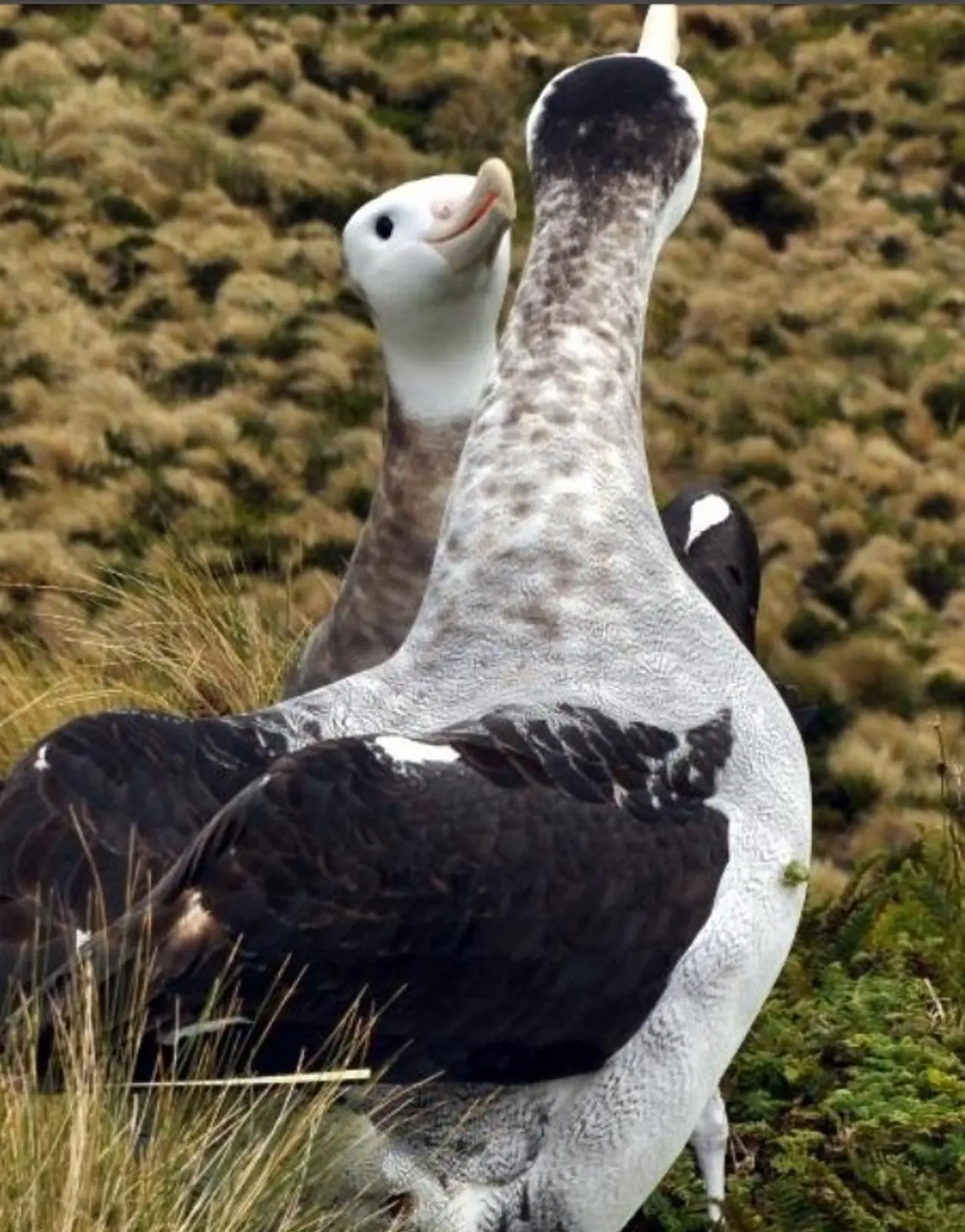
After her nest failed the Antipodean albatross known to scientists as White-755 lifted off on her three-metre wingspan to roam her familiar Pacific feeding grounds east of New Zealand.
The 16-year-old’s tracking device showed her heading north and then following a zigzagging route over the ocean for four months until she crossed the monitored path of a longline fishing vessel.
When the two paths intersected, her transmitter suddenly went dead, pointing to her becoming another victim of fishing by-catch.
White-755 was well known to scientists monitoring her species, which breeds almost exclusively on the subantarctic Antipodes Island southeast of New Zealand. She left the island for the first time in 2004 after fledging, returned after five years at sea in 2009 and after several years of courting, found a mate and began breeding in 2015.
The following year she successfully fledged her first chick but failure followed in 2018 and 2019.
Antipodean albatrosses, like other great albatrosses, breed once every two years. A female may not start breeding until her mid-teens or later, so every chick and every breeding pair is important to maintain the population.
The estimated number of breeding pairs on the island fell from 5233 in 1994 to 3148 last year, according to research by Graeme Elliott and Kath Walker for the Department of Conservation. The number of females has been declining faster than males and is at only 42% of the 2004 level.
Antipodean albatrosses are just one of 95 seabird species that breed in New Zealand and 346 that visit our waters. Although we are known as the seabird capital of the world, most of us are only dimly aware of these birds that generally feed far offshore and breed on isolated predator-free islands.
Human-related impacts, including introduced predators, pollution, overfishing, disease, climate change and fishing by-catch, mean 90% of our seabirds are threatened with or at risk of extinction.
Bycatch is the one threat we can make a big difference right now for some of these threatened seabirds. That is why Forest and Bird has declared 2020 to be the Year of the Seabird.
Many seabirds, including albatrosses and petrels, are scavengers and will flock around fishing vessels. They are caught on longline hooks, trapped and drowned in trawl and set nets, or are injured or killed by other equipment on vessels.
Fisheries New Zealand estimated in 2017-18 there were 3328 seabird by-catch captures, including birds that were released alive. Allowing for seabird deaths that cannot be observed, potential fatalities could have been as high 14,400 birds, although this figure is uncertain.
The draft National Plan of Action 2020 (NPOA) released by Fisheries NZ and the Department of Conservation in November is open for submissions until today. It is our chance to make a big difference by introducing incentives to drive down by-catch, through stronger rules, better monitoring and meaningful penalties for breaches.
Many fishers are doing their best to avoid killing seabirds but are being let down by those who don’t.
Bycatch rates compared with fishing effort has not declined consistently since the 2004 and 2013 seabird NPOAs. A review of the 2013 plan revealed serious shortcomings in implementing the plans goals.
The new plan includes the welcome vision of eliminating fishing by-catch but lacks the specific actions needed to turn that vision into reality.
The most important actions needed include requiring progressive reductions in by-catch every year, so it is all but eliminated by 2025. Rules are needed to ensure fishers at a minimum follow international best practice by using all the available tools to deter seabirds from their fishing gear.
There must be cameras or observers on all boats to get an accurate picture of the level of by-catch and to ensure all fishers meet their obligations. Those who fail to do the right thing must face meaningful penalties.
There are at present no effective seabird deterrents for set nets, which kill highly endangered species including hoiho, yellow-eyed penguins. Set netting in their habitats needs to end.
New Zealand can have a successful and sustainable fishing industry while protecting our seabirds from unnecessary deaths in fishing gear. The National Plan of Action on Seabirds in the Year of the Seabird is our chance to make that happen. Feedback on the National Plan of Action for Seabirds closes at 5pm.
- Forest and Bird Otago-Southland regional manager Sue Maturin is also its seabird spokeswoman.