
PHOTO
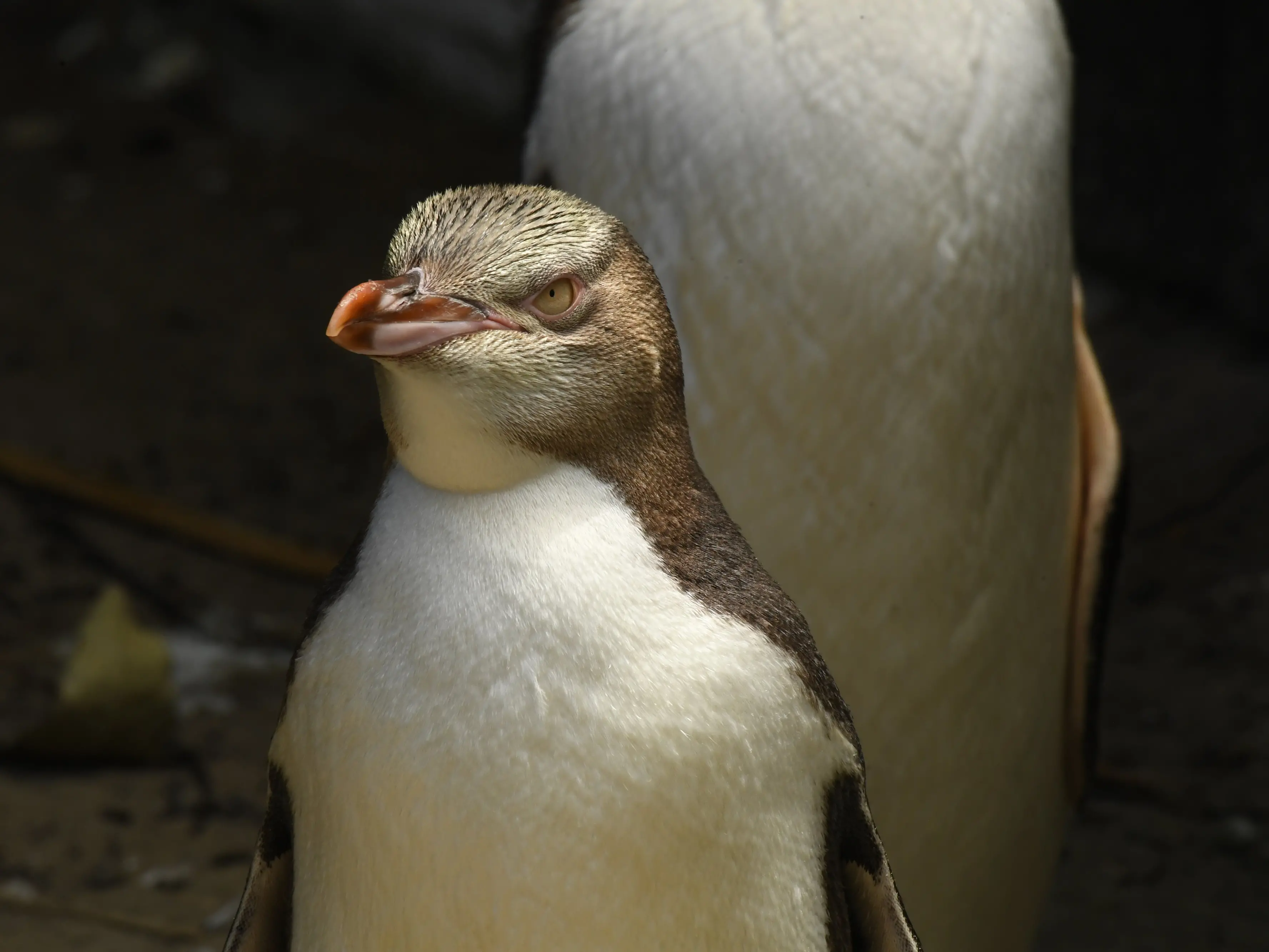
Four times last summer I took foreign guests to Sandfly Bay on Otago Peninsula to see our wildlife. We only saw one hoiho, and only once.
A few years ago, it was common to see several. However, I saw many tourists, most of whom ignored all the signs telling them to stay 20m away from sea lions and where to position themselves to not frighten the incoming penguins. They just went wherever they wanted, stood right next to sea lions, did silly antics for selfies around them and stood right in the line of sight of any poor shore-bound hoiho. They are driving the birds elsewhere.
Not only that; according to Yellow-Eyed Penguin Trust (YEPT) scientist Trudi Webster, "tourists could be preventing foraging parents from returning in time to feed their chicks" and causing these shy birds "additional stress which could be the straw which breaks the camels back".
For hoiho could be in deep trouble. Over 300 birds, nearly half the mainland population, spent time in Penguin Place's rehab centre this summer because they were seriously underweight. Their numbers have already declined: from 600 pairs in 2008-9 to 225 now.
Their behaviour may be giving us clues as to why they are tending to spend longer at sea foraging. It could be they have to search further and longer to get enough food.
This is a disaster for the birds and also for the local economy. A 2007 study found the economic value of Otago Peninsula wildlife was around $100million per annum. It also found "the wildlife are quite fragile". We are seeing this now. Whether it is warmer seas or overfishing affecting fish stocks, or both, combined with poor protection due to underfunding of Doc, one of Otago's precious taonga, and main tourist drawcards, is under threat.
Dr Webster informed me that planning was under way with other stakeholders to protect hoiho. Let's hope they can. Tourism has helped our wildlife, where great operators such as the Peninsula Trust, Nature's Wonders and Penguin Place have protected wildlife on their patch; but where people are unsupervised ... !
Calls for caps on tourist visitor numbers to New Zealand are coming in from several quarters now, like from Federated Mountain Clubs (FMC) and from researcher Prof Susanne Becken, of the University of Queensland, as totals rise past four million per year.
She calls the recently released Government Tourism Strategy's subheadline of "Sustainable Growth" "an oxymoron".
She also points out that rather than the Government trying to find ways to ensure more tourists can come, for example by "enabling communities to welcome" tourists more,
"some places don't wish to
have more, like Mt Cook, Tongariro, Milford Sound".
There has been a decline in support for tourism in places both most affected and most dependent on it, such as Central Otago. Traffic congestion, parking problems, high accommodation costs and unavailability, there and in the Mackenzie district, as well as underfunded and under-strain infrastructure are causes of complaint.
Mackenzie Mayor Graham Smith thinks the social licence of tourism is under threat; something echoed by Prof James Higham, of the University of Otago's tourism department, and Forest & Bird spokesman Kevin Hackwell.
Both Mr Hackwell and FMC's Jan Finlayson say that the Government's strategy is a disappointment, and that tourism is already eroding the quality of the experience of the outdoors for locals.
FMC says the tourism strategy should be "supply driven", not "demand driven" as it is now, meaning we make as much space available as we are comfortable to, not say "as many tourists as wish to come can", which is our current regime.
The strategy "ignores the elephant in the room, which is the enormous carbon footprint of air travel", Prof Higham said. Tourism Minister Kelvin Lloyd brushed aside this issue, saying "air travel is a fact of life", an attitude Profs Becken and Higham both think needs to be reconsidered.
Aviation contributes around 5% of global greenhouse emissions, which is rising rapidly. Cruise ships are more energy intensive and they cough up fumes equal to 10,000 diesel vehicles. Mark Dixon, of Awesome Tours, noted "a haze is visible in the upper harbour some days they are in port".
The Government strategy has sustainability as one of its major emphases, but seems to offer little assistance to the industry to achieve this. While many operators, such as Trent Yeo, of Ziptrek EcoTours, are already very eco-conscious, with a very small carbon footprint, the strategy doesn't help tour operators such as Mark Dixon or Coastline Tour's Bruce Damill make a real difference by getting into a low-emissions vehicle.
Nor does it nudge our industry towards low-impact short-haul or domestic visitors, let alone focus on value rather than volume, on becoming "the southern hemisphere Switzerland", as outgoing Air New Zealand chief executive Chris Luxon suggests.
That might be appealing not just to us human locals, but also help save our non-human locals like the hoiho, too.
- Joseph Dougherty is an environmental advocate and researcher and a trustee of the Dunedin Environment Centre.