
PHOTO
When a state turns its guns on its own people, the world faces an old question in a new, urgent form: what does "never again" require in practice?
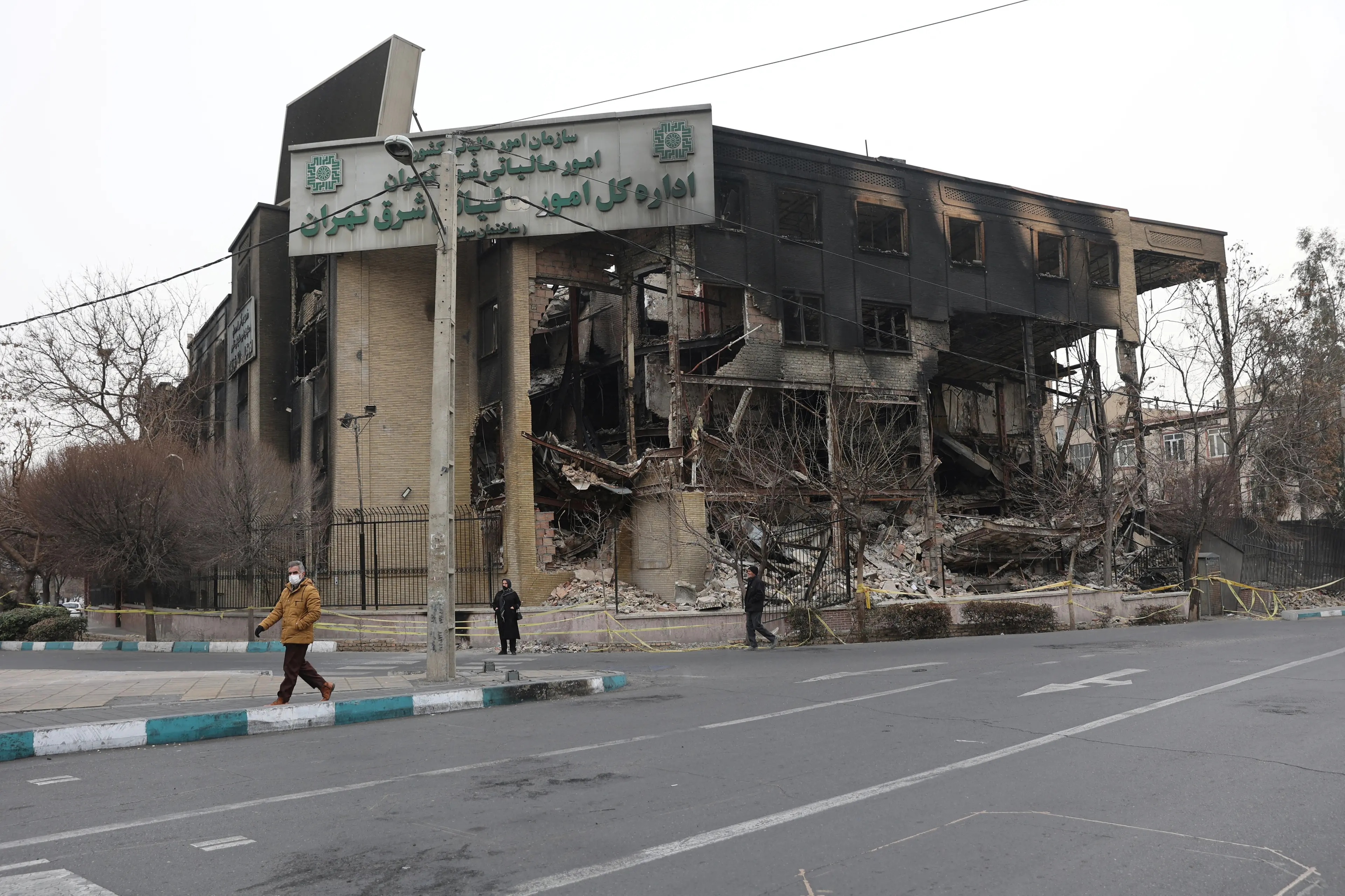
Recent reporting from Iran describes a nationwide crackdown following protests that began in late December. The Sunday Times reports that a newly obtained report from doctors on the ground in Iran estimates that at least 16,500 protesters have been killed and more than 330,000 have been injured.
The information environment has been further complicated by a total internet blackout, making independent verification difficult and leaving families searching for missing relatives.
On Sunday, we Iranians in Dunedin gathered at the Octagon to mourn the dead, to support democracy and freedom in Iran, and to ask the world to protect civilians. We also reflected demands increasingly voiced inside Iran: the fall of the Islamic Republic, the return of the Pahlavi monarchy, and support for Crown Prince Reza Pahlavi as a national figure around whom many protesters are rallying.
Reuters has reported some demonstrators have chanted slogans in support of Pahlavi, including "Long live the Shah", and that videos shared show protesters chanting his name.
New Zealanders can sympathise with that plea while still asking the sharper question: what is lawful and legitimate international action when a government is credibly accused of mass killing?
International law begins with a firm rule. The UN Charter prohibits states from using force against another state, with narrow exceptions such as self-defence and action authorised by the UN Security Council.
That framework was built to prevent interstate war. It is far less effective at stopping a government from killing its own citizens when the Security Council is immobilised by veto politics.
After Rwanda and Srebrenica, the international community tried to close that gap.
In 2005, all UN member states endorsed the "Responsibility to Protect" (R2P).
The principle is straightforward: states have a duty to protect their populations from genocide, war crimes, ethnic cleansing and crimes against humanity.
If they fail, the international community should use humanitarian measures; in extreme cases, collective action may be taken through the Security Council.
R2P is often misunderstood. It does not create a standing licence for war. It is a framework for prevention, pressure and — only as a last resort — collective protection.
But it does underline a moral and political truth that matters in Iran: sovereignty is responsibility, not impunity.
This is where the phrase "humanitarian intervention" enters the debate, and where New Zealand should insist on precision.
The aim is not conquest, not occupation, and not regime change imposed by foreign arms. The only defensible purpose is narrowly defined civilian protection: stopping mass killing and preventing further atrocities.
The legal status of military intervention without Security Council authorisation remains contested. That disagreement is not a technicality. It is a warning.
But the existence of controversy is also not an excuse for passivity when civilians are being slaughtered.
New Zealand does not have to choose between cynicism and crusades. We can press for a principled path that maximises both legality and legitimacy.
First, escalate what is plainly lawful now: targeted sanctions on commanders, security agencies and judicial officials implicated in killings; diplomatic isolation of those responsible; support for secure communications; and sustained documentation for future prosecutions.
These measures may not stop bullets tomorrow, but they raise the cost of repression and preserve evidence when perpetrators bank on impunity.
Second, when the Security Council fails, use the UN system publicly.
The General Assembly’s "Uniting for Peace" procedure cannot replace the Security Council, but it can convene urgently and recommend collective measures, building wider political legitimacy for action short of war and keeping pressure on states tempted to normalise the violence.
Third, if protective force is even discussed, it must be constrained by strict, transparent criteria: last resort; right intention (civilian protection, not strategic advantage); proportionality; a reasonable prospect of reducing harm; and clear international accountability.
Anything less is not humanitarianism; it is a recipe for escalation and civilian suffering.
You do not have to share protesters’ political preferences — whether for a republic or a Pahlavi-led constitutional monarchy — to recognise the underlying claim: civilians are being killed, and the world must not remain a bystander.
New Zealand cannot remake Iran, but it can use its diplomatic voice and multilateral credibility to insist that protecting civilians is not optional — and that international law must be capable of confronting atrocity, not merely condemning it after the graves are filled.
■ "Reza" , whose name we have agreed not to use, is a PhD candidate at the University of Otago.