
PHOTO
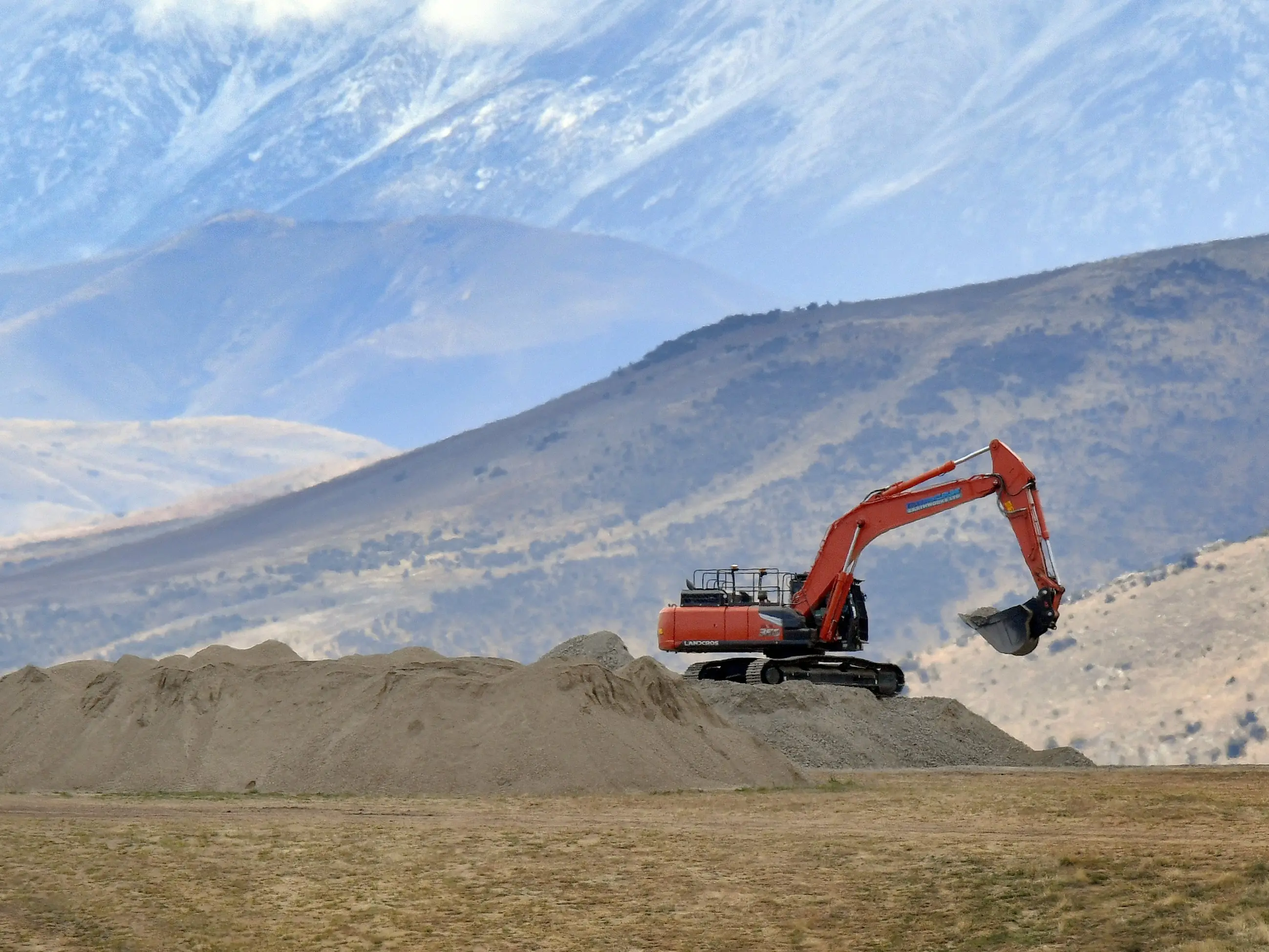
A local group opposed to Santana Minerals’ fast-track mining application launched this week with a campaign that questions the mine’s net economic benefit for the region.
Natural Capital Central Otago is an Upper Clutha-based group opposed to the proposed methods and rushed consent of the mine, which they believe will likely increase the risk of environmental and economic fallout from mining in the region.
The group’s spokeswoman, Zoe Hawkins, said the idea for Natural Capital came from a belief that ‘‘our environment is our most valuable asset and the current deal on the table from Santana Minerals and potentially other international mining companies to come, doesn’t make economic sense’’.
The group’s website posits the mine’s purported economic benefit — an estimated $6.75 billion worth of gold, 375 new jobs and $1.5b in tax income — did not outweigh the economic cost of a likely environmental disaster, with $1.9b at stake for the tourism and agricultural industries that rely on clean water and air.
For the group, it was a simple equation: high public risk versus low public return was a bad deal for the region.
‘‘Around 78% of the value of the gold will go to an Australian mining company, but we take on the majority of the risk,’’ Ms Hawkins said.
For the group, the big risk was the mine’s use of a tailings dam, an earth-filled embankment used to store byproducts of mining operations.
The group said the dam — used to store byproducts from the Santana project — would contain 18 million cu m of toxic waste behind a wall of waste rock taller than the Clyde Dam, forever.
Over the past century, just over one in 100 tailings dams have failed (compared to one in 10,000 with conventional water retention dams) and when they did, the results were disastrous.
In 2019, the collapse of a tailings dam in Brazil killed 270 people, with the mining company responsible ordered to pay $US840 million ($NZ1.4b) in reparations to cover the environmental and economic costs.
Tailings dams might fail at a rate of about one in 100 over a century, but Natural Capital Central Otago identified the high probability of a strong earthquake on the Alpine Fault as an increased risk factor, while pointing to the work of tailings dam expert Steven Vick, who said the eventual failure rate was 100%.
For Ms Hawkins, the goal was to ensure local residents were as informed as possible about the mine’s economic risks, while making it clear support for the mine was not as unanimous as its supporters claimed.
‘‘There has been a very effective strategy on the part of people who are pro-mine to just keep saying that everyone is for it, but we want to create a way for people who don’t support it to come together and take action.’’