Concerns grow over fast-track proposals

The Lightfoot Initiative chief executive Lana Cruickshank beside a crossing to nowhere near...
The Lightfoot Initiative chief executive Lana Cruickshank beside a crossing to nowhere near Queenstown Airport. PHOTOS: STEPHEN JAQUIERY
Critics of fast-track construction projects around Queenstown say developers are riding roughshod over the area’s growth plan, distressing locals and threatening to pave paradise. Mary Williams reports. 

Queenstown is raining humans.

Tourists seeking a skydiving thrill with jaw-dropping views float down in a perfect example of the town’s reputation — a year-round adventure capital in nature.

The sight is also a metaphor for the area’s extraordinary and likely accelerating urban growth.

Over the past decade, grey roofs have shot up where once there were paddocks and the district’s population has doubled to 50,000. The upshot is developer paydays, property price hikes, continued buyer demand and ongoing rampant construction.

Now, urban sprawl could spread faster due to the government’s fast-track rules.

The Queenstown Lakes District Council estimates that, on top of developments under way, 11 fast-track proposals for about 11,000 new homes could mean about 32,000 more people, plus more in nearby Wanaka and Cromwell.

Add to that The Remarkables Ski Area, which hopes to double its capacity to 6000 users a day, and an alpine village of 780 houses is planned close to the Coronet Peak Ski Area.

Developers applying through the fast-track process are not required to consult with communities or stay within urban growth boundaries dictated in the council’s spatial plan.

Locals say they believed the plan would keep green space and blue rivers safe, until at least 2050.

Now, they doubt it.

They are worried about emissions, congestion, road casualties, sewage, emergency services, healthcare — and their own mental health as developments nibble away at paradise.

Merrin Brewster in her little piece of paradise.
Horse owner Merrin Brewster rents a paddock between Morven Ferry Rd and the Kawarau River. She says the land is her ‘‘rejuvenation space’’ but, just down the lane, there is a fast-track proposal called Ridgeburn.

The developer wants 1250 houses on 212ha between the paddocks and the river, and it is causing her to feel ‘‘stressed’’.

‘‘My instant reactions to these developments is ‘Will I lose my horse’s grazing? Will I be able to ride safely on roads?’. Developers are putting urban into rural without knowing the kinds of things that go with rural living.’’

She stresses the holistic importance of feeling happy at her paddock.

‘‘Happy is a significant word for me, having a long history of not-great mental health. I am in nature, with my favourite horse and in a community of like-minded people, who have become friends.’’

Cr Samuel Belk on his Gibbston farm.
Her perspectives are echoed by Arrowtown-Kawarau Ward councillor Samuel Belk.

He grew up in a ‘‘concrete suburb’’ in the United States, but lives on a 60ha historic farm at Gibbston, caring for his ‘‘beautiful girls’’ — a flock of merino sheep.

His land is down river from a fast-track proposal for 900 houses called Gibbston Village and he objects, strongly, to the project, and fast-track generally.

‘‘I could apply for a ferris wheel under fast-track, or the most obscene thing you could think of,’’ he says.

Aware that the United Kingdom has national parks containing villages, roaming rights and rules against development, Cr Beck is on a mission to create something similar on a micro scale.

Working with Kāi Tahu, he has bought a 3.2km strip of land alongside the Kawarau River and intends to put up signs encouraging people to walk there and learn about historic Kāi Tahu use of the land.

‘‘Maybe someone else will do the same thing ... I don’t believe in land ownership, I believe in trustees.

‘‘People think I am an idiot. They say, ‘Why not subdivide and make millions, it will be great.’

‘‘They have not grown up in soul-destroying cement wastelands.’’

Back in the day, when arriving at Queenstown Airport, there was one obvious road home — west, along the traffic-free lakefront into town. Alternately, you could take country lanes to your farm, or travel to your crib in Arrowtown, near pristine Lake Hayes.

Now, there are three congested roads to thousands of homes. The roads stem from a clogged Frankton junction, known locally as ‘‘BP roundabout’’ due to its petrol station.

State Highway6a still goes west into town, but SH6 heads east, to an area branded the Eastern Corridor. It stretches down a valley with a startling array of out-of-town mega-stores, past the wastewater treatment plant next to the Shotover delta, housing estates, and glitzy developer billboards promising more.

The billboards continue past the turnoff for Arrowtown, and on towards Gibbston and Cromwell, selling various dreams in various locations, often about exclusivity and sometimes exclusion, too.

One reads: ‘‘Luxury is wasted on the young.’’

Arrowtown residents worry about being engulfed by development and Lake Hayes is now known for its ‘‘very poor’’ water quality, according to watchdog Land Air Water Aotearoa.

Back at BP roundabout, SH6 swings to the south, through Frankton and into an area unsurprisingly dubbed the Southern Corridor, with more housing estates and more developer billboards.

One Southern Corridor fast-track project, called Homestead Bay, was consented in February and includes 2800 houses and a shopping centre. It is next door to two pre-existing housing estates, Jack’s Point and Hanley’s Farm.

The Southern Corridor then narrows into the Devil’s Staircase, a 35km notorious road pinned between Lake Wakatipu and The Remarkables making development impossible. Development resumes at the small settlement of Kingston at the end of the lake.

The growth across the Queenstown area is extraordinary, but adds to a limited ratepayer base and limited funds for updated infrastructure.

When asked to comment on the fast-track process, the Queenstown Lakes District Council did not hold back.

‘‘Without a co-ordinated, funded and staged infrastructure response, there is a risk that growth could place increased strain on already constrained networks and impact the efficient functioning of the district,’’ a spokesperson warned.

Local National MP Joseph Mooney takes a different tack, saying it is not fair to lay the ‘‘blame’’ solely at the door of his party’s fast-track rule and developers and communities can talk to each other.

There has been ‘‘unco-ordinated growth happening for a long time’’ and ‘‘the reality is that growth is going to happen’’.

When asked about his vision for a future Queenstown, he says he does not see it as ‘‘isolated’’.

‘‘I see it connected to the Wānaka basin, the Cromwell basin ... I would love to see a 100-year vision for inland Otago ... rather than dealing haphazardly as it [growth] happens. Then we can work our way backwards. New York City did that.’’

He laughs and qualifies his statement, saying he does not envisage another NYC, but rather a ‘‘federation of interconnected, fiercely independent valleys’’.

He did not clarify if he thought the valleys would be developed or significantly green.

GRAPHIC: ODT
GRAPHIC: ODT
Cr Belk believes Mr Mooney’s call for dialogue is disingenuous in the face of fast-track rules that do not allow community involvement.

‘‘A rise of authoritarianism begs the question, how can we co-operate with each other? What works in a capitalist, libertarian, open society is dialogue — but that is like pixie dust.’’

Back at the BP roundabout, change is under way.

Branded a ‘‘road of regional significance’’, millions of dollars are being spent to replace the roundabout with extra car lanes and traffic lights.

Space is also being created for buses, cycling and walking but The Lightfoot Initiative chief executive Lana Cruickshank believes investment is needed for Queenstown-wide sustainable transport solutions.

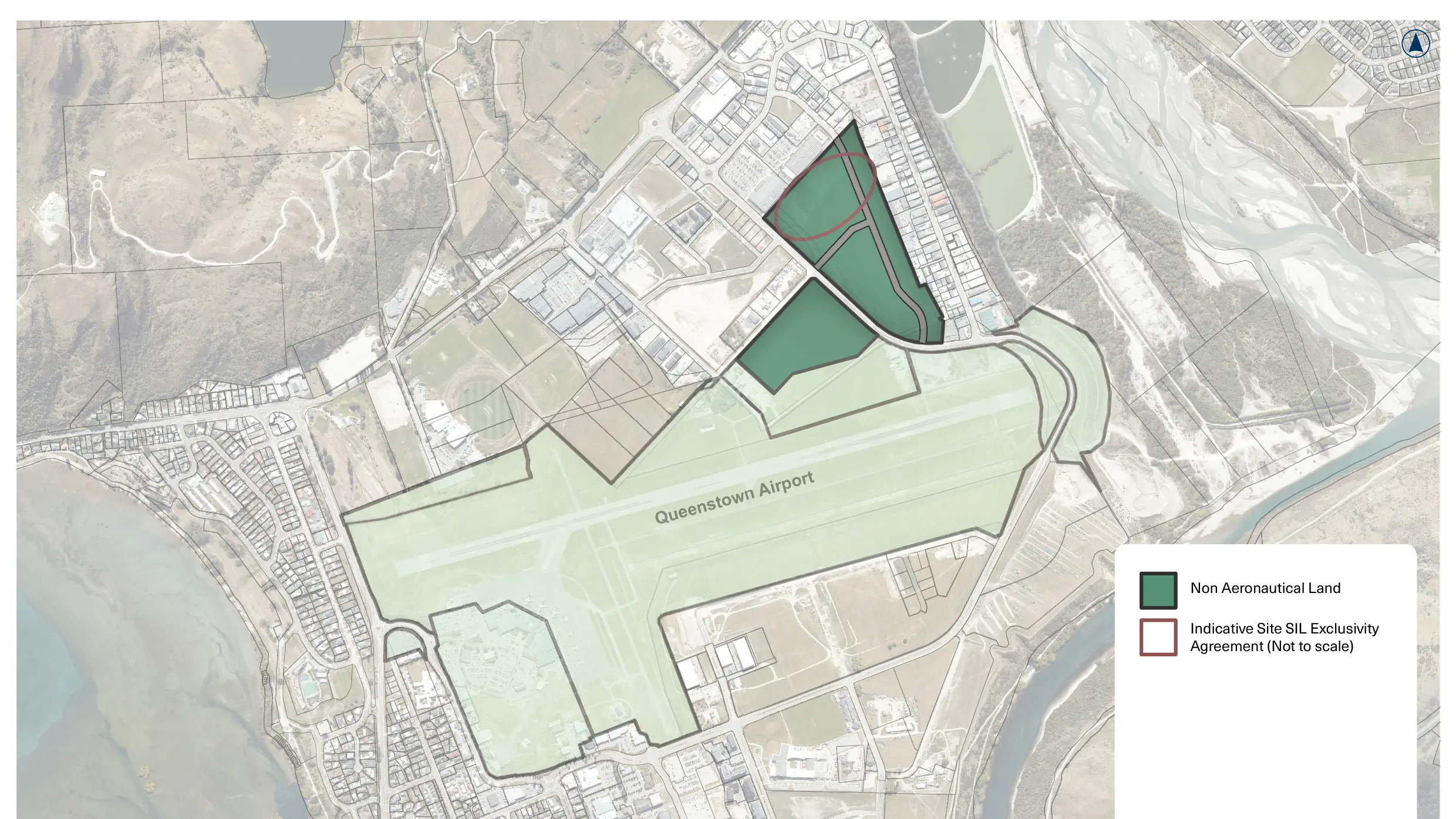
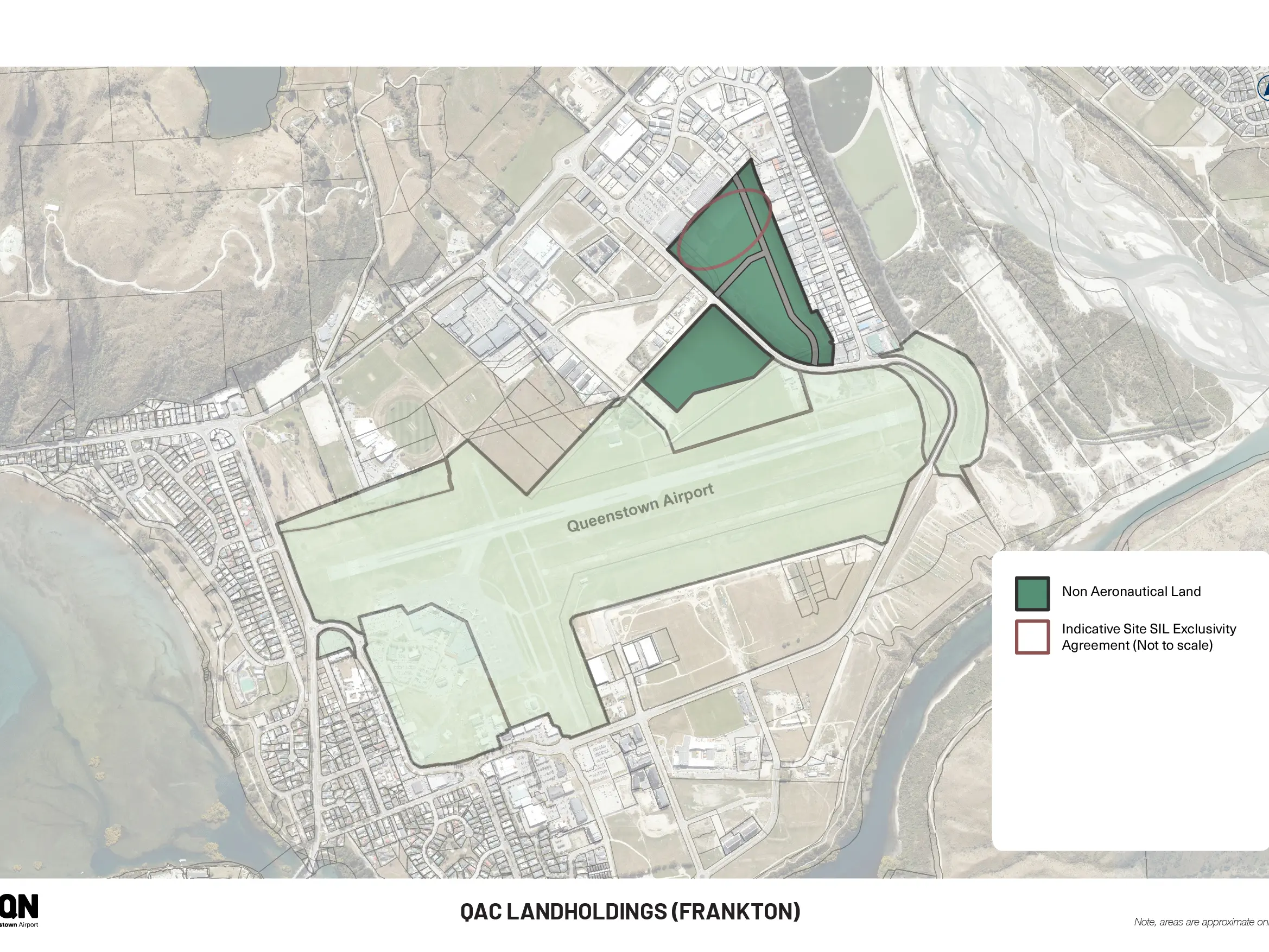
She points out a ‘‘pedestrian crossing to nowhere’’ that crosses a road dividing the airport from Frankton shopping centre.

On the airport side there is a path but, on the shopping centre side, there is only a wide, grassy verge.

‘‘This is a key connection and there is space for a path. Obviously there are competing priorities but there are also easy, low-hanging fruits.’’

Ms Cruickshank stresses the imperative of reducing car use, for congestion reasons.

Another concern is road safety. There was one road death in the district in 2016 and five in 2024, according to data from the Ministry of Transport.

One high-hanging fruit is the proposed and fast-tracked Queenstown cable car, which could stretch from Queenstown to the airport and Frankton, then along some of the Eastern Corridor.

Ms Cruickshank points out that the Southern Corridor, from the Homestead Bay to Frankton, is already at ‘‘peak congestion’’ and it is also important to think how people undertake the last mile or so of any journey by mass transit.

‘‘Due to the nature of the fast-track process, the alignment with the spatial plan is not there ... a fully integrated transport network should be designed in from the outset.’’

She was at the ‘‘early stages’’ of talking with developers for transport solutions, wants a collective voice from all corners of the community and, when asked about her vision of the future, she was clear.

‘‘Would we be happy if our town became a dense urban jungle at the cost of our open spaces? No. We have to bring things back to why people come to Queenstown. It is the natural environment.’’

Hanna Pettit on the Crown Terrace where a fast-track development is planned for the Arrow...
Hanna Pettit on the Crown Terrace where a fast-track development is planned for the Arrow Junction flat below.
Hanna Pettit is the spokeswoman for the Queenstown Smart Growth Initiative, a community group formed last year to object to the Ridgeburn development, not far from Arrowtown.

The group, and its growing following, has scrambled to assemble experts and an out-of-town lawyer to fight the project.

The developer has not reached out, Ms Pettit says.

‘‘There has been no engagement. None. Now their fast-track application is in, we are past that point anyway.’’

Ms Pettit says locals used to believe Queenstown’s urban growth boundaries would prevent wayward development.

‘‘QLDC’s spatial plan went through consultation to ensure development is close to infrastructure and jobs, ensures growth, does not have a huge impact on the wider community and supports sustainability. Fast-track is designed to override these plans and remove the public from the equation.’’

She caveated that by saying some fast-track applications could ‘‘do great things’’ and mentioned the cable car project.

‘‘We are not saying we should halt all development. But the No 1 driver for Queenstown is tourism and the No 1 detractor is traffic ... we are concerned urban sprawl is eroding our natural landscape.’’

‘‘There is capacity within the spatial plan, so why do we need to lose these places that are so precious?’’

The companies proposing Ridgeburn and Gibbston Village were contacted, but did not respond.

Arrowtown Village Association chairman Nick Fifield.
Nick Fifield is chairman of the Arrowtown Village Association, which fought, successfully, against proposed rules that would have allowed taller buildings.

‘‘Arrowtown is a passionate community that notices what is going on. It means that instead of things sweeping through, there can be resistance,’’ he says.

Now, the association is concerned to prevent urban sprawl nearby. Mr Fifield commends Ms Pettit’s efforts to fight the Ridgeburn proposal rather than ‘‘pave paradise’’.

He agrees residents used to believe the spatial plan’s boundaries were ‘‘it, forever’’ but now people are starting to think small developments on Arrowtown’s boundary may be the ‘‘lesser of two evils’’ compared with building skywards, or bigger.

‘‘If it serves the town and considers impacts, then let’s have that discussion and try to figure out the best solution.’’

‘‘Arrowtown is a nice place to visit because it has evolved slowly, but if you took someone from 30 years ago and showed them the bars and shops they would bemoan the loss of the old Arrowtown.

‘‘In 30 years’ time we may be equally horrified.’’

Roger Monk is a potential development partner.

Aged 80, he has farmed land adjacent to Arrowtown since 1964 and has a plot — about 18ha — that he thinks could be used for housing, if the community wants it.

‘‘I am happy to make a bob on the way, but community consultation has to happen. I don’t like running against the tide, and Arrowtown has a place in my heart,’’ he says.

His opinion of large fast-track housing developments is terse.

‘‘It’s a bit odd — out of character with the landscape. But I am old fashioned. I like the rural nature of the district and it is a shame to see such change.’’

He remembers fondly a past slipping from living memory.

‘‘The population was sparse and we ran sheep all over the hills. Back then, we thought Queenstown was full of people, but things have changed horrendously.

‘‘It was a different life — rural — and we loved the place.’’

mary.williams@odt.co.nz


Advertisement

OUTSTREAM