



Rongoā Māori was launched as an option in people’s recovery with Accident Compensation Corporation (ACC) in June 2020, and includes mirimiri and romiromi (bodywork), whitiwhiti kōrero (support and advice), and karakia (prayer).
Together with a 125% increase in uptake in Otago, both southern regions have experienced growth since it was introduced.
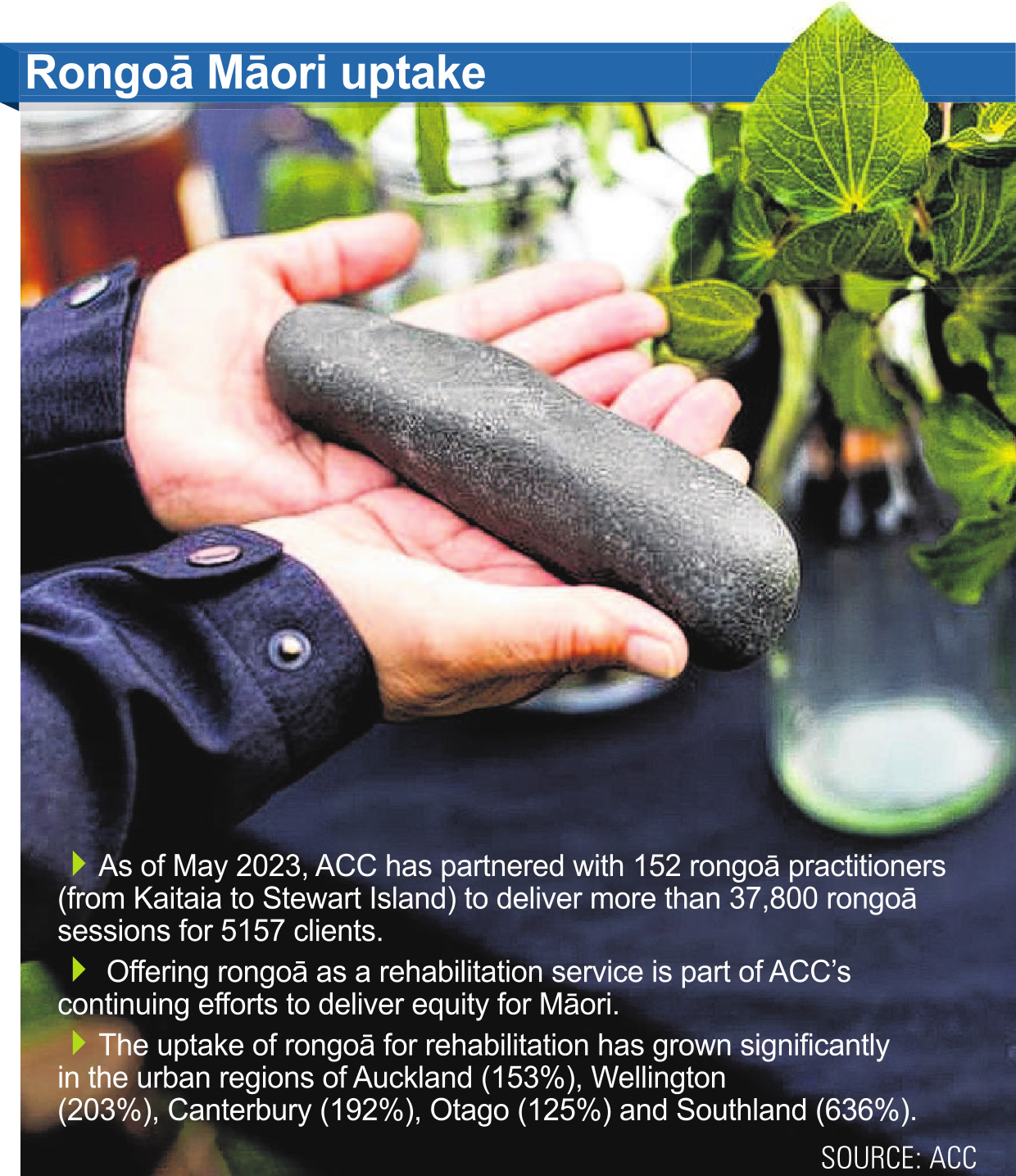
As of May 2023, ACC has partnered with 152 rongoā practitioners to deliver more than 37,800 rongoā sessions for 5157 clients.
Data from the Crown entity shows rongoā Māori claim volumes have doubled since the same time last year — there were more than 22,000 rongoā sessions delivered in the 12 months to May 2023. Over the same period, the number of rongoā providers around New Zealand increased by 40%.
ACC Māori health manager Eldon Paea said the numbers showed rongoā Māori was making a difference.
"We recognise we need to offer a choice of support services that reflect tikanga Māori [Māori customs] and te ao Māori [the Māori worldview] to uphold our responsibilities to Māori under Te Tiriti o Waitangi.
"We want to bring more Māori to ACC to support better health outcomes, and partnering with rongoā Māori practitioners who are connected in their communities is helping us to do this."
In 2015, Māori were 25% less likely to make a claim than non-Māori, he said.
This was improving, with present data reflecting Māori were now 18% less likely to claim.
"We are excited to see this significant growth in rongoā Māori claims.
"It presents injured Māori, and all New Zealanders, with more choice in their recovery options, and is a positive step towards delivering equity for tangata whenua."
He said about a third of people accessing rongoā care were survivors of sexual violence, but the most common injuries treated were sprains and strains.
"There has been a significant uptake of rongoā services in Southland over the past year with more than 70 clients taking up the service, an increase of 636%."
The data showed there had also been a "significant" increase in uptake in the big cities, including Auckland (153%), Wellington (203%), and Canterbury (192%).
He said non-Māori now accounted for 40% of all ACC rongoā Māori claims.


