
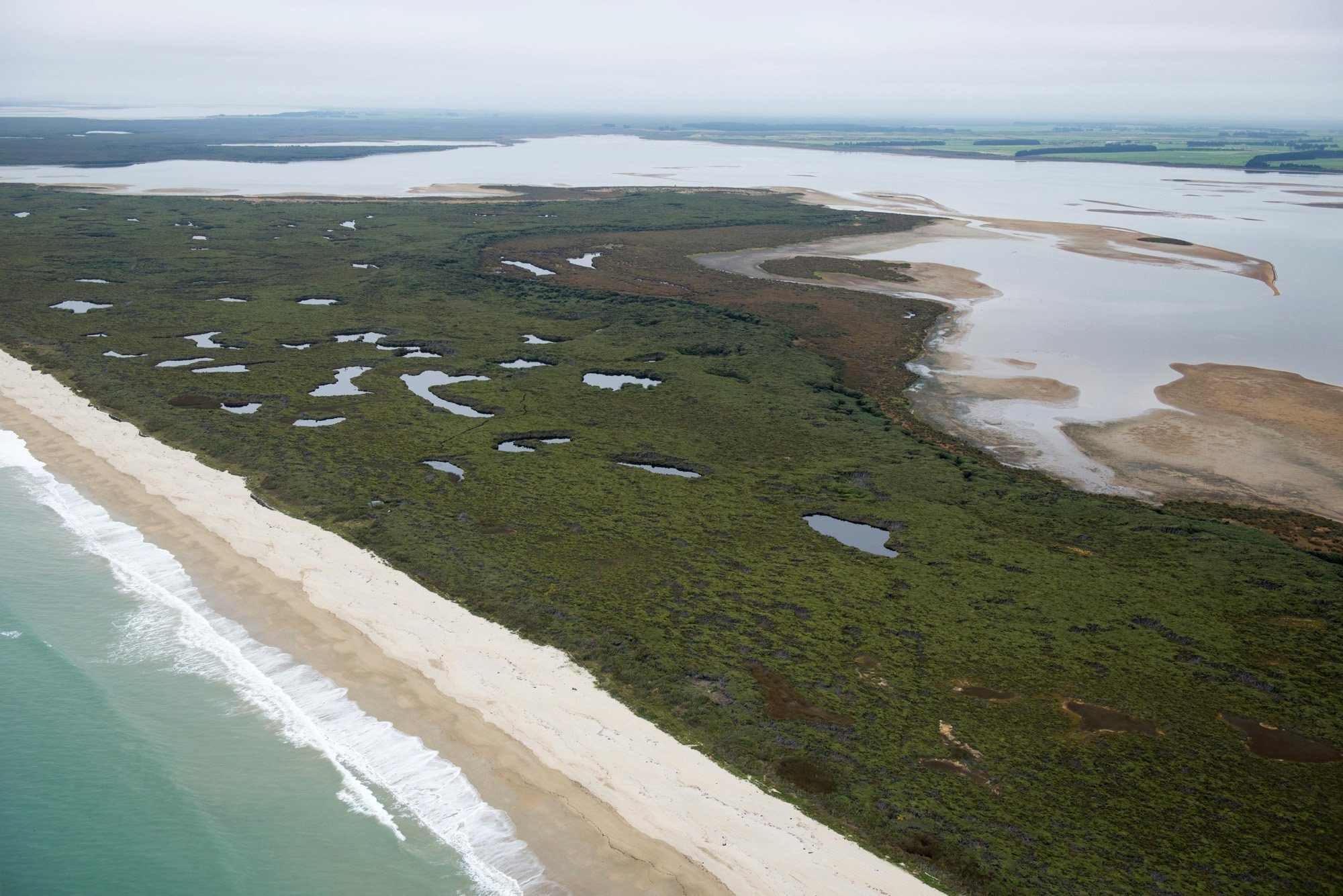
Results from an annual survey have exceeded the department’s expectations, revealing a decrease in algae and higher levels of aquatic plant Ruppia.
The treasured wetland is home to a plethora of native birds, fish and plants, but has been plagued by algal blooms and deteriorating water quality in recent years.
Doc principal science adviser Hugh Robertson said he was feeling "positive, but always cautious".
"This is a system where we really have to keep an eye on the water quality as well as water levels ... for a number of years ahead.
"The system is vulnerable each summer to whatever conditions are present."
Located about 40 minutes southeast of Invercargill, Waituna Lagoon’s management has proven contentious over the years.
Surrounded by farmland, it is prone to high nutrient levels which have led to toxic algal blooms and manual openings to adjacent Toetoes Bay.
A 20-year consent was granted in October to Doc, Te Rūnanga o Awarua and Environment Southland for opening the lagoon based on a variety of triggers.
It has been appealed by Federated Farmers which feels the required level will compromise farms.

If it stayed open the whole time, the system would change with water levels dropping and salt content increasing, making it harder for plants to grow.
But opening it also had the benefit of flushing out nutrients.
"So, in an ideal world, if nutrient levels coming into this lagoon were much lower, [we] probably wouldn’t need to open it that often.
"Apart from when there’s concerns around flooding and other things like that."
The lagoon level was 1.4m, which meant more water and habitat for plants to thrive, Mr Robertson said.
Although many of the country’s coastal lagoons were in quite poor condition, Waituna had remained "fairly resilient".
The lagoon was last opened to the sea in September 2024 and closed in April last year.
Doc’s annual survey was undertaken across 47 sites at the lagoon and showed low levels of algae.
Ruppia was present at 80% of monitoring sites compared with 36% last year, and stonewort had jumped from 7% to 54%.
— LDR is local body journalism co-funded by RNZ and NZ On Air.


