
PHOTO
Life is brief, fate is indifferent and the only real freedom we have now is how we savour the present moment.
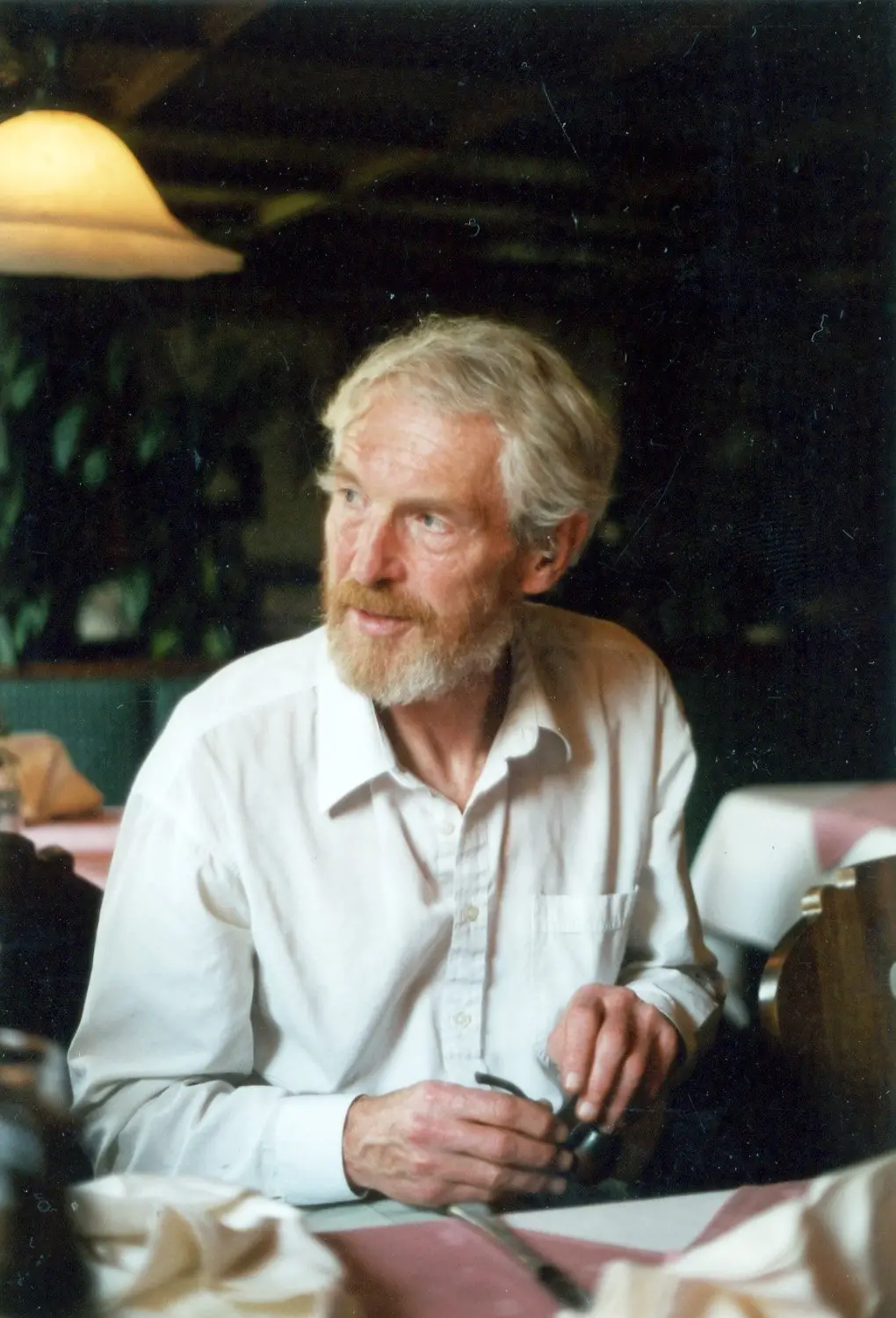
The philosophy comes from University of Otago Emeritus Professor Alan Edward Musgrave’s most treasured possessions — a book of quatrains attributed to Persian poet and polymath Omar Khayyam.
Prof Musgrave was known by many of his students and colleagues as "a rock star philosopher", who would share his spark of curiosity and wonder at the world with anyone who would listen.
He was an eminent scholar, whose contributions to the philosophy and history of science, and epistemology (the theory of knowledge) were highly influential internationally.
He was born in Ashton-under-Lyne, Manchester, England, on June 5, 1940, to factory worker Nora, and fishmonger Joseph Musgrave.
He went to school in Ashton, and was the first in his family to go to grammar school and university.
Almost from the beginning, his future wife, Julia, was part of his life.
Julia’s father and Alan’s father joined the British Army together and served in the same platoon during World War 2.
Alan and Julia met as toddlers when they farewelled their fathers at the local train station as they headed off to war.
During the war, their mothers would take the toddlers for walks in the park together, and later, the duo went to school together.
While many see him as a well-educated and thoughtful man, as a child he was considered by some as a ratbag.
He and other children would run past Mrs Wilson’s bakery, shouting: "Don’t eat Wilson’s bread, it makes you shit like lead; no bloody wonder, you fart like thunder; don’t eat Wilson’s bread".
It was a chant he later shared with his own children as they were growing up.
He did well at school and initially had his sights set on studying law.
He was accepted to study at London University’s Law School, but the course included text books worth £1000, which in those days was a huge amount of money.
His family could not afford the expense, so he switched to a bachelor of arts degree in philosophy and economics.
It was the start of a lifetime love of education and teaching.
He graduated with honours in 1961.
In 1962, he and Julia were married and the first of their five children arrived while he studied for a PhD at the London School of Economics.
Throughout his career, he was a steadfast and influential defender of the theses of scientific rationality and scientific realism, against competing schools of thought, such as post-structuralism.
He was most fortunate to have one of the giants of 20th century philosophy, Sir Karl Popper, as his PhD supervisor.
The wealth of knowledge he also gained while working as a research assistant for Sir Karl during his studies was invaluable.
Prof Musgrave graduated with his PhD in 1969.
He went on to become a lecturer at the London School of Economics, and co-edited Criticism and the Growth of Knowledge — one of the most influential collections of essays in recent philosophy of science.
Just a year after he graduated, he was appointed head of the philosophy department at the University of Otago and began building his international reputation as a historian of science who added greatly to the understanding of its development, foundations and importance.
At 29 years of age, he was one of the youngest appointments to head a department at the university, and he held the role for 35 years.
Prof Musgrave was popular with his students because he was simple, thoughtful and he valued clarity, honesty and getting straight to the point without fuss.
One of his students from the 1970s described his animated and entertaining style of lecturing.

"I can still see him striding up and down at the front of the lecture hall, talking loudly without lecture notes, in his accent from Manchester, punctuating sundry claims with a belligerent ‘Yes?’, that more or less demanded agreement.
"Alan’s excellent lectures were highly entertaining, enormously informative, amazingly clear, totally lacking in obfuscation and bracingly partisan.
"Unlike many of his contemporaries in the profession, he was adamant that the discipline of philosophy had made real progress, and that philosophical conjectures could be — and often were — refuted.
"It was obvious when Alan thought that a philosophical conjecture had been successfully refuted.
"It was obvious that he was a passionate advocate for a brand of common-sense realism with a healthy dose of scepticism which he called fallibilism."
In case there was any confusion about his point of view, he had a large wooden sign hanging on the wall of his university office, saying: "Beware of mad dog realist".
They were qualities that were also admired and respected by his fellow colleagues, who quickly became part of his wider family.
That bond, as well as the trust and respect he had for his colleagues, was returned two-fold, which resulted in his department being ranked as the best-performing academic department in New Zealand, in the 2003 and 2006 Performance Based Research Fund Survey.
It was a major achievement that he was very proud of, in his own humble way.
In August 2003, he lost the love of his life, Julia, but he took solace in his philosophy and continued to lead the way in his profession.
In 2008, he was elected a fellow of the New Zealand Academy of the Humanities, and the following year he was elected a fellow of the Royal Society of New Zealand.
In 2011, a master’s scholarship in philosophy was established in his name by the University of Otago, in recognition of his service and standing in the university.
In 2012, he was awarded the Royal Society of New Zealand Humanities Aronui Research Medal, and in 2013 he received the University of Otago’s highest research honour, the distinguished research medal, for outstanding research performance at international level.
At the time, the Otago Daily Times quoted him as saying the medal "meant the world to him" and he was lost for words when it was announced — something that was rare for him.
While his academic achievements were a source of great pride, it paled in comparison to the pride he felt when members of his family, his students and his colleagues had major achievements.
He came from very humble beginnings, and he never forgot that.
He was passionate about learning and teaching, and he took great joy in helping those in his orbit to reach their goals.
He was a truly kind man and believed all people, "as long as they were good ones", should be accepted and have equal opportunities in life, no matter their gender or race, rich or poor.
"Teaching isn’t a chore, it’s a privilege," he once said.
"You have a new bunch of people coming in every year, to sit at your feet and listen to what you say. It’s a tremendous job."
Many of his students went on to forge high-profile careers.
Outside of his work at the university, Prof Musgrave had many professional positions, including secretary to the British Society for the Philosophy of Science and president of the New Zealand Division of the Australasian Association for Philosophy.
During his career, he also published dozens of books and essays, including Common Sense Science and Scepticism, Essays on Realism and Rationalism, and Secular Sermons — Essays on Science and Philosophy. Books have since been published in his honour, with contributions by national and international colleagues.
When Prof Musgrave had time off, much of his attention was focused on his family. When the children were young, he would often take them to the beach to play and explore rock pools. Ever the teacher, the beach was really just another platform for him to share science lessons, such as Darwin’s theory of evolution.
On Saturdays and Sundays, he also loved to play sport, particularly football, tennis, cricket, golf, snooker and chess.
He was captain of the university’s third-grade football team and cricket team, and he could often be seen playing both sports while smoking his pipe. He was fiercely competitive.
Until relatively recently, Prof Musgrave was a regular attendee and contributor to the philosophy department’s weekly research seminar.
Both students and colleagues said he would be greatly missed for his penetrating philosophical intelligence, his kindness and attentiveness to students and colleagues, and a fund of often hilarious anecdotes involving some of the major philosophers of the 20th century.
Prof Musgrave died on January 20 after a period of poor health, aged 85 years. He is survived by partner Iveta, children and children-in-law Alastair, Rachel, Helen and Jens, Frances and Greg, James and Lisa; and his grandchildren and great-grandchildren.
Prof Musgrave himself said: "My life has been a series of happy accidents. I’m a lucky man. I’ve had a very lucky life." — John Lewis