
PHOTO
The Roman poet Ovid wrote "Let others praise ancient times; I am glad I was born in these".
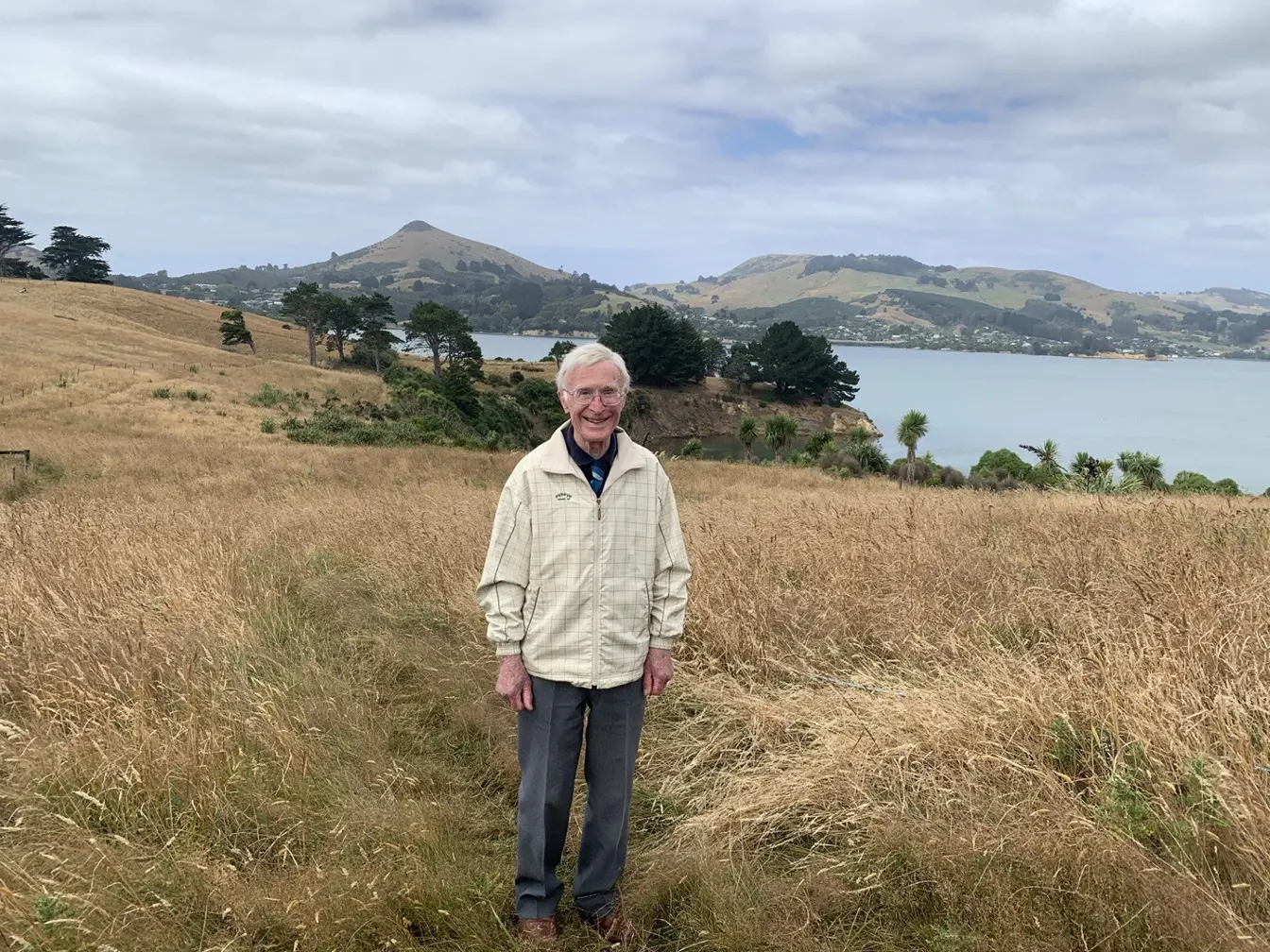
John Barsby’s life was one in which he balanced both sides of Ovid’s adage: he spent his life praising ancient times, but also revelled in a life well lived in the modern day.
Emeritus Prof John Barsby ONZM was the former head of the Classics department at the University of Otago and instrumental in the subject becoming part of the secondary school syllabus.
He was also a devoted family man and avid sportsman, who made a conspicuous contribution on Dunedin’s fields as a coach, administrator and player.
John Barsby was born in London on September 2, 1935.
The son of Harry, a lace salesman, and Edith, he was raised in Nottingham. His childhood there infused him with a life-long love of Nottingham Forest football club.
His father travelled extensively for work and demonstrated a knack of quickly picking up foreign languages, a linguistic gift he passed on to John, who was one of three children.
Those skills helped John, when at Nottingham High School, to secure a scholarship to Peterhouse College, Cambridge.
After graduating, he completed a Certificate in Education while at Bristol. His next move was to North London where he taught Latin at Mill Hill School. While teaching there John met his future wife Ann. They married in her native Jersey, Channel Islands, in 1964.
When not working, rugby was John’s passion. Having already played rugby in Cambridge, he joined Saracens after moving to London and played halfback for several years for this top-flight club.
In 1968 John embarked upon what was to be a sparkling academic career by securing a year-long interim lecturer post at Bristol University.
Having decided academia was for him, John Barsby applied for a role as senior lecturer in the Classics department at the University of Otago.
In 1970 the successful applicant, his wife and two children, Nicola and Helen (Andrew, was born in 1973) set sail on a six-week voyage down under, a move neither ever regretted for a moment, as in this case fortune favoured the brave.
Sport was John’s entree to Dunedin. Almost as soon as he arrived in the city he joined the University rugby club and became coach of Varsity B.
He would eventually be named a life member of the club, for both his years of service and for having coached Varsity B to a premiership win against Southern.
He was also a dedicated social grade cricketer, played "zig zag’’ golf and became a vital member of the Moana Tennis Club.
He was a committee member, secretary and past president, and was still playing tennis into his late 80s.
A practical, patient and knowledgeable teacher, John soon earned promotion — to associate professor in 1975 and then to head of Classics in 1977.
He taught widely in Greek and Latin language and literature, and wrote articles on Catullus and Propertius, as well as editing a collection of essays on Greek and Roman drama.
A gentlemanly instructor with great empathy for his students — many of whom became dinner guests and ultimately friends and sometimes colleagues — Prof Barsby was known for his commitment to academic rigour, but also for his keen sense of whimsy and irony.
Generous and respectful of all, Prof Barsby led his department by trust, empowering his lecturers to teach and research what matched their interests, so long as it could be fitted within the structure of a well-rounded and highly regarded Classics programme.
He was also an innovator, giving the go ahead to a paper on Greek and Roman women — a forerunner of the discipline eventually to become women’s studies.
Although he was an acknowledged leader in the field of the Classics in the South and a one-time president of the Otago Classical Association, Prof Barsby placed huge importance on building the subject on a nationwide basis.
He was a founder of the New Zealand Association of Classical Teachers and played a leading role in Classical studies becoming a subject offered in secondary schools from 1980 onwards.
Prof Barsby’s role was far greater than just advocacy: he helped design the curriculum, compiled teaching resources — which were regarded as a Godsend by many of the recipients — and devised model exams.
His textbooks reached Britain, where they are still in circulation.
Some of his academic writings were assigned as texts and he no doubt took quiet satisfaction in subsequent years when he got to lecture students at university who had referred to a text by J A Barsby when at high school.
As an academic, one of Prof Barsby’s passions was Roman comedy.
He translated, and wrote commentaries on, the works of the playwrights Terence and Plautus, and also published works on the poet Ovid.
One of his key messages was that the plays were written to be performed and that simply studying the text was to ignore the physical theatre dimensions of the works.
A highlight of his academic career was the organisation of an international conference in Dunedin, held in 2000, where some of his beloved plays were staged. The lengthy roll of attendees from overseas was testament to how far and wide the reputation of Prof Barsby had spread.
Worthy things happen to the worthy.
Prof Barsby, who received a doctor of letters while at Otago, retired in 2002 and was named emeritus professor.
Having already received the Queen’s Service Medal for services to education, in 2003 Prof Barsby was made an Officer of the New Zealand Order of Merit.
Although ancient times were Prof Barsby’s enduring passion, he also had a keen interest in the recent past. Being able to spot a doric or ionic column from a mile away, he was a natural collaborator for Ann when she and other like-minded people founded the Southern Heritage Trust in 2002.
Equally as convinced as his wife in the importance of preserving Dunedin’s rich built heritage, Prof Barsby was both secretary and treasurer of the organisation and contributed towards advancing a range of heritage issues and projects over many years.
"Retirement’’ suited Prof Barsby. He also continued teaching part-time and also worked on a history of the Classics department. He played sport with friends and colleagues and indulged in another of his joys — entertaining people at he and Ann’s home.
However, as Ovid wrote, we are all bound thither; we are hastening to the same common goal.
"Black death calls all things under the sway of its laws,’’ and the rigours of age eventually caught up with Prof Barsby.
Dementia weakened his precise mind and he made his final home at St Andrews.
Fate gave Prof John Barsby eternal rest on February 7, aged 90.
He is survived by Ann, his children Nicola, Helen and Andrew, and six grandchildren. — Mike Houlahan.