

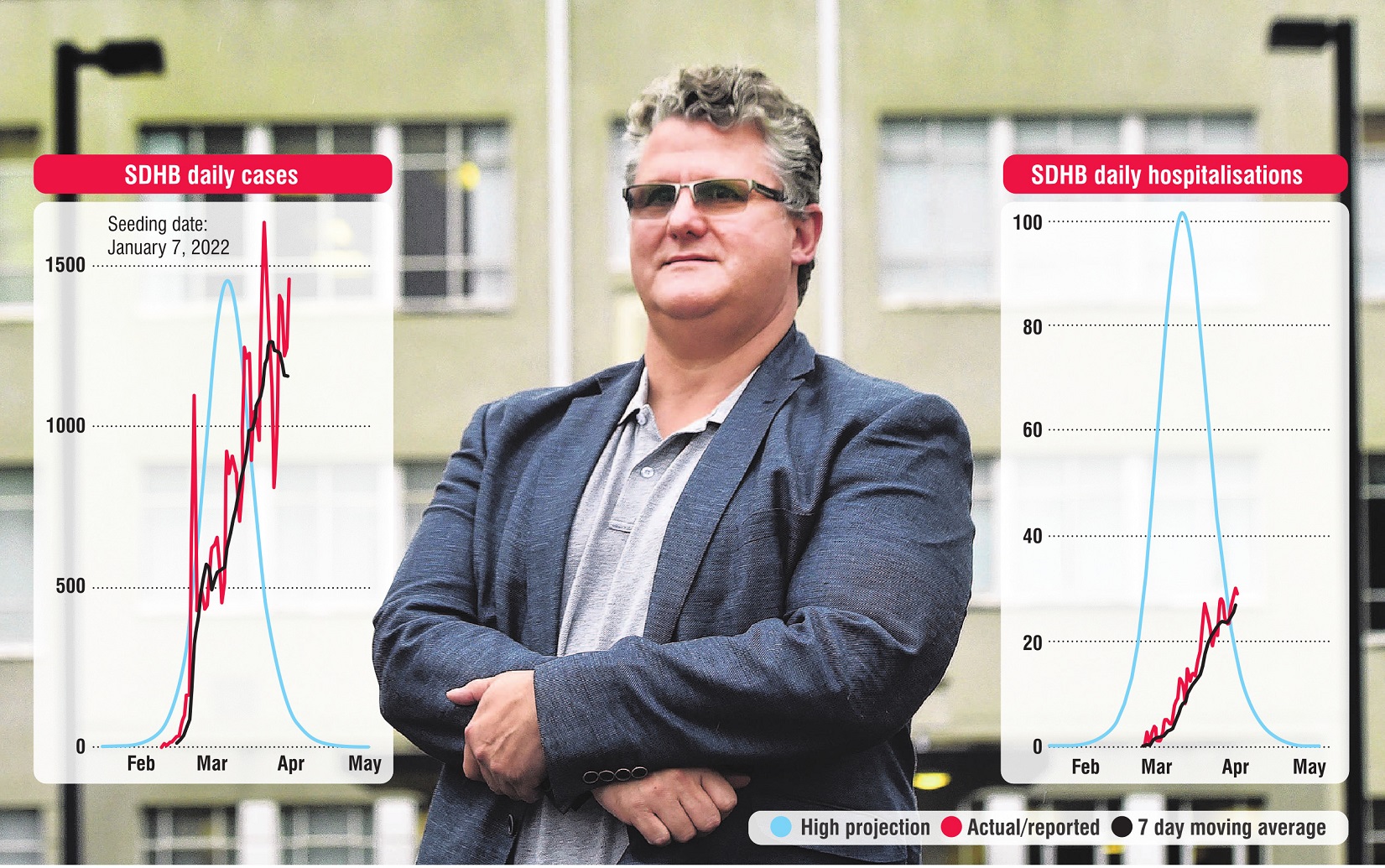
A surge in new Covid-19 cases in the South yesterday raises doubts whether the region has reached its peak in cases, the Southern District Health Board has been told.
A further 1456 cases were reported yesterday, the second-highest daily total yet across Otago and Southland, and a further person with Covid-19 died.
Hospitalisations were down slightly on Monday's pandemic high of 33, but wards were under pressure and patients were having to be transferred from Southland Hospital to Dunedin to ease strain on the Invercargill facility, Covid ward, SDHB acting quality and clinical governance solutions director Dr Hywel Lloyd said.
"We transferred a couple of patients over the weekend, following a couple of patients last week, to ease the pressure on Southland Hospital and care for them in Dunedin Hospital where we have greater capacity.
"We have done that so that we can try and maintain our usual work in Southland as well as care for Covid cases."
Dunedin Hospital was yesterday caring for 14 people with Covid-19, plus one case in intensive care.
There were 12 Covid-positive patient in Southland Hospital, and one in Lakes.
Primary care was also under pressure and GPs and nurses were monitoring more than 300 serious home-based cases, Dr Lloyd said.
"WellSouth do a survey every couple of weeks and primary care says they are under considerable pressure and that some of the routine appointments at practices are becoming less available, but they are managing all the cases that they need to from an Omicron perspective.
"They are squeezed, but they are managing to get the work done."
Southern case numbers had been "bouncing about" in recent weeks, which made it hard to assess the trend in Covid numbers, Dr Lloyd said.
"We have got quite a broad, flattened curve with quite a prolonged peak so it is really tricky to work out whether we have actually peaked or whether we haven’t, but that certainly is not the case yet with our hospital admissions."
A closer look at the ages of southerners who had caught Covid-19 suggested that cases were yet to peak for people aged 65-plus, Dr Lloyd said.
Aged residential care in particular, with its large population of vulnerable people remained a concern.
Staff at 62 of the 65 southern facilities had contracted the disease, as had residents at a quarter of facilities; 12% had active cases now, Dr Lloyd said.
"Those are our most vulnerable and when it gets into that age bracket that will also affect our hospital admissions."
One positive was that about 90% of over-65s had received booster shots of the Covid-19 vaccine, something which would provide them with the maximum protection possible against Omicron, Dr Lloyd said.
SDHB chief executive Chris Fleming said the southern health system was coping with the Omicron outbreak, but it was under increasing degrees of stress and strain.
"I’m proud of how the collective health system is responding and reacting."
Dr Lloyd said while Dunedin and Queenstown-Lakes had been the early focus of the pandemic, Covid-19 was now well spread throughout Otago and was particularly surging in Invercargill and Southland, where he suspected that the disease was still far from reaching its peak.
Yesterday’s regional breakdown of Covid cases backed Dr Lloyd. There were 371 new cases in Invercargill yesterday, just behind 402 new cases in Dunedin.
Invercargill and Southland combined had 2814 active cases of Covid-19 yesterday, while Dunedin had 2312.
A further 208 cases were reported in Queenstown-Lakes yesterday, where there are 1143 active cases of Covid-19.
Nationally, 14,120 new Covid-19 cases were reported, the southern cases making up about 10% of country’s new infections.
Across New Zealand the deaths of a further 23 people who had Covid-19 were reported, that figure being drawn from deaths over the past nine days.


