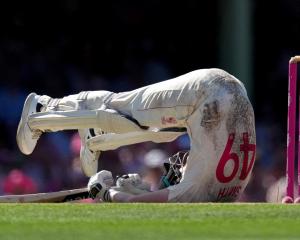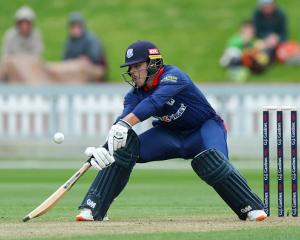
You know — the one-legged 181 not out to lead the Black Caps to a glorious five-wicket win over England in a one-dayer at the University Oval in March 2018.
He was so broken afterwards he had to be transported to the makeshift media centre on a drinks cart.
It was a courageous and swashbuckling innings — well worth all the angst fans went through during a topsy-turvy match — and one of the many highlights Taylor has had the opportunity to reflect on since making the decision to retire.
The 37-year-old bowed out from test cricket last month and will finish up his international career with three one-day internationals against the Netherlands in March-April.
The Otago Daily Times caught up with the great right-hander on Friday after the first of the two Ford Trophy games between Otago and Central Districts was called off due to poor weather.
Taylor plans to play for Central Districts until the end of the season then reassess where his "body and mind" is at.
"I think I want to play at this stage, but when you get to this stage of your career, you don’t think too far ahead," he said.
"I’ll be 38 turning 39 next season."
His most pressing plans post-retirement are to spend more time with his children — Mackenzie, Adelaide and Jonty — and wife Victoria.
"I’d like to be a dad for a bit, actually. I’ve been an absent father."
But a return to cricket in some capacity "won’t be too far around the corner".
He is already working with some of the younger Central Districts players in a mentoring role, and it is a pathway he would like to explore when the timing is right.
"I guess when you’ve played close to 450 games for your country, you’ve got knowledge there that you can pass on."
When he looks back over his test career, it is the team’s evolution and his own development which supply the most pride.
The Black Caps moved from battlers to world test champions with a formidable record at home, while Taylor moved from slogger to dependable in the test arena, and it took a lot of work.
"Turning myself into a test cricketer was probably one of my best achievements," he said.
He had to curb some of his natural instincts and bat with more patience. The hockey-hoick to midwicket had to be shelved for "three or four years".
"I was never going to be a person who could block it out for long periods of time, but I had find a way that gave me the best chance to succeed and develop.
"It took a lot of trial and error and I tried different techniques at different stages.
"Martin Crowe helped out as well as a lot of other batting coaches.
"It could have been easy to meander along and average in the late 30s. But as part of a team commitment, you need to set the bar as high as you can."
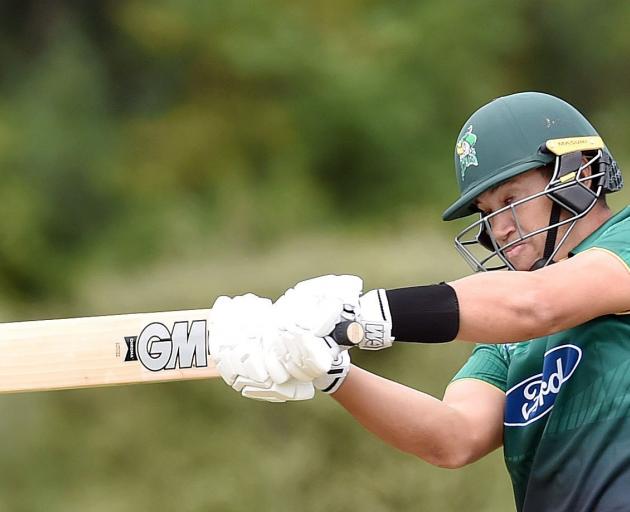
That meant the slog sweep had to go and he joked it cost him a lot of money in lost earnings on the T20 circuit.
"Sometimes cricket is about limiting the ways of getting out. It is nice when it comes off, but you’ve got to pick and chose when to use it, I guess.
"To me, the classical cover drives and cuts are a lot more rewarding, but I played hockey, and the midwicket boundary was quite often free, so it made sense to hit it there."
The shot often led to his downfall which is why he abandoned it for a period.
But, hey, when you are down to one good leg and cannot run between the wickets, that slog sweep is a very, very handy shot.
He employed it with wonderful success that day four years ago in Dunedin.
Taylor arrived at the crease in the third over with his side two for two and chasing 336 for the win.
He got injured during the innings and had to move from a more calculated approach to all-out beast mode.
He clobbered 17 fours and six sixes in all.
It was a tremendous performance that combined his two best attributes — the patience he had acquired through hard work in the test arena and the thrilling raw talent he possessed as a young man when he first emerged on the scene as a punishing limited-overs player.