
PHOTO
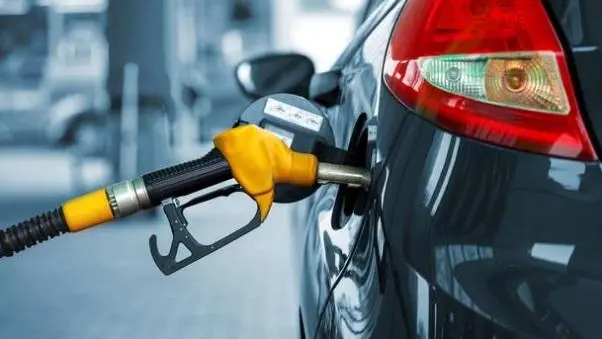
Until a few weeks ago you might have been forgiven for never thinking about where fuel comes from, other than the petrol station.
But given international uncertainty, a greater focus is going into what happens before you put the hose into your car at your local.
The US and Israel's ongoing war on Iran has caused a global fuel crisis and a sharp realisation that New Zealand sits at the bottom of the world.
It has hugely disrupted key supply chains and pushed Brent crude over $US115 a barrel, pushing up prices at the pump.
In New Zealand it has caused panic buying, huge queues and possibly even inspired sabotage of an Auckland fuel line.
But fuel has a long road to travel before it makes it to New Zealand petrol stations.
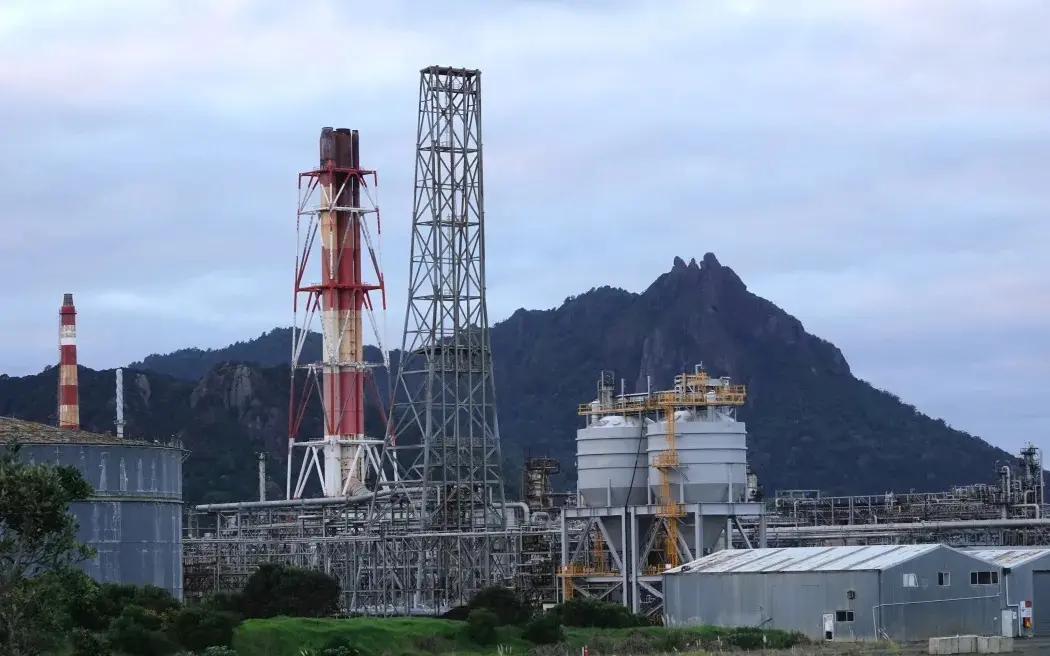
En route, refined fuels sit in tankers, the biggest of them arriving at former refinery Marsden Point.
The AA's Terry Collins said as a deepwater port, it can take the largest ships - holding up to 120 million litres.
There are nine other import terminals and two inland terminals in New Zealand - Wiri in Auckland and Woolston in Christchurch.
Mount Maunganui, Wellington and Lyttelton could receive medium-sized ships that carried 40 to 50 million litres.
Napier, New Plymouth, Nelson, Timaru, Dunedin and Bluff were the smaller regional terminals.
Collins said tankers deliver the refined product from the ships to what are called 'tank farms' or storage tanks.
"You'll see them perhaps in Seaview in Wellington and Marsden Point, obviously. They have big tanks, steel tanks, and generally what they do is they have what's known as a sinking lid on them. That's to contain the vapour as they go down."
From there, fuel is sent around the country by road.
"They have a trucking system where the drivers turn up, pick up the fuel, and then deliver them to the service stations to be used in our vehicles.
"Depending on who they're delivering to, [they have] a schedule of service stations where they drive around and discharge compartments of fuel, different fuel into each of the underground tanks and service stations."
Or in the case of Marsden Point, fuel is sent through a special pipeline from Ruakaka to Auckland - ending up at the Wiri Terminal and Auckland Airport for further distribution.
"They'll send down various products through the pipeline, but maybe diesel at one stage, maybe petrol at another.
"And that's used to basically maintain the storage around the Auckland area, being the largest city in New Zealand."
Collins said the storage tanks were like a dam with water flowing in and water flowing out.
"The level will go up and down, depending on how often the ships arrive and the shipping schedules.
"But the demand is usually fairly consistent."
Some fuel starts to go off after about three months, but Collins said that did not happen because nothing sat for that long. He reiterated it was not a good idea to store fuel for that very reason.
On top of the main and regional fuel terminals there are also smaller tankers that go rurally to farms and mining sites.
Refineries optimised for certain oil
Before the fuel even makes it to our shores, it must be refined.
Since the closure of the Marsden Point refinery in 2022, New Zealand has imported all its refined fuel. Before it is refined it starts off as crude oil, sourced mainly from the Middle East, particularly Saudi Arabia and the UAE.
Refineries in South Korea, Singapore and Malaysia need to get their hands on it before it can be turned into essential fuels (gasoline, diesel, jet fuel, heating oil), petrochemicals, and materials like plastics, rubber, asphalt.
New Zealand gets 80 percent of its fuel supply from just South Korea and Singapore. However, Collins said it was not so simple, since the trouble in the Middle East took away key supplies.
"Refineries aren't all equal and oil isn't all equal. We know it's been a bit of a concern because they had been sourcing a lot from that market and because the refineries are optimised to use that type of fuel."
He said it was their decision where they got the crude oil from, but it might not be the kind that made it the best for their refinery.
"Their decision is like asking the Kellogg's company where they get their corn for their cornflakes. They need corn for their flakes, but some corn makes better cereal than others."
