
PHOTO
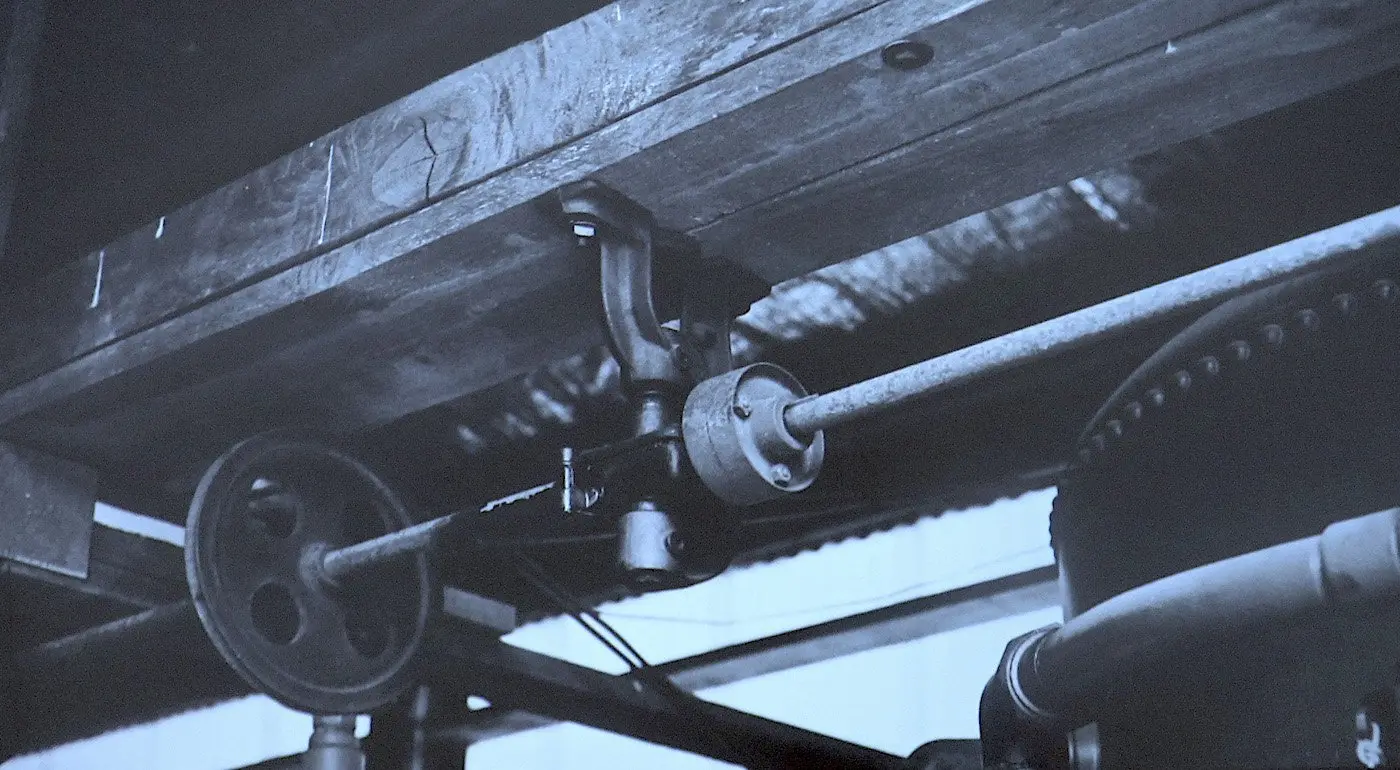
"A World of Doubt", Luke Shaw
(Blue Oyster Art Project Space)
Luke Shaw’s exhibition at Blue Oyster explores history, communication, and memory trace.
Using the former Taiaroa Head fog signal as a point of reference, Shaw explores its symbol as a potential life-saver sending its signals out into the fog.
Shaw’s work is partly inspired by the writings of Jennifer Lucy Allen, who emphasised the foghorn’s role as being totally auditory in a realm where sight is usually the primary sense.
Furthermore, she points out that it is a call with either silent response or no response at all and no way of knowing whether it’s heard.
From the safety of shore, the signal acted as a symbol of hope for the Schrödinger ships that may or may not have been present.
Shaw’s exhibition features three items, a foghorn-shaped speaker broadcasting across the gallery, a cameo-like image of Taiaroa Head lighthouse as depicted in New Zealand stamps and most interestingly, a slide show featuring toned monochrome blueprints and images of the former fog signal’s apparatus, the beating heart of its efforts to communicate.
We are left to ponder on communication, missed communication and miscommunication, a realm which has resonance in modern society, from the signal-noise ratio of modern mass media to the hopeful messages sent into space with no guarantee of response.
(RDS Gallery)
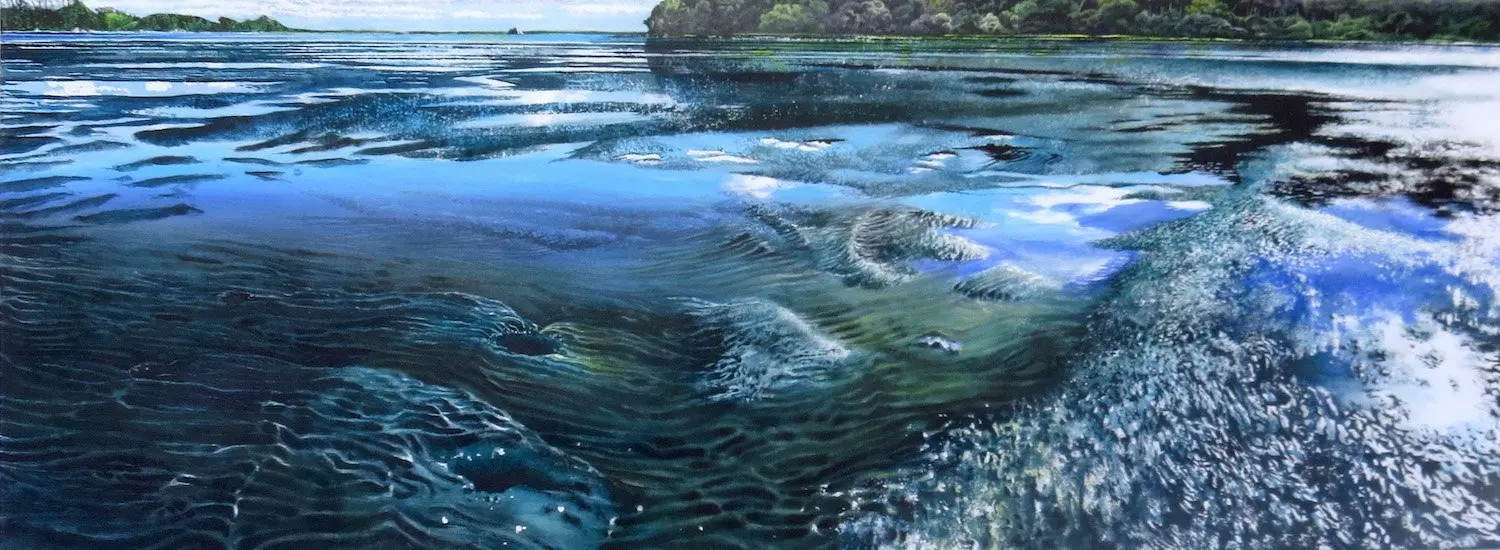
Clive Humphreys takes us on a journey around the shoreline and bush of Whakanewha, Waiheke Island.
Humphreys’ lush, vibrant paintings have, at first look, an air of photorealism, yet a closer inspection reveals a series of interesting painterly techniques by which the artist has created his work.
Perhaps the most apparent is the use of masking gel before painting, which is then removed to reveal white highlights.
This technique, combined with Humphreys’ pre-Raphaelite-like process of working in layers from light to dark, adds brilliant highlights to his scenes’ depth.
The bold use of panoramic horizontal panels, coupled with the wide-angle views depicted, leads the viewer to feel immersed in the works.
The scenes are as much invitations to study the effects of light and shade as they are realistic scenes (they are also excellent examples of the latter).
Given that Whakanewha’s meaning relates to the strong rays of the setting sun, the lengthy shadows cast across several of the scenes from low sunlight is apt.
Overall a sense of emptiness and tranquillity is generated, most notably from the scenes of rippling water.
The works remind us that, even within a city, there are areas of nature where we can reconnect with the world, and that these places need preserving by us all.
(Fe29 Gallery)
The current exhibition at Fe29 Gallery lies within the overlapping areas of art, science and politics — ultimately reflecting on the human condition.
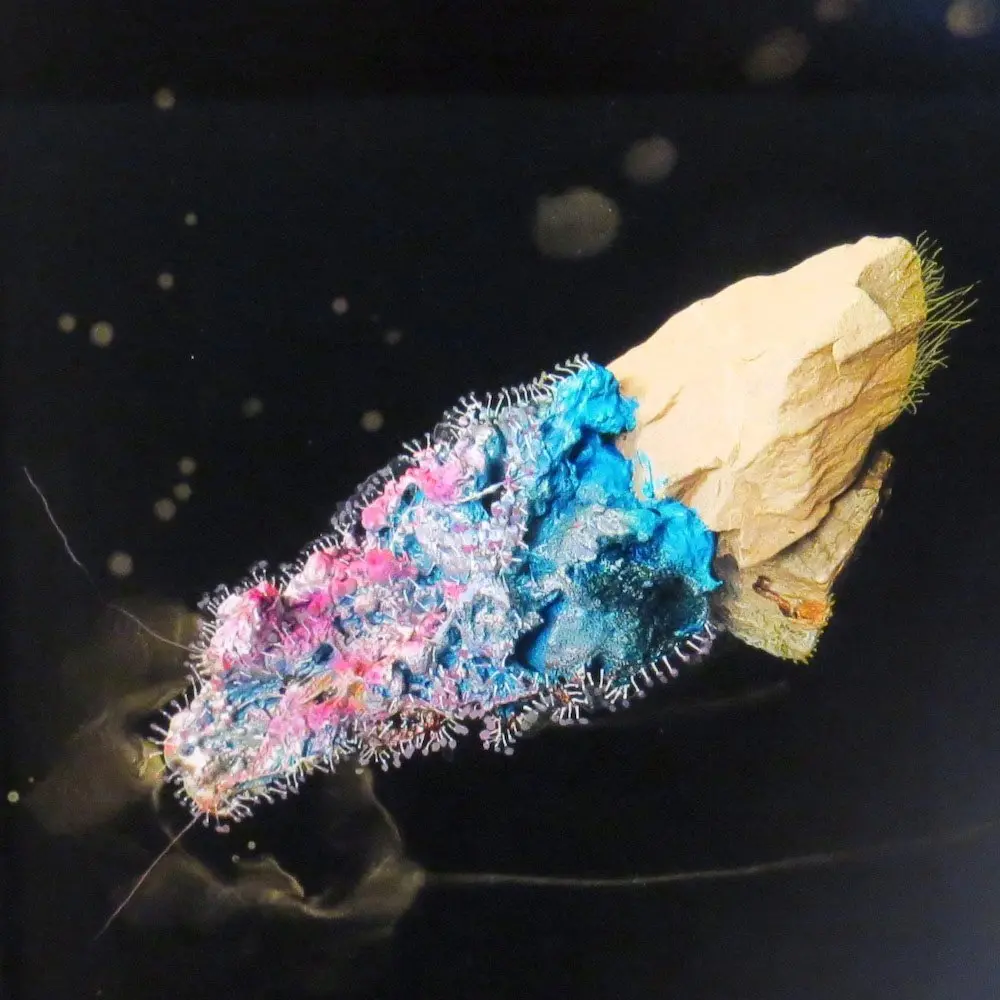
The majority of the exhibition is the work of Johanna Zellmer, who creates organic forms which reflect the scientific equipment which forms it medium — equipment usually used to analyse DNA.
Using molten glass DNA storage chambers, the artist has created "protean beings", amorphous crystalline creatures reminiscent of mutated protozoans and delicate necklace forms from the same materials.
The vitreous forms are filled with their own personalities, echoing the diversity of life.
As biopolitics and scientific advances lead us towards the risk of bespoke beings, the works force us to consider the vulnerability of what it means to be a human.
Alongside these works are a series of photographic pieces by Victoria Edwards and Ina Johann.
The two artists are known for their studies of being and non-being, creating narratives that often subvert the expected.
In the current exhibition, the two have created objects which they have "clothed" and decorated, giving them their own life.
These forms have then been photographed and the resulting prints have been hand-tinted.
The artists imbued the pieces — similar to microscopic organisms — with uniqueness and life.