


From small bronze heads to bigger than life-size plaster figures and abstract sculptures, photography, painting and books, nothing is off the table for Dunedin-based artist Nicole Page-Smith, Rebecca Fox discovers.
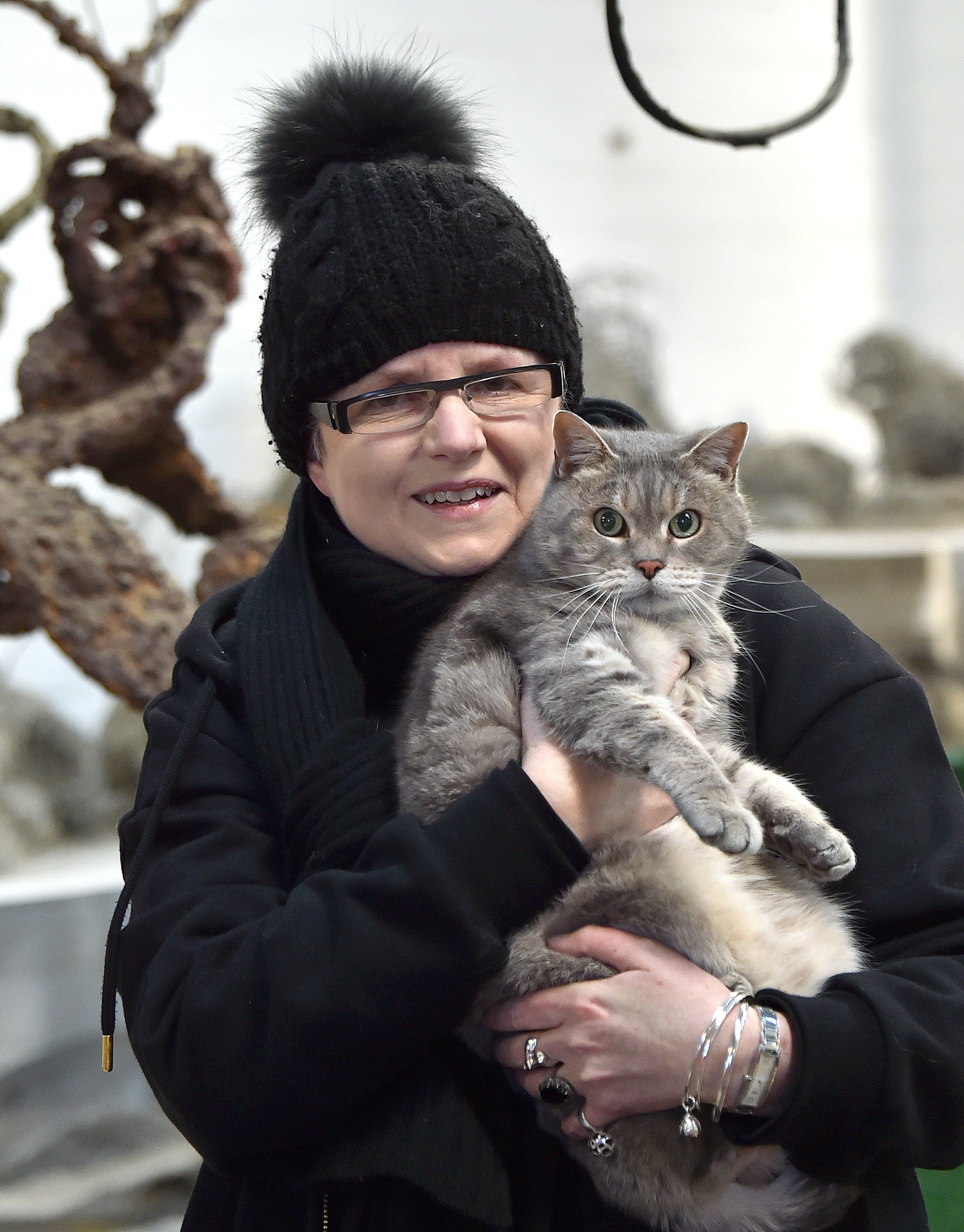
A grey tabby named Celeste winds his way around Nicole Page-Smith’s studio not at all perturbed by the sculptures filling every surface.
The cat keeps the artist company while she works and has the run of the studio, a former warehouse in Dunedin’s Bond St.
“We have tried Celeste at home but he prefers the studio.’’

The cat came into her life after Page-Smith walked past a pet shop on her way to the studio, looking at the kittens each time.
“I would fall in love with most of them until one day I could not resist any longer and purchased one.’’
He is credited with helping select her latest work currently installed on the Peter Nicholls sculpture plinth at Knox Church’s garden.
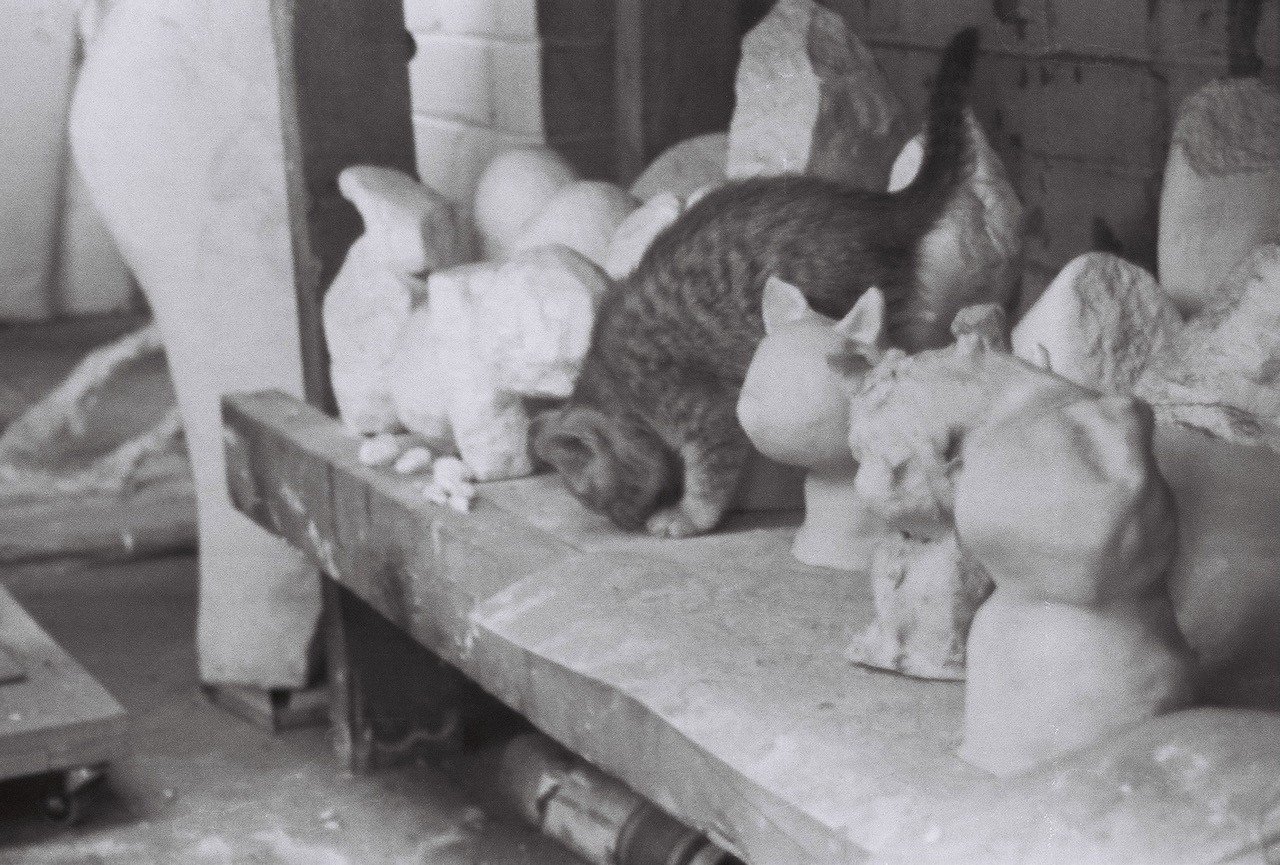
“Celeste started playing with the already constructed sculptures, from 2008, sitting on a shelf in the studio.’’
At the time Page-Smith had finished her book Heaven, (2022) which featured a series of photographs of Celeste.
“Celeste means heavenly or celestial in French, part of the sky. So, my little heavenly being stars in the Heaven book.’’
She had taken a whole roll of film on a 35mm camera when Celeste was a kitten.
“I loved the ‘motion blur’ of Celeste jumping around the studio where he fades away into out of focus. Celeste is a real sweetheart and takes the leading role, centre stage in the book, too.’’
The small clay “heads” Celeste had befriended fit the bill as they also continued the feline theme from the book.
“I decided, when I was wanting to do bronze, I’d just start with something that was sort of not really that even serious or important to me. Things have evolved out of one another.’’
“I guess it’s just its permanent nature and that you can have it outside.’’
The inspiration comes from Page-Smith’s overseas travels and the bronze sculptures that dot the gardens and squares of Europe.
“There’s probably examples of bronze [that have been around] for a couple of thousand years and it’s nice that it still exists.’’
A fan of the ancient sculptures and art to be seen in Paris, Italy and Germany, Page-Smith says a favourite discovery was a little museum of ancient Greek sculpture in Munich.
“We were going to Munich for the opera but there’s all these cute little museums around the world that are off the tourist track, you just have to dig them out.’’
She also likes to sculpt in stone, something else she has admired on her travels.
When she was living in Melbourne, she was gifted off-cuts of stone from a church renovation and then after moving to Dunedin she sourced Oamaru stone.
“That was fun, stone’s really lovely to work in. Sort of feels really ancient, and because it’s from the sediment of the sea, it’s got all the little crustaceans and shells embedded.’’
When it comes to materials there is very little Page-Smith has not tried. When a neighbour cut down a tree recently, she suggested leaving some unwanted pieces for her.
“So that’s another sort of thing I’m thinking about doing.”
It is not a new material for her. When she was an art student she would regularly dumpster dive in construction skips for materials left over from building renovations and scour the riverbank for driftwood.
“So I started using that for a while and then I used new wood and it’s gone on and on.’’
Examples of that journey are scattered through her studio, where a few narrow paths allow her to navigate through the work, both big and small, including large primary colour figurative forms.
“I made them in white plaster, they took about a year to dry, they sort of went green and weird colours. After a while they started to shed so I had to paint them and I painted them with gesso.’’
Some of the work made the journey with her from Melbourne. She had grown up in Geelong, picking up a crayon as soon as she was able, developing an interest in art early on thanks to her mother who was a potter.
She then moved to Melbourne to go to art school studying at RMIT (Royal Melbourne Institute of Technology) University, School of Art in 1988.
“When I went to art school, they told me that sculpture was fairly strong in my portfolio, so I tried sculpture. I haven’t really looked back, but I still did painting and drawing and printmaking and photography.’’
Page-Smith, who has exhibited in contemporary art venues such as MUMA (Monash University of Art) and Heide MoMA (Museum of Modern Art) in Melbourne, was in her 20s when she met Dunedin painter Jeffrey Harris in the city. They lived there for 10 years before making Dunedin their home in the early 2000s.
“He wanted to come home so it’s all his fault I’m here. But I don’t mind it here. It’s sort of quite a nice, quaint little city, and sort of like a mini Melbourne in some ways, because the buildings are all old, and you’ve still got some civilisation with cafes and restaurants.’’
She admits to not knowing who Robert Burns was before she came to the city and saw the Octagon statue of the Scottish writer.

In more recent years her sculpture work has been curtailed by problems with repetitive strain injury (RSI) so she turned to other creative practices.
“I stopped sculpting for about five years and just wrote. I almost gave it up, but I just couldn’t.’’
She found writing almost filled the creative urge. Heaven was a mix of essay and photographs.
“We were told when we were at art school to write about our work, but my writing about my work is sort of almost writing a poetic verse. It’s not really a critique.
“I’ve read lots of ancient Greek and stuff, so it’s apparently a continued tradition of Hellenism.’’
As she healed, sculpture came calling again.
“I suppose because I’d been physically making art for years and years and years, I just felt the need to go back and do some more. So I’m back again, I just have to pace myself.’’
Page-Smith also tried mixing sculpture with writing but found that did not work so instead does one or the other.
“I take time off, that’s really good for my hands, sometimes and write a book or something, and then I'll go back.’’
She has also picked up a paintbrush again, something she had not really done since her 20s, painting abstract forms similar to her sculptures and sometimes figurative things and flowers.
Pen and ink drawings that look similar to woodcuts is another practice she has returned to.
Having her most recent sculpture work In the blue sky of the wind on Nicholls plinth was significant to Page-Smith, who knew the artist.
“He was a great supporter of my work, and we did a show in the botanical gardens, way back, about 20 years ago. He was always terribly supportive, and I just thought it was a really nice idea, the plinth.’’
She is working towards her next exhibition at Gore’s Eastern Southland Art Gallery next year.


