

Double the trouble or twice as nice?
It is an easy answer for Blue Oyster Art Project Space director Piupiu Maya Turei who sees the space’s division into two distinct galleries as a way to support more contemporary artists and create more opportunities for audiences — twice is nice.
The change came as a result of feedback hui the gallery held in February which highlighted that people would like to see more shows.
It also came on the back of a long-term mission to be more responsive to the needs of artists and audiences.
‘‘I think it’s important for Oyster to have a level of fluidity when it comes to our programming of exhibitions and when it comes to how we interact with artists and audiences.’’

‘‘It’s a place for experimenting, it’s a place for dreaming and making those things possible.’’
To help achieve that, last year the gallery moved from a proposal-based structure for exhibitions where artists had a set period to put an exhibition proposal to the gallery to an expression of interest process open all the time.
‘‘So at any point, anyone can email us, or come arrange to make a meeting with us, to show us their work and talk about their practice.’’
This was designed to alleviate the administration work artists do as a proposal is unpaid work which can take artists anywhere from a day to three weeks to do.
‘‘It’s quite an undertaking. Whereas the expression of interest should only take a couple of hours. So we changed that process to make it easier for people to approach us, to lower the barrier considerably.’’
This has resulted in Turei receiving anywhere from five to 10 expressions of interest every month.
‘‘I’m not so interested in artists saying I’ve made these works. What do you think? I’m interested in them saying, this is my practice. This is what I’ve made in the past and this is what I like to make work about.’’

‘‘I feel like it allowed for more creative freedom to develop my concepts as the project took shape.’’
So in May the gallery opened its new gallery spaces. The front gallery known as Oyster and the rear gallery named Pearl.
‘‘It was a lot about just kind of opening up opportunities for people to exhibit with us. And thinking through how it’s actually really nice to be able to go into a gallery and see multiple shows at once.’’
This has enabled Blue Oyster to support nearly double the number of artists this year, than previous years.
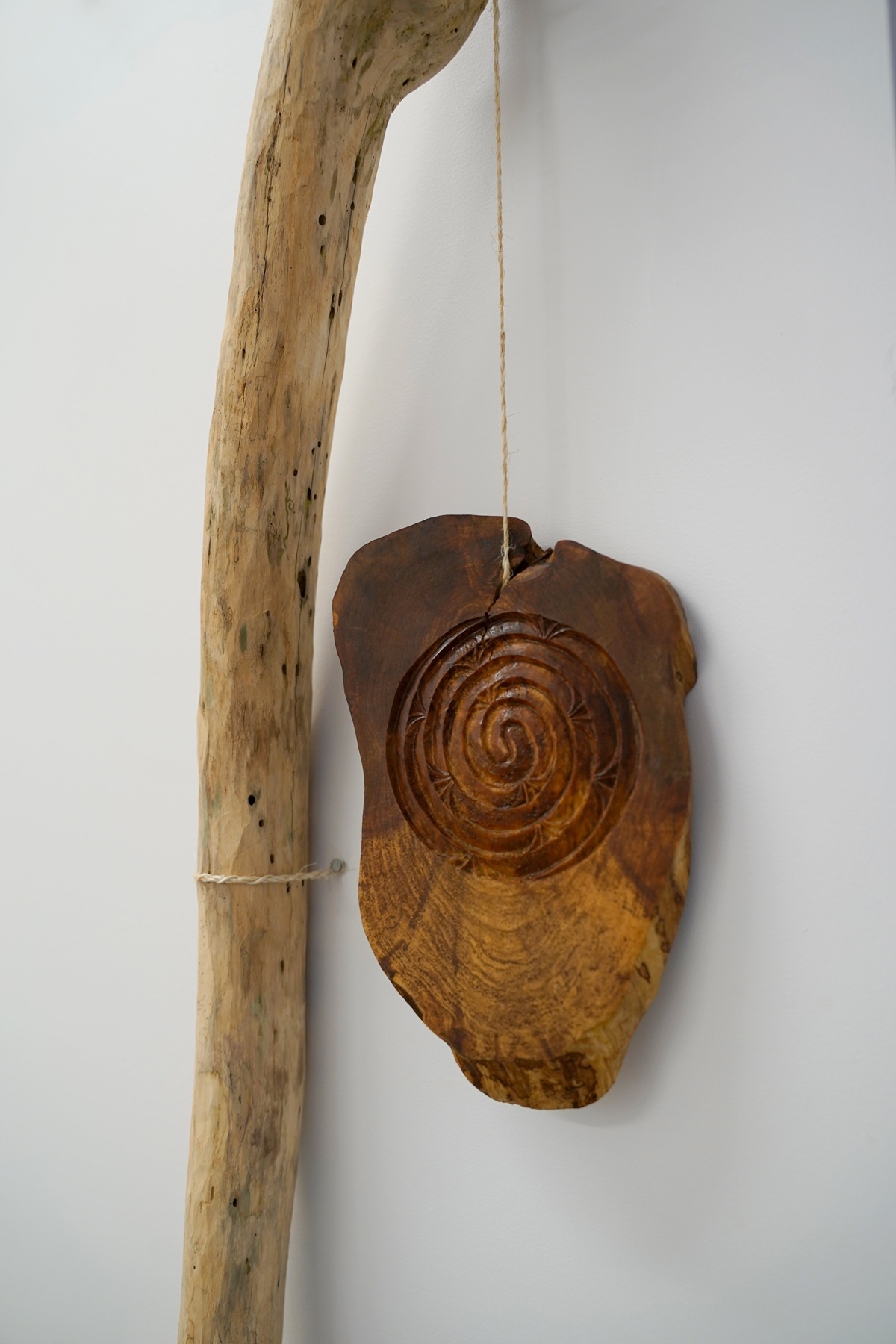
The first exhibitions were Korean-born New Zealand artist Sena Park, who works across painting, mixed media and installation, in Oyster and Pakaua, who focuses on whakairo (carving) and playing with whenua pigments from around the motu, in Pearl.
‘‘Sena and Hineaorangi’s shows are very different. They’re different in form, they’re different in content, and they’re at very different stages of their careers as well.’’
Park, who completed an master in fine arts from Elam in 2015 and is based between Pahia and Tāmaki Makaurau, has recently received the Bundanon Residency in Australia while Tūhono is Pakaua’s first solo exhibition.
‘‘So it’s kind of about providing a more diverse experience for audiences, more opportunities for artists, and also allowing different artists to come together and have conversations.’’
Park says she found unexpected similarities in her own and Pakaua’s ideas and approaches to making work.
‘‘Although our practices are visually and culturally very different, both of us are deeply connected to personal histories and ideas of connection within our work. To be honest, when I am considered for collaborative exhibitions, I am often positioned within an Asian or migrant context. For that reason, I thought it is very rare opportunity.’’
While both were busy with installing their own projects, Park says she felt a strong sense of emotional support from Pakaua’s presence.
‘‘Working alongside another artist — especially as a non-resident artist working together with a local artist — made me feel far more comfortable throughout the process.’’
Pakaua agrees as she found the working side by side in a space felt very familiar to her.
‘‘I have spent a lot of time in wānanga spaces over the last few years, so the closeness was natural and welcoming.’’
She also saw the parallels between their work and enjoyed working alongside Park.
‘‘There are some really strong parallels to be drawn in the way we build a vibe and approach a concept.’’
Blue Oyster hopes to replicate this experience with exhibitions by more established artist Noanoa Von Bassewitz and first-time exhibitor Moby Matshana in August.
‘‘We’re all together in this space, kind of building relationships with each other and talking about art and this kind of thing. And again, Sena and Hineaorangi shows are very different, but there’s some really beautiful connective fibre that brings the two together. And that’s quite fun.’’
Turei, who is also an artist, sees the changes as also providing an important opportunity for people to experience contemporary art in what is an increasingly troubled world.
‘‘It’s my personal opinion that contemporary art can be a really beautiful salve for a lot of the things, the kind of mental strain that we’re dealing with, and also can offer us lots of different solutions to the problems that we’re facing in the world.’’
‘‘What she’s done is created an exhibition, an installation, where you can be on your own and find connection. You can sit in the shelter and look at the work and know there’s other people in the space but not have to interact with them. Being alone together is kind of a phrase that she’s used.’’
Whereas Pakaua’s Tūhono is about whakapapa and connections people have to themselves and their place they live in.
‘‘Connection to our histories, like our shared histories and our personal histories as well. And so we have these two exhibitions that are quite different in content and form but are both providing these kind of open pathways for navigating the world as it is.
‘‘And that’s what I believe the importance and power of contemporary art is.’’
The next two shows Te Ikahoungata and Various Artists and Ilish Thomas are about the future and dreaming.
‘‘It’s hard to think past tomorrow but both of them are about thinking in five years, in 10 years, in 100 years, what could the world look like? What do we want the world to look like as well? And then what do we need to do now to make those steps?
‘‘Which is a great way to kind of alleviate some of the terrifying, kind of paralysing feelings of what’s happening in the world.’’
Turei says the aim is to provide as many pathways as possible for visitors and artists to be able to explore the ideas they are presenting.
‘‘We invite everyone to come in and think about the ideas. You don’t have to agree. You don’t have to like the work.’’
While the gallery has run two exhibition spaces before, it is the first time it has proposed to run two spaces for a year. How long it continues depends on funding.
‘‘We work quite hard to get all the funding to make sure that we can remain non-commercial. It just gives people a bit of leeway to do things that they otherwise wouldn’t necessarily do.’’
The small scale of the gallery also means artists are able to try out things to see if they work.
‘‘That’s a real privilege to be able to hold space for them to do that.’’
While it has increased work for staff, Turei says it is doable with tight processes to make it manageable.
‘‘It’s definitely worth the extra work, I think. It’s a fun way to do exhibition making.’’
The gallery is also encouraging visitors to sit and read a book related to the exhibitions if they would like.
‘‘It’s nice and it’s warm and it’s calm. That’s also part of the function of the space. It’s a contemporary art gallery, but we’re also a community space.’’
TO SEE
Blue Oyster Art Project Space
• ‘‘Tūhono’’ by Hineaorangi Pakaua and ‘‘When the shelter is needed ... ’’ by Sena Park until June 6
• Te Ikahoungata and various artists and Ilish Thomas June 20-August 1


