


Whether it was her phone to write a poem late at night as feelings threatened to overwhelm or to take an image while wandering around her burnt house waiting for the builder or crocheting while sitting with the children watching television.
For Wardell those small moments, grabbed whenever they presented themselves, helped her cope as she dealt with the aftermath of the fire that ripped through her family’s 1914 villa in St Leonards, which they had lived in for five years, describing it as their "forever home".
"There's a lot of experiences that are so unprecedented and you don't have words for them and there's no pathway or strategy as to how to feel or how to process any of it.
"So, I think, really early on, I had a strong impulse to make art. And there wasn't a lot of time for that, amidst everything, at all."
Taking photographs for insurance purposes became slightly less painful when she looked through the lens in a different way.
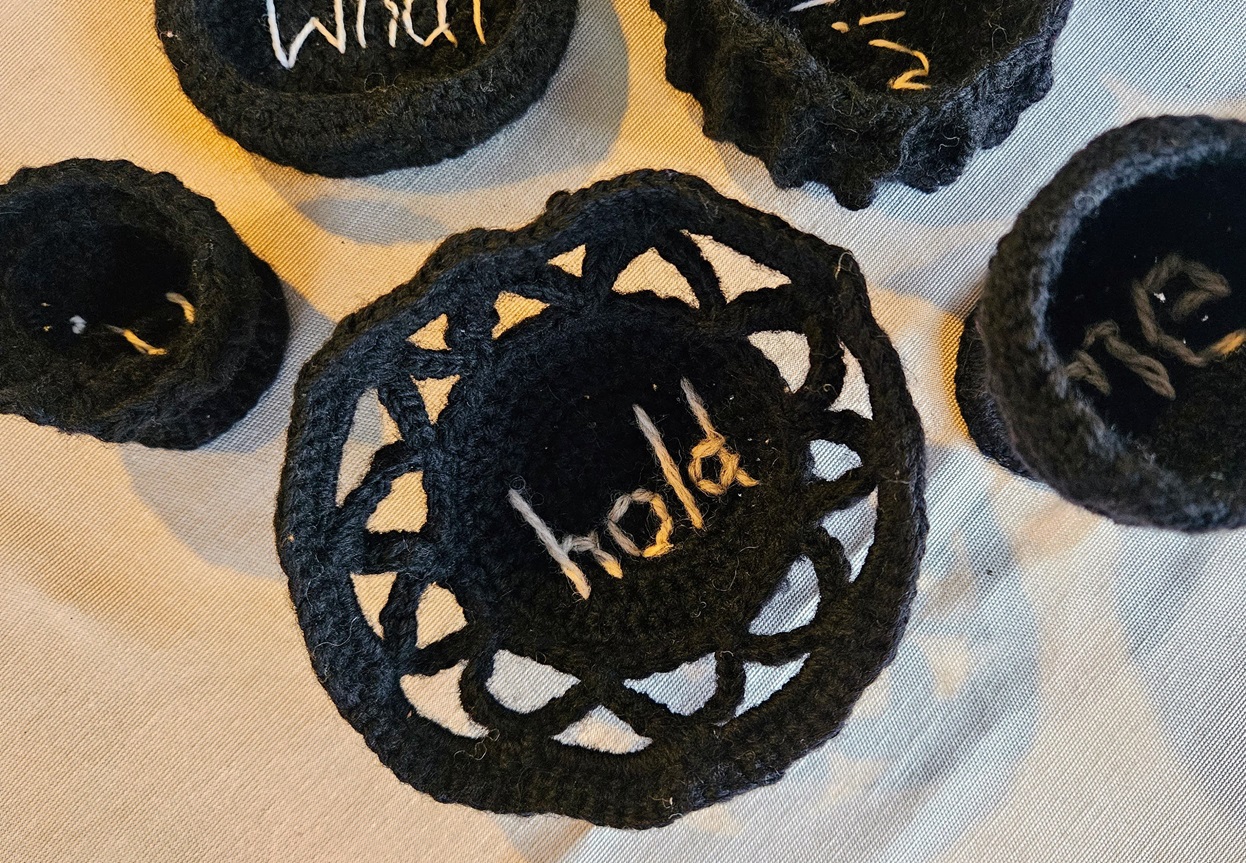
"The rhythmic nature of the crochet was soothing as she created blankets for her family.
"I guess I was just kind of reaching for whatever tools or language I had in different forms to kind of process the experience for myself. I certainly found it quite healing and cathartic myself. "
At the time the creations were just that, a way to process, but along the way she started to think about sharing it more widely with the community, deciding to hold an exhibition "The Afterlands" during the Dunedin Fringe Festival.
"And that's the thing when you are vulnerable in that kind of way after a fire, it's not a good feeling to be vulnerable.
"But it is a lovely feeling to be held and cared for in that. So, a lot of people donated things to us or reached out to see what they could do."
Part of the exhibition is a series of postcards printed with poems she has written which are addressed to different people who cared for the family after the fire, such as the builder who threw the ruined contents of their home into a skip.
"I don't think I could have done that with my own hands, one-by-one kid stuff and the toys.
"I wasn't there on the day that he did that, but am kind of grateful to him as this semi-stranger who was going through these quite intimate things in our lives. He must have had a sense of us as a family.
"So some of the exhibition is that kind of gratitude and it's not all doom and gloom."
Another way she will show that gratitude to people who have given them a lot is by giving away a little piece of art to each person who comes to the exhibition.
She has also realised through the experience that people are curious about the extremes of other people’s experiences.
"It’s been hard to explain or describe much of what it has been like, so part of it is a way I can open up a little window into that and let people walk around for half an hour and get inside my own internal world in some way."
There have been times when Wardell has genuinely felt all right, realising her husband and two children are safe and the house can be rebuilt, but then there are times when it "feels so bad".
"I don’t know why, that’s where the writing is helpful because sometimes you can work towards just explaining to yourself what is going on.
Wardell describes the exhibition as small, informal and a collection of the different forms of art she has created since the fire.
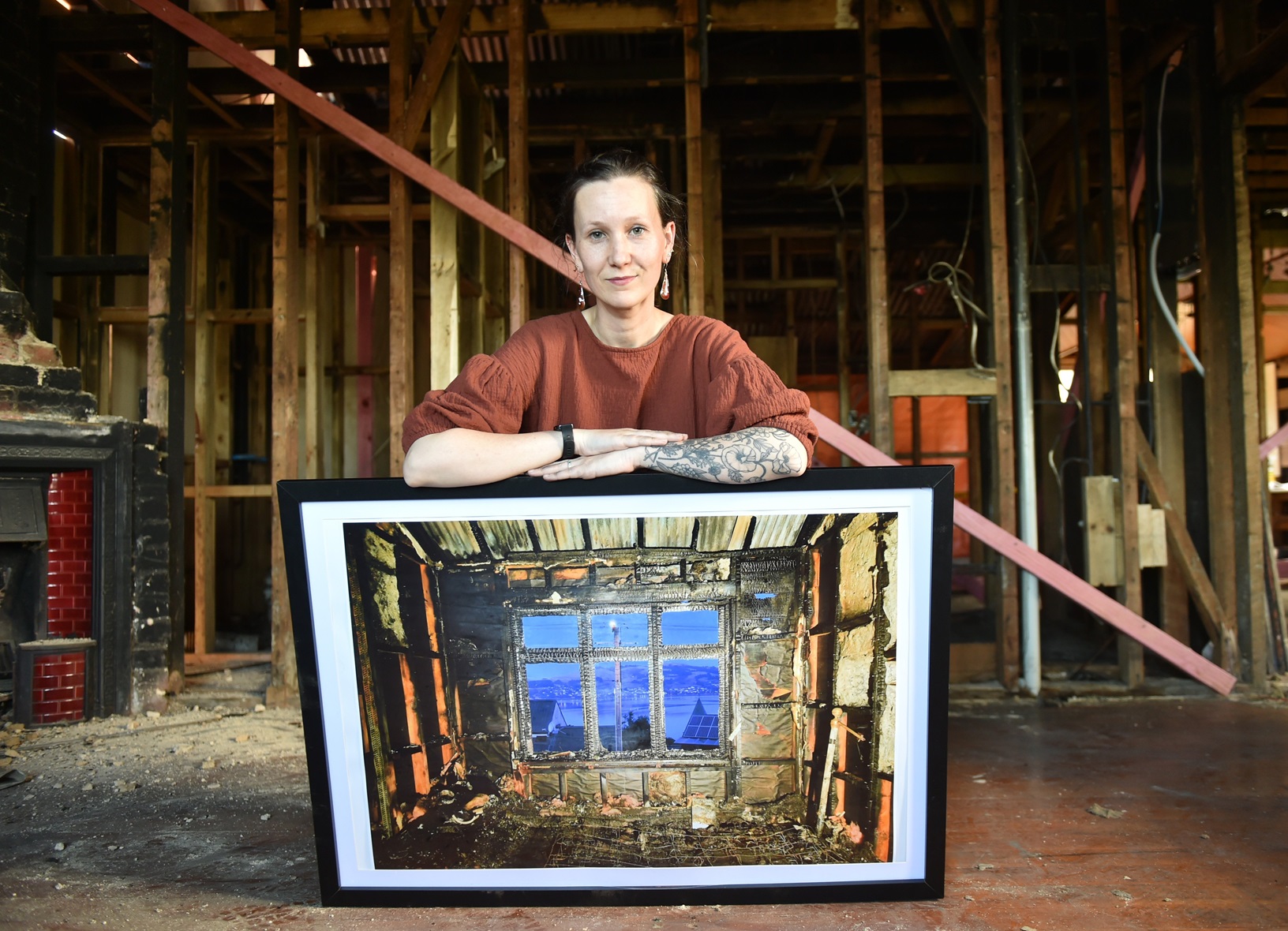
"There's kind of the idea that the fire is a collaborator on the exhibition because it changed and transformed the home. So it's this collaboration between me and the fire, of what you see.
"The fire also created the colour and texture there on top of what I had created as my home and then I'm re-creating it again as a photo."
Wardell, a senior lecturer in the University of Otago’s anthropology department, is a creative writer who has won a variety of national and international awards for poetry, flash fiction and essay.
That is her "comfortable identity" but she has been working with visual art and installations for a while so she found a way to combine both in this exhibition.
"I like moving between different genres and the Fringe is a great place for that."
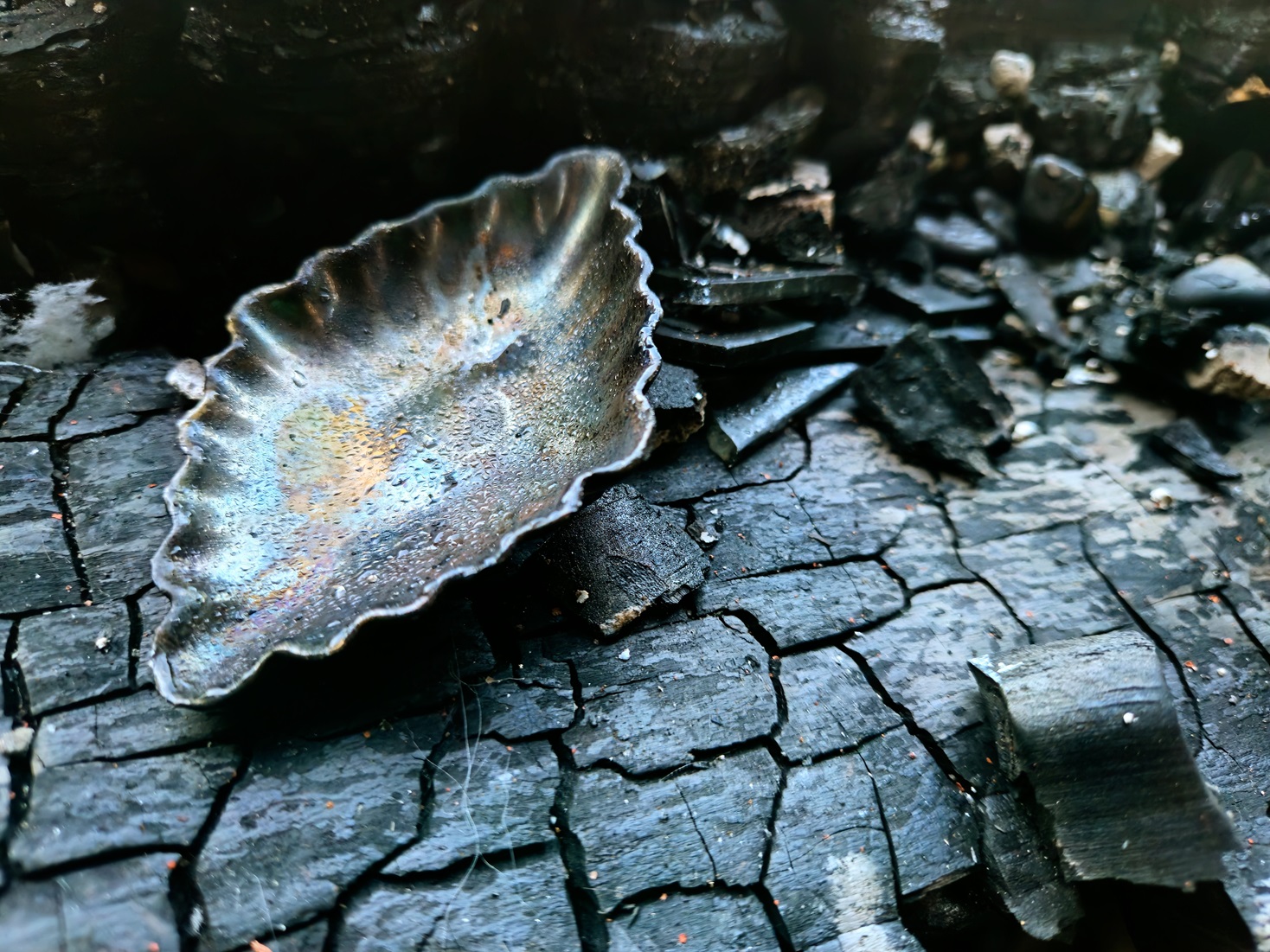
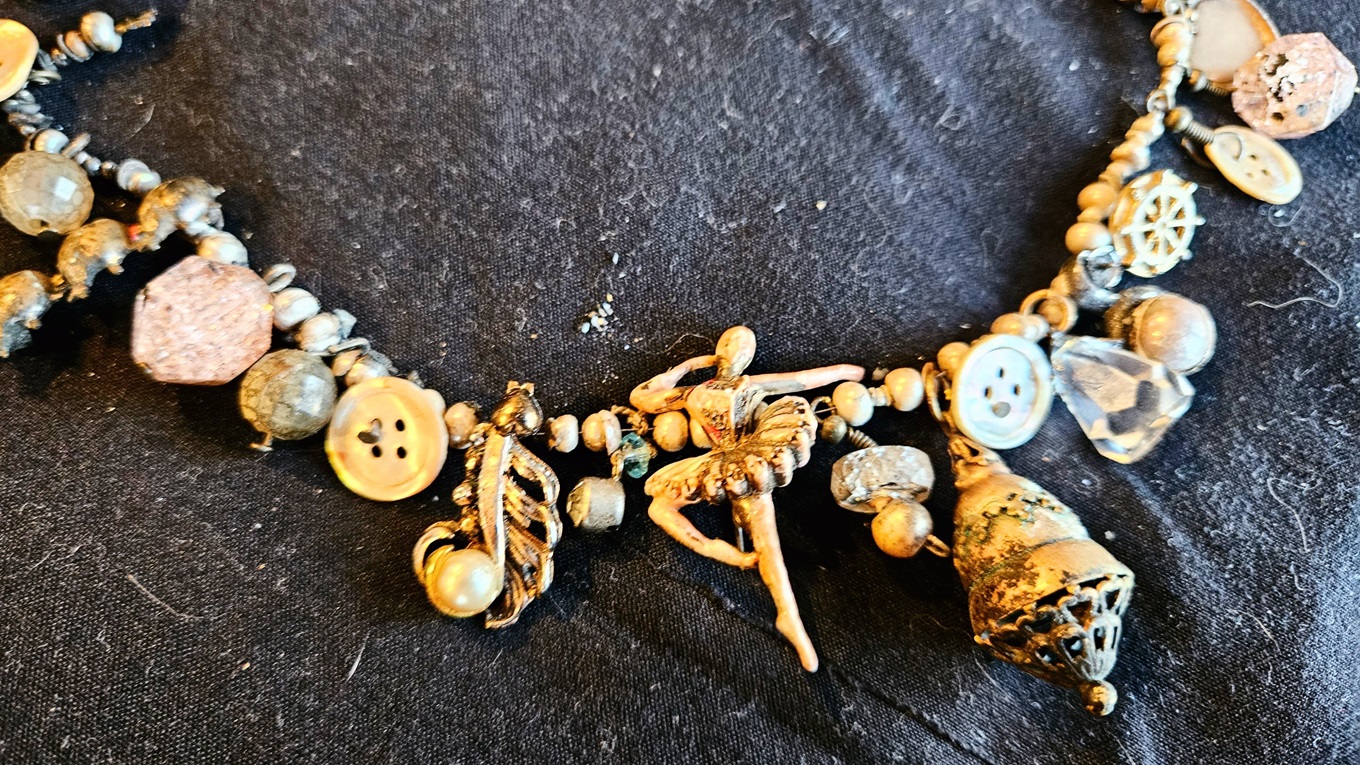
As well as the photography, crochet and textiles, she has also made sculpture using things she has salvaged from the fire such as a hunk of metal — the melted remains of her bed frame.
"That was where the fire was hottest. So this blob of silver metal, it’s kind of an intimate thing, that's my bed with my husband. I spend a lot of time in bed, sometimes writing on my laptop. But it's an interesting sculptural item, so I used resin, and it's a sculptural piece too."
"It’s not a tidy process. It’s an experiment and I really wanted that. It's maybe also a kind of point of closure for me, too, of gathering up the different parts of what I've got and the experience, putting it all in one room and here's kind of the body of work and that experience."
Admittedly the process is far from over. The family is still not back in the house which is undergoing an extensive rebuild agreed to by the insurer.
They never considered not going back, believing "that’s our home for better or worse".
They are making a few "tweaks" to the interior of the house and a positive is the insulation that is being installed.
"Once we do get back, I anticipate that'll be a strange adjustment, too. And, like, my kids are processing emotionally in their own ways. I don't know what it'll be like for them to go back at the moment.
"They kind of don't want to even set foot on the property, which is hard and sad."
It is one reason she has called the exhibition "The Afterlands".
"There's layers of things to process, even going back into the nice new house, about what it was and what was kind of lost in the way. And even though we're really excited about having our home back in a new form. But I think, like any forms of grief, it takes longer than people think."
While she has been hesitant to use the word grief in relation to the experience as she does not want to compare it to the loss of a person — they were lucky no-one was home when the fire broke out — but has found grief the closest word to describe the letting go and adjustment to a "world that feels different".
"It's going to take time."
The exhibition also asks questions about what is it people anchor to in life, what makes a house a home.
"Like, it was these layers over those five years of, like, painting of the wall or arranging the furniture, these little acts of love and care we put in that, like, that, in a sense, that can be lost, but also it can't, because I can do that again."
When the exhibition is over Wardell is not sure what the future of the photos will be.
"They’re not things I necessarily want to think about and remember in a way.
"I’m not going to hang them on my wall but it’s a record.
"It happened. It’s part of our story and our life."
TO SEE
"Into the Afterlands", March 14-21, 63 Hanover St, Dunedin


