
PHOTO
Director: Emerald Fennell
Cast: Margot Robbie, Jacob Elordi, Hong Chau, Shazad Latif, Alison Oliver, Martin Clunes
Rating: (M) ★★
By THOMAS GREEN
Your opinion on the latest adaptation of Emily Bronte’s novel Wuthering Heights (Margot Robbie prefers the term "interpretation" actually) will depend on how willing you are to accept director Emerald Fennell completely drenching the original material in her sensual fantasies, while hypocritically wringing out enough moisture to avoid its drenched state substituting as an artistic statement in of itself. In other words, this decidedly lustful interpretation of Wuthering Heights’ simply isn’t tantalisingly scandalous enough to justify its abject departure from the source material.
Set in the late 1700s, the narrative, like the novel, follows the intertwining relationship of young Catherine Earnshaw (Margot Robbie), and her family’s adopted uneducated stoic servant Heathcliff (Jacob Elordi). Close as children, the two go separate directions as they mature into young adults. As Catherine marries into the wealthy neighbouring Linton family, Heathcliff, despondent, leaves for parts unknown. But years later, he returns to the gusty plains of Wuthering Heights a far more prosperous man. From there, Catherine and Heathcliff’s repressed love for one another reaches a boiling point as the two begin an illicit and twisted affair, that is, of course, doomed to end in tragedy one way or another.
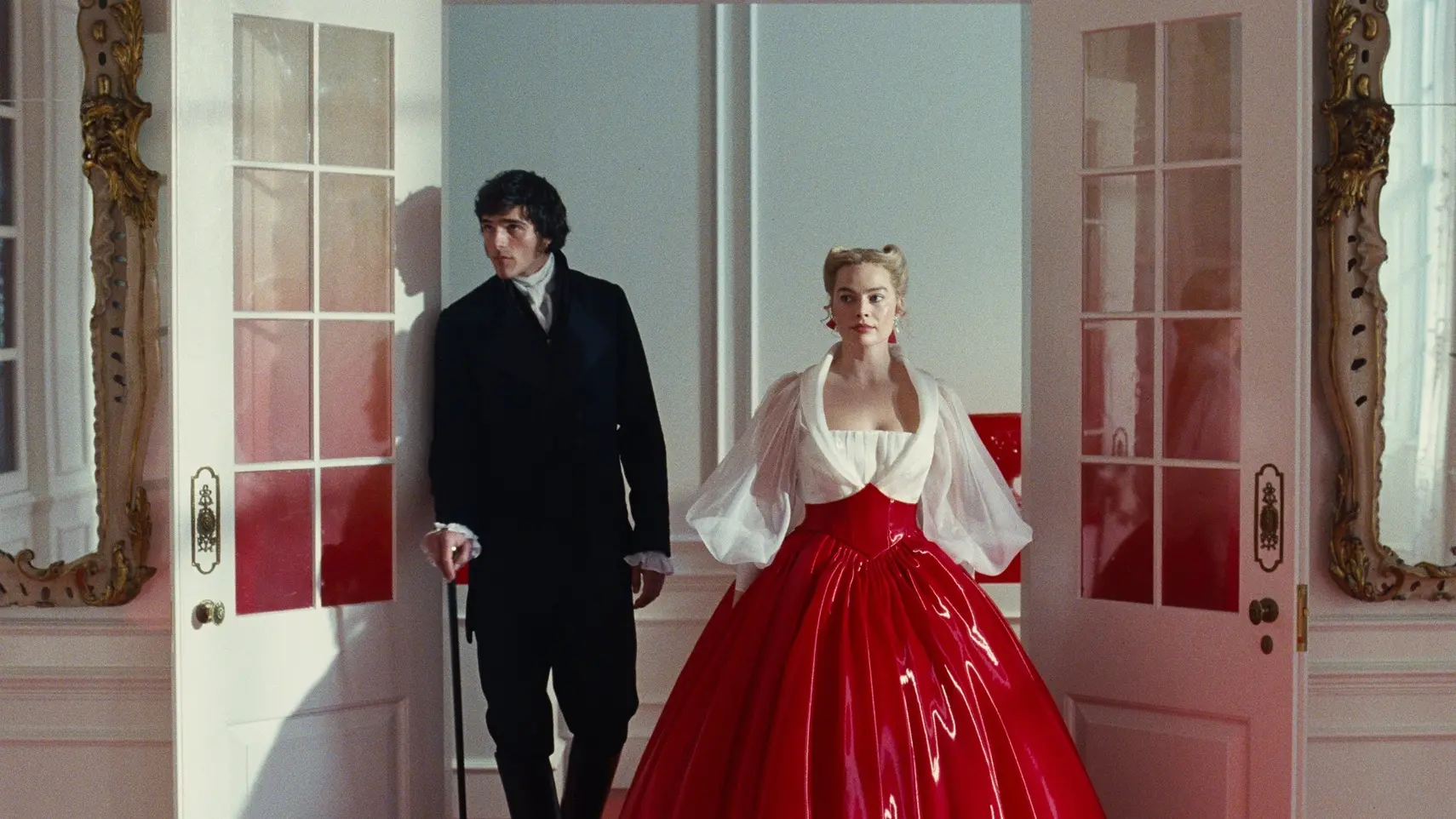
If you were to differentiate this "interpretation" of Wuthering Heights from other past attempts, Fennell’s take may be best described as a postmodern cavalcade of anachronistic oddities that don’t quite gel. Beautiful vibrant sunsets and endless misty fields, punctuated by looming dour structures, bring to mind those glorious old Hollywood romances, but autotuned contemporary pop songs by Charli XCX abruptly puncture the grandiosity. Meanwhile, Robbie’s performance is shockingly subpar, playing Catherine like an amateur actress who wandered straight off the set of a young adult melodrama for streaming services, appalling British accent and all. Her incongruous pairing with the comparatively composed and soft-spoken Elordi, who towers over everyone else (literally and figuratively) makes for an uneven dynamic at best, and incredibly distracting at worst. But as alluded to earlier, it is the cinematography, shot by Linus Sandgren, where Wuthering Heights finally arouses interest. Lingering on titillating extreme close-ups of moist textures, from slimy snail trails to the silky fluids of cracked egg yolks, the libidinal imagery is certainly evocative, but that’s where Fennell’s flirtatious strengths start and end. She doesn’t have the courage to follow through on anything beyond vanilla eroticism, keeping Wuthering Heights a shockingly tame experience, even with her trademark attempts at (ineffectively) provoking audiences through a nasty third-act turn.
Overall, Fennell’s Wuthering Heights doesn’t honour the novel’s lasting legacy as a seminal work of tragic fiction. It’d be better to describe this as background noise for a date night, one that’d arguably function better if watched on mute. There’s a litany of recent excellent erotic dramas out there (Queer and Love Lies Bleeding among them), but as for Fennell’s Wuthering Heights?, I’d advise abstinence.