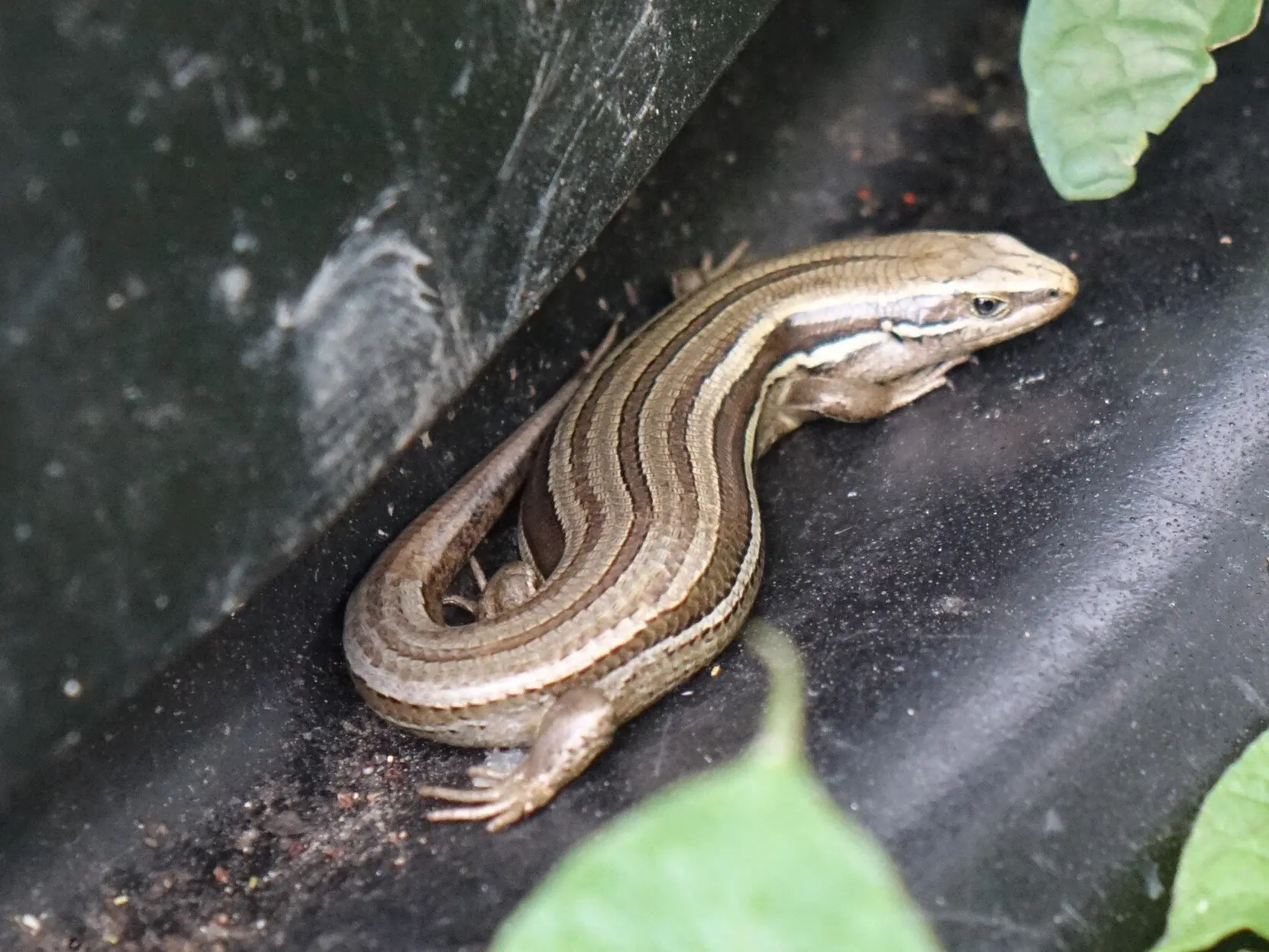
An iNaturalist observation of a New Zealand grass skink (Oligosoma polychroma) John Barkla saw basking on the lid of his compost bin. PHOTO: JOHN BARKLAThe urban garden is a rich source of wildlife once you know what you are looking at, writes Maureen Howard.
Earlier this month I watched a kārearea New Zealand falcon on my neighbour’s roof in Liberton. Satiated from a feed of feral or domestic pigeon, it was an awe-inspiring example of an endemic species in a novel role as an urban predator. Fortunately I had my phone handy so I could upload my grainy observation to the citizen science platform iNaturalist.
Nature is everywhere, including cities, so it’s exciting Dunedin has been formally entered in the annual four-day global City Nature Challenge (CNC), the purpose of which is to record urban biodiversity and encourage people in cities to connect with nature.
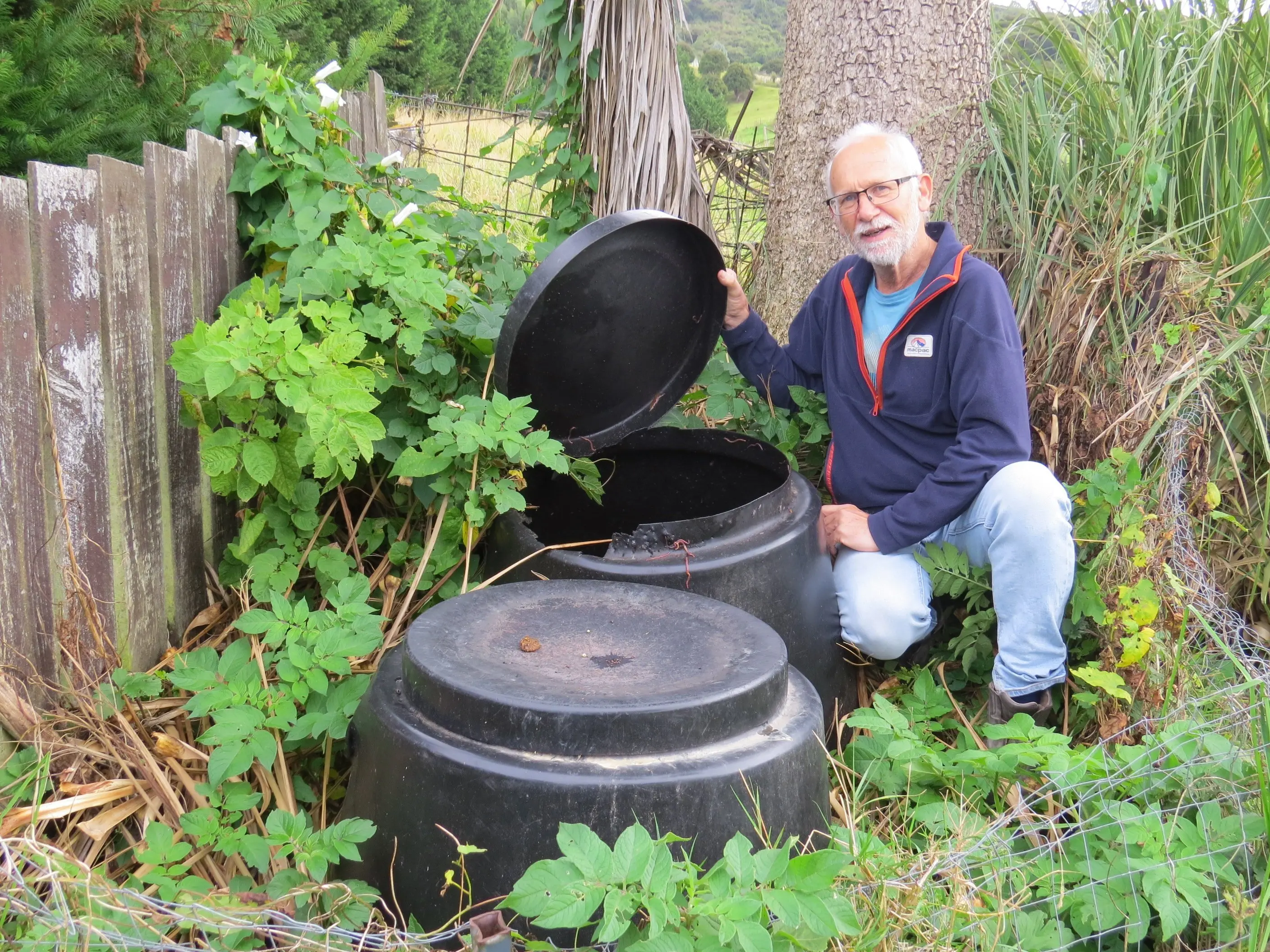
Botanist John Barkla by his compost bin. PHOTO: MAUREEN HOWARD
The CNC follows on the heels of the Wild Dunedin Festival that starts today and runs until April 19. Wild Dunedin’s programme director, Lesley Smith, entered Dunedin in the CNC and says more than 1000 other cities have registered interest globally, including our neighbour city, Christchurch. The CNC is open to everyone to participate and is an easy way to learn about the wild organisms you see as well as contribute to science. To participate, all you need is the iNaturalist app on your phone.
One of the reviewers who might identify some of your uploaded entries is botanist John Barkla. John has been involved with iNaturalist since its inception 18 years ago: to date, he has uploaded 32,220 of his own observations and helped identify a further 117,813 observations made by others.
Barkla says the garden is an excellent place to use iNaturalist, in part because it is close to hand and can be made a regular part of life. In addition to what Barkla has planted in his tidy garden, his iNaturalist profile shows he’s made close to 800 observations of 252 wild species there over the years.
A nature friendly garden contains a wide variety of mini-ecosystems that change over time. Perhaps you have an awkward corner where the grass is growing long, a steep bank of exposed clay, a stack of unused bricks collecting cobwebs or a slowly decaying tree stump.
Wild Dunedin’s programme director, Lesley Smith, adding to her garden’s iNaturalist list. PHOTO: SUPPLIED
Nature is quick to occupy most niches and each mini-ecosystem will have its own diverse group of species that change as the ecosystem changes. Compost heaps are a great example, Barkla says. His compost bin has been visited by many different species including endemic flatworms, glass snails, a ship rat and a skink earlier this year.
“It’s gone through a whole transformation and at each stage of that transformation there’s a whole range of different biodiversity present.”
As well as providing us with a peer reviewed identification of the organism we’ve seen, iNaturalist has many user-friendly features, such as instant identification suggestions, species life lists and communicating with other contributors. Being part of iNaturalist has expanded Barkla’s knowledge and helped him to forge new friendships, he says.
“It’s a really nice environment to be learning in.”
After visiting Barkla and seeing the impressive list of species he has found in his garden, I’ve begun making my own garden list in earnest. Not that I’m competitive ... Certainly, in addition to attending Wild Dunedin events, I’ll be busy during the City Nature Challenge at the end of this month. Fingers crossed, the kārearea returns.
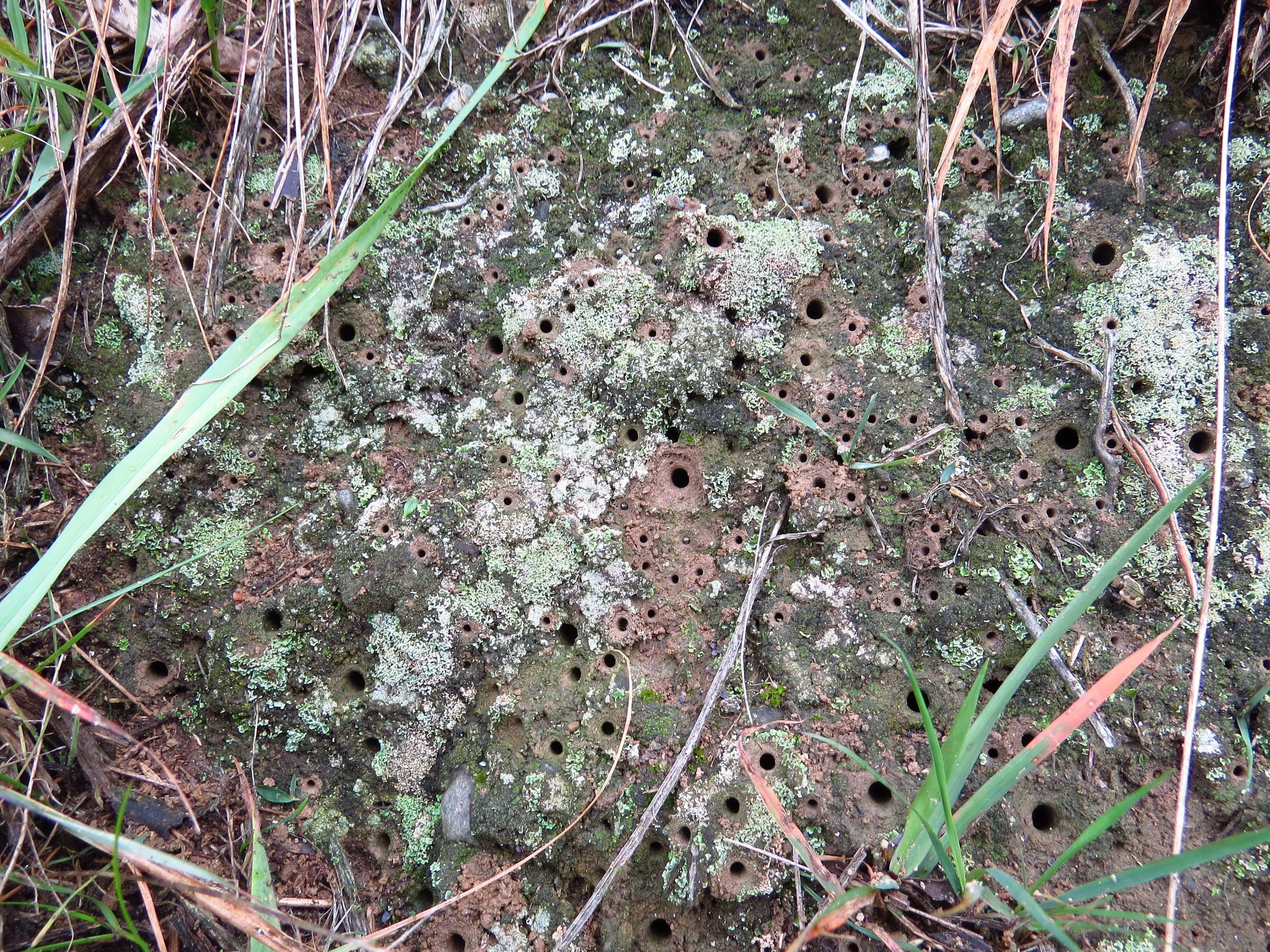
Clay banks make excellent homes for burrowing invertebrates such as native bees. PHOTO: MAUREEN HOWARDHelp organism ID
In addition to taking a photo of the whole organism, a second photo or two is useful to indicate its size and any species-relevant characteristics. For example, photograph:
Ferns: Spores (sporangia) on the back of the leaves.
Fungi: Underside of the mushroom cup as well as nearby trees.
Trees and shrubs: Leaves, bark and stems: flowers or seeds if present.
Insects and other invertebrates: Many phone cameras have a macro function. A camera with a zoom function will allow you to stand back and zoom in on resting flies without disturbing them.
Birds: Ideally record with a fast autofocus and zoom lens. You can also upload photographic evidence of an organism such as faeces, a nest or eggshells, as well as audio recordings.
Note: iNaturalist is primarily for recording wild or uncultivated organisms. If you want to upload a cultivated organism, click the ‘‘Cultivated’’ box.
This decaying European silver birch tree stump in Dalmore Reserve is host to more than seven native plant species. PHOTO: MAUREEN HOWARDHow to participate in the City Nature Challenge (April 24-27)
Upload the New Zealand version of the iNaturalist app (www.iNaturalist.nz) to create your profile and get started. The website has information on how to make good observations.
To be included in the bioblitz, recordings need to be taken between midnight on April 24 and 11.59pm on April 27.
If you would like to join others, the Wild Dunedin website has a list of bioblitz activities around the city on their website at www.wilddunedin.nz/cnc
Dr Maureen Howard is the senior education co-ordinator with Town Belt Kaitiaki, and the creator and host of the podcast series Rewilding in Action, with Otago Access Radio.