

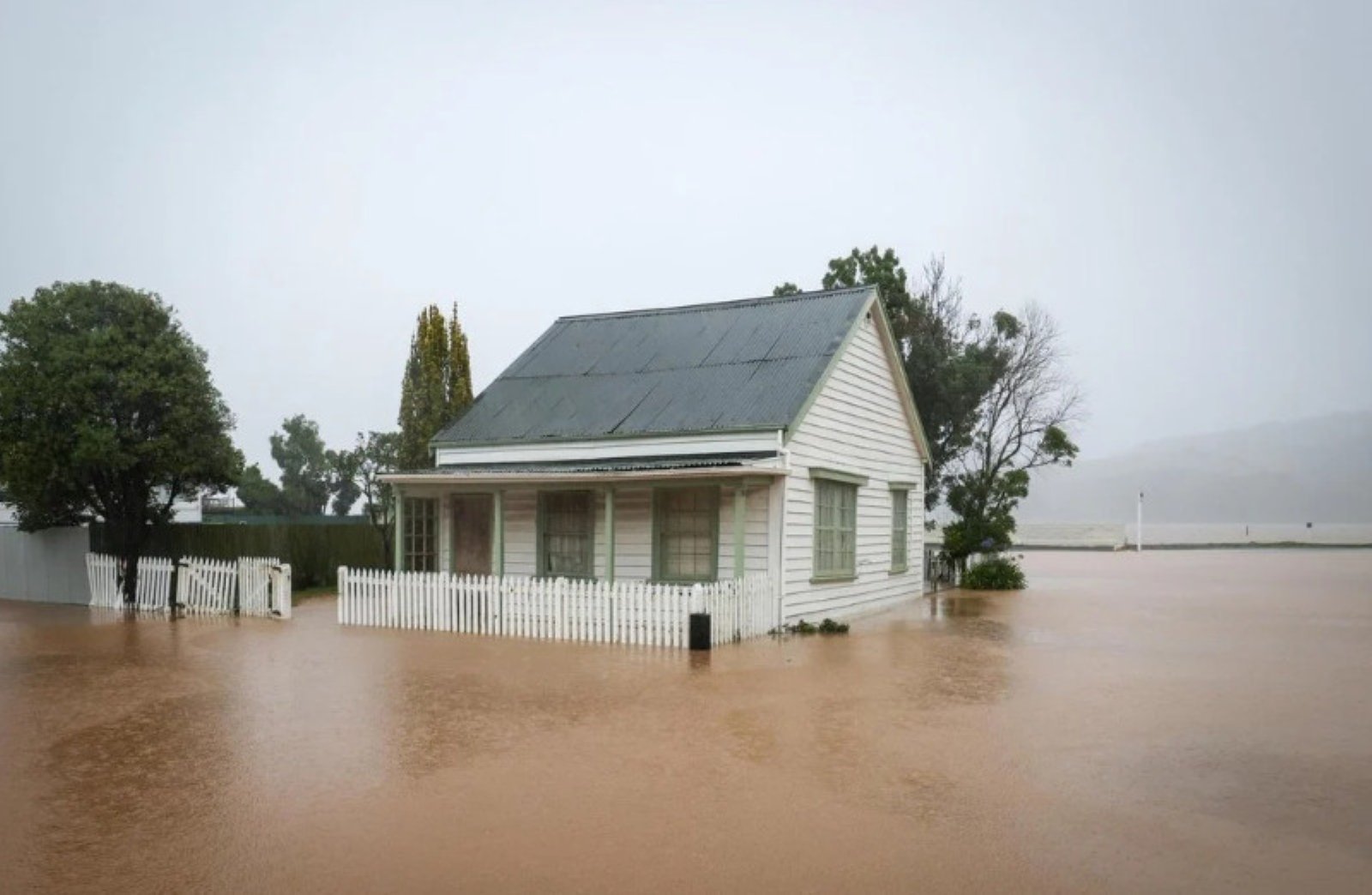

The Minister for Emergency Management recently admitted that we are in a "perpetual cycle of response and recovery" due to the extreme weather. More than "25 local states of emergency have been declared over the past two years" and yet the Government is seeking to burn more fossil fuels and has cancelled a $6 billion resilience investment.
Insurance companies, by contrast, are clearer eyed about the climate crisis. AA Insurance has stopped new insurance policies in Westport because of flood risk. Meanwhile, what was happening quietly in Ōtepoti Dunedin is now out in the open too with Taieri homeowners refused insurance because of flood risk. The Infrastructure Commission warns that "Residential insurance premiums — which more than tripled in inflation-adjusted terms between 2010 and 2025 — may become prohibitively expensive or even unavailable" and indeed in some areas they are unavailable.
Fortunately, there has been some sensible local leadership on adapting to climate impacts and one of the stand-out examples is the South Dunedin Future programme, jointly funded by the Otago Regional Council and the Dunedin City Council. As I’ve travelled around the country, meeting folk involved in helping communities adapt, I have heard repeatedly that the lessons learnt in Ōtepoti Dunedin are being used everywhere from the Far North, to Tauranga, to Nelson and Westport.
There will always be those who refuse to acknowledge climate impacts even as the water rises around them, but this local leadership is empowering communities to take charge, to engage and to work together on solutions. It won’t be simple or easy. Complex solutions rarely are. But the last thing we can afford is indifference and climate denial.
We may have a Government enamoured of fossil fuels and refusing to acknowledge the latest climate science but the insurance industry is already acting to protect itself by refusing to gamble on what is a sure thing: future costly flooding and extreme weather. It is far better now to face the reality and be designing for climate safe communities that are resilient, with low or minimal-emission transport options, healthy housing, local food and energy systems to ensure wellbeing.
Rural Southland and South Otago communities were hit last October with extreme winds (you guessed it — winds made more extreme by global heating) which caused widespread damage and led to thousands of power outages that took weeks to sort out. I was very pleased when I attended the Southern Fieldays last week to learn that the demand for farm electrification is strong. Static batteries and solar arrays provide power when the network fails, and can provide greater grid resilience the rest of the time. The increase in distributed energy systems will help navigate the more extreme weather events and with real local area energy planning they can bring council, iwi, communities, farms and households together.
The thing about adapting to our climate challenged future is that while we are all exposed to more risk, what risk we are exposed to will differ from place to place. It may be flooding, it may be slips, it may be extreme wind, it may be forest fire. In a worst case scenario it may be all of the above. Rising greenhouse gas emissions have resulted in climate instability. Warmer global temperatures mean the atmosphere holds more water; Antarctic ice melting affects the global conveyer belt (deep and surface ocean currents); together these impacts result in warmer and windier conditions and more extreme weather events here in Aotearoa while sea-levels continue to rise.
Sometimes I hear the refrain that we’re too small in the global scheme of things to make a difference. But every fraction of a degree of warming matters. Every fraction of a degree we save reduces the cost of adaptation, reduces risk, reduces the loss of livelihoods and lives, such as those tragically lost in recent events.
That’s why we need a positive state of mind, to join forces with those engaged and to take action right now, because to paraphrase the Beatles, we’ll all get by with a little help from our friends.
Scott Willis is an Ōtepoti Dunedin-based Green Party MP. Each week in this column writers addresses issues of sustainability.


