


Playgrounds, like all of us, have grown up.
They may look different these days but their rationale, to bring joy and adventure into the lives of young people, to encourage them to learn through experimenting, hasn’t changed.
Who doesn’t have happy memories of time at the local playground? Staying on the swings or the roundabout until you felt dizzy and sick. Losing count of how many times you’ve whooshed down the slide and clambered back to the top.
Wanting your parents or grandparents to watch and be proud as you conquered the climbing frame. Ice creams or even a picnic on a sunny day, the tickle of the tartan rug on the back of your legs. Staying out till it’s just about dark and that thrill of daring to have just one more go when you can’t really see what you’re doing.
Nostalgia tinged with sadness that a friend in a wheelchair can only watch.
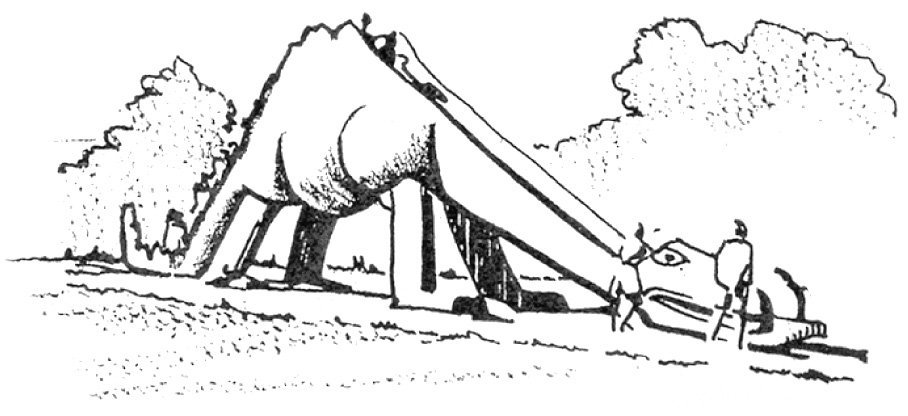
If ever proof were needed that playgrounds linger longer in the memory than the actual time spent playing in them, we need look no further than Dunedin’s Marlow Park and its most famous resident, the green and pink dinosaur slide.
The friendly cartoon-like concrete creature, whose mother was some kind of diplodocus or brachiosaurus and father a stegosaurus (or vice-versa), was designed and championed in the mid- to late 1960s by the Rotary Club of Dunedin South.
Since opening day in 1969, probably tens of thousands of children have spent euphoric hours climbing up and slithering down the slide. Marlow Park is known as "the Dinosaur Park" by many.
Children have become parents and then grandparents, rain and icy winds have come and gone, and still the cracked and weather-beaten dinosaur stands resolute, featuring prominently in the city’s history.
The self-effacing dinosaur had suddenly become the most unlikely lightning rod in town.
Two options for the dinosaur had been presented to councillors — either upgrade it as part of the new playground, or retire it and replace it with a new and more inclusive dinosaur slide — sparking a social media storm led by locals and city councillor Andrew Simms. Many didn’t want to see it replaced with something plastic and sterile.
Proposals for the upgraded playground close on July 21 with a decision from the council expected possibly late in September.
The outcry over the dinosaur gave a fascinating insight into what residents see as the big issues facing the city: rising rates, the dire need for flood protection for South Dunedin, the new hospital, loss of events for Forsyth Barr stadium, a revamped dinosaur slide.
Nobody wants to come across as a grinch about spending money on playgrounds. But in these times of fiscal constraint, is it all that unreasonable to question whether that money could be used elsewhere in a way which benefits a greater number of ratepayers?
A PLAYGROUND GROWS
Travel back a couple of generations, to when the Marlow Park dinosaur was metaphorically just a baby.
If there was a playground in their neighbourhood, Baby-boomers and Generation X had to contend with dangerous, out-of-control rides made of razor-sharp metal, held together by large, exposed bolts. Character-building, presumably.
If you didn’t slice your skin open or get a hand crushed, your teeth and nose were in peril on the roundabout, see-saw and rocking horse. Or you might break a bone being thrown on to the especially hard concrete they surrounded these rides with.

By the 1990s, saner heads prevailed, recognising play didn’t have to be injurious to be challenging. There was also a push to increase accessibility for all.
Rides were now made of thick, moulded plastic and treated wood, with first bark chips and then impact-absorbent rubber matting on the ground below. There were ramps rather than ladders and adapted rides which could much more easily accommodate children in wheelchairs.
In recent years, boards with symbols and pictures have been added to playgrounds for non-verbal children, along with quiet, low-stimulation zones and shaded rest areas for the neurodivergent.
The council is not alone in New Zealand in wanting shiny new destination playgrounds with extra enticements. Along with Marlow Park, Woodhaugh has received $3.5m and Mosgiel Memorial Gardens another $3m for development.
City councillor Jo Galer has been a voice for careful spending since being elected in May. Like many others, she has happy memories of playing on the dinosaur slide.
"My mother took me there and I remember staring up at the steps and thinking, ‘how am I going to get to the top, and what am I going to do when I get to the top?’. Then I plucked up enough courage — I was only a wee thing, maybe 4 or 5 — and I remember being quite scared when I got to the top and then down I went.
"As a kid, it challenged you to do something hard and maybe risky, and they say that’s what kids actually benefit from. I then took my own kids there when they were little and they loved it too."
Despite Marlow Park being windswept and often cold, Cr Galer says it’s clear the public want to retain the dinosaur. But she questions the playground work being a spending priority.
"If you’re talking maintenance for improving things which are necessary for safety, such as remediating the dinosaur, that’s one thing. But in this climate of a cost-of-living crisis, high rates — we’ve just put the rates up by 8.9% — the need for infrastructure in Dunedin, the need for better roads, the need for pipes and pumps and other things, I just think it’s frivolous to spend large amounts of money on new flash playgrounds that can come when we’re doing better as a city.
Some might say it’s just a few million dollars though to keep young people occupied?
"That’s like saying when you go to the supermarket you’ll just buy a couple of magazines each time, and you’re going to have a coffee every day," she says. "They all mount up, and eventually we’re borrowing. We’re around $700 million in debt. So, we face a debt crisis as well as a rates crisis and infrastructure needs."
Cr Andrew Simms has a special connection to the dinosaur slide — he was one of the first few hundred who went down it on opening day in 1969.
"Others have suggested that the dino slide was completed mid-year, but my memory doesn’t extend that far. You don’t remember much from when you’re 6, but what you do remember must have had a significant imprint on you. Perhaps in Dunedin in the ‘60s there wasn’t much to look forward to, but I clearly remember to this day when the dinosaur slide opened.
"I wouldn’t be exaggerating if I said there were probably 300 kids queued at any one time to have a go on the slide. In those days the tail wasn’t on it, it just had a ladder up the back.
"I remember the queue being up the ladder as well. I had to wait at least an hour to have a go that day.
"For my kids, the playground was always their favourite place to go, and it was always a beeline for the dinosaur, so I don’t think it’s lost any of its charm."
Cr Simms believes it is possible to retain nostalgia while developing a modern playground which is more inclusive, has better accessibility and room for adventure trails, food trucks and picnic areas. He disagrees with those concerned about paying for an upgrade during tight times.
"Playgrounds are absolutely a core council function. There’s a number of reasons for that. It’s an everyday activity, it’s outdoors, it’s kids off devices. It’s a low-cost family activity, and I think it’s something we all collectively contribute to.

Former councillor and former Dunedin South Rotary Club director Andrew Whiley highlights the joint efforts of the club, local companies and the old St Kilda Borough Council in building Marlow Park and its rides back in the ‘60s.
He says the dinosaur is "not in great health" and the time has come to do something about it, even though he agrees it has become a significant part of the city’s history.
"If you do not invest in the young and the youth, then you actually take away that creative play and everything else, and it’s not a great cycle.
"The key part is the memories that were created at that space are great, but actually what we played on as kids and what excites kids today are totally different. And the requirements are totally different.
"So, I’m not a fan of worrying about keeping the status quo, but a fan of enhancing it in partnership with the community.
"Keep a dinosaur-themed slide — perfect — but I wouldn’t support investing in rebuilding or redoing the current dinosaur slide just for the nostalgia."
IMPORTANCE OF PLAY
The mental, psychological and developmental importance of play is emphasised in the DCC’s Play Spaces Plan-Te Mahere Papa Tākaro 2021.
National and international research, and local consultation with more than 1100 children, disability groups and community stakeholders, highlighted that play was not just recreational but also a biological, psychological and social necessity, essential to the health, development and well-being of individuals and communities. It helps children understand their world, build social skills and develop confidence.

Disabled Persons Assembly kaituitui (community connector) Dunedin, Amy Taylor, spends a lot of time in playgrounds with her daughters, aged 11 and 8. She is a wheelchair user and both girls are neurodivergent.
She singles out Christchurch’s Margaret Mahy Playground, Timaru’s Caroline Bay and the Dunedin Botanic Garden play area as genuinely designed with accessibility in mind.
"Other playgrounds have token pieces of equipment, such as a wheelchair-accessible roundabout or a wheelchair swing, but that’s often where accessibility ends.
"‘Disabled’ doesn’t just mean wheelchair users — we’re only one part of the disability community. Token pieces of equipment don’t make a playground accessible.
"A good example is the large yellow wheelchair swing at Mosgiel Memorial Playground. It’s kept locked with a huge padlock and able-bodied children are told to stay off it. That’s not inclusive design.
"Play equipment should be for everyone. When you put a lock on it, you create another barrier. I don’t want to jump through additional hoops to enjoy a playground — I want to turn up and play just like everyone else.
"The wheelchair seesaw on George St is another example. It was wonderful to see accessible equipment included, but, despite repairs, it still isn’t flush with the ground, making it impossible for me to get on to."
There is a need for musical and sound-based play equipment, and safe water play is also highly accessible and sensory-rich, she says.
"We also need to remember disabled carers. Parents and grandparents with disabilities need to be able to get close enough to supervise their children. I often can’t because of woodchip surfaces. I’ve had to ask complete strangers to help my daughter because I simply couldn’t get anywhere near her.

Taylor, who was involved in the Marlow Park upgrade plans, says it considers the needs of a range of people with disabilities.
"Marlow Park is a cold, exposed site. Low temperatures particularly affect three groups who are commonly found at playgrounds: older people looking after grandchildren, very young children and disabled people. Many disabled people, myself included, have difficulty regulating body temperature, often because of neurological conditions.
"Windbreaks should be included in the design, along with plenty of seating located close to the play equipment.
"I also suggested including a splash pad. Water play is one of the most universally accessible forms of play, particularly if supportive seating is incorporated into the design. We don’t have enough outdoor water play opportunities in Dunedin and while Marlow Park can be cold, it’s a wonderful location on warm beach days."
Access consultant John Marrable, of Dunedin’s Livingwell Disability Resource Centre, also worked with the council on Marlow Park.
"Every disabled person is different . . . so it’s very hard to try and ensure that they cater for every disability," he says.
"There’s a term called ‘challenge by choice’, so we want to make sure, whether they are able or disabled, they get the enjoyment, they get the buzz they can."
The trick with destination playgrounds is to ensure each has its own individual character, he says.
"The idea is to have them different and not replicate the equipment at every park. What they’re trying to do is really make the Marlow Park playground a flagship. We’ve got so many little playgrounds all around ... and we can’t make every playground as accessible as we’d like."

"We’ve got something like over 33,000 disabled people in Dunedin. If all the disabled people decide to come into town and spend $10, and you might be coming with me and we might be meeting friends, all of a sudden we’re talking about spending $600,000."
University of Otago geographer Assoc Prof Christina Ergler says well-designed playgrounds, with natural elements and acknowledging local landscapes and cultures, can contribute to a deep sense of connection for young people and a lasting relationship with the environments they grow up in.
"Children experience cities and neighbourhoods as a network of everyday places, including streets, parks or nature spaces, school grounds, libraries, health or shopping centres.
"Playgrounds are one important part of this wider landscape. They often become places where families meet, children create shared memories and communities develop a local identity. The most successful playgrounds are those that spark children’s imaginations and invite them to play in their own way.
"Just having a playground is not enough — any playground needs to be welcoming, inclusive and accessible to many diverse children and families."
Distinctive play features like the dinosaur can become meaningful local landmarks that add to children’s sense of place and belonging, Ergler says.
When it comes to the dinosaur, Taylor’s children call it "creepy and uncanny", too steep and scary.
"Many of the people feeling nostalgic about the dinosaur aren’t actually the current users of the equipment," she says. "The stairs are steep and inaccessible, and the slide is narrow and very steep and the whole thing is made of concrete and metal — a health and safety nightmare.
"Let’s have dinosaurs — kids love dinosaurs, not just the kids that can manage the stairs — but we can do much better for today’s tamariki than a design our grandparents played on."


