PHOTO
But, he asks, where is the evidence government and other businesses are taking the climate crisis seriously? Bruce Munro takes a look.
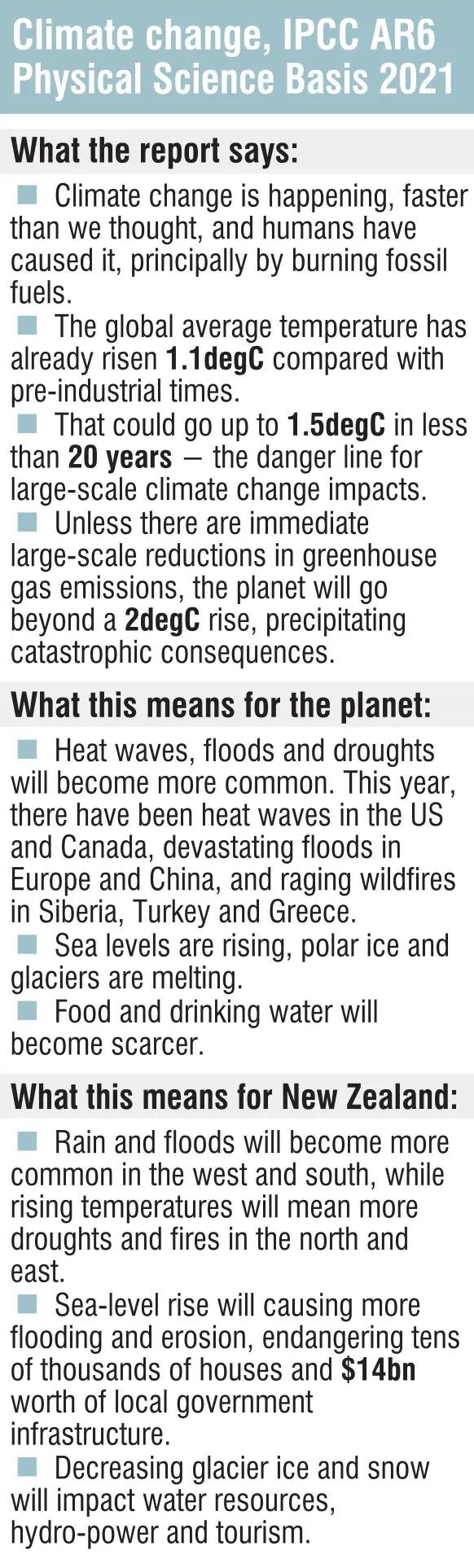
The heart of Southern Clams’ $5 million-a-year seafood export business is a small room housing a high-pitched refrigeration unit and an oversized hot-water cylinder.

"The refrigeration plant is essential, because we have to chill all our product," says Roger Belton, who in 1984 began exporting to the world Otago cockles, tuangi, a delicacy known elsewhere as littleneck clams.
"No refrigeration, no work, no business," he says in summary.
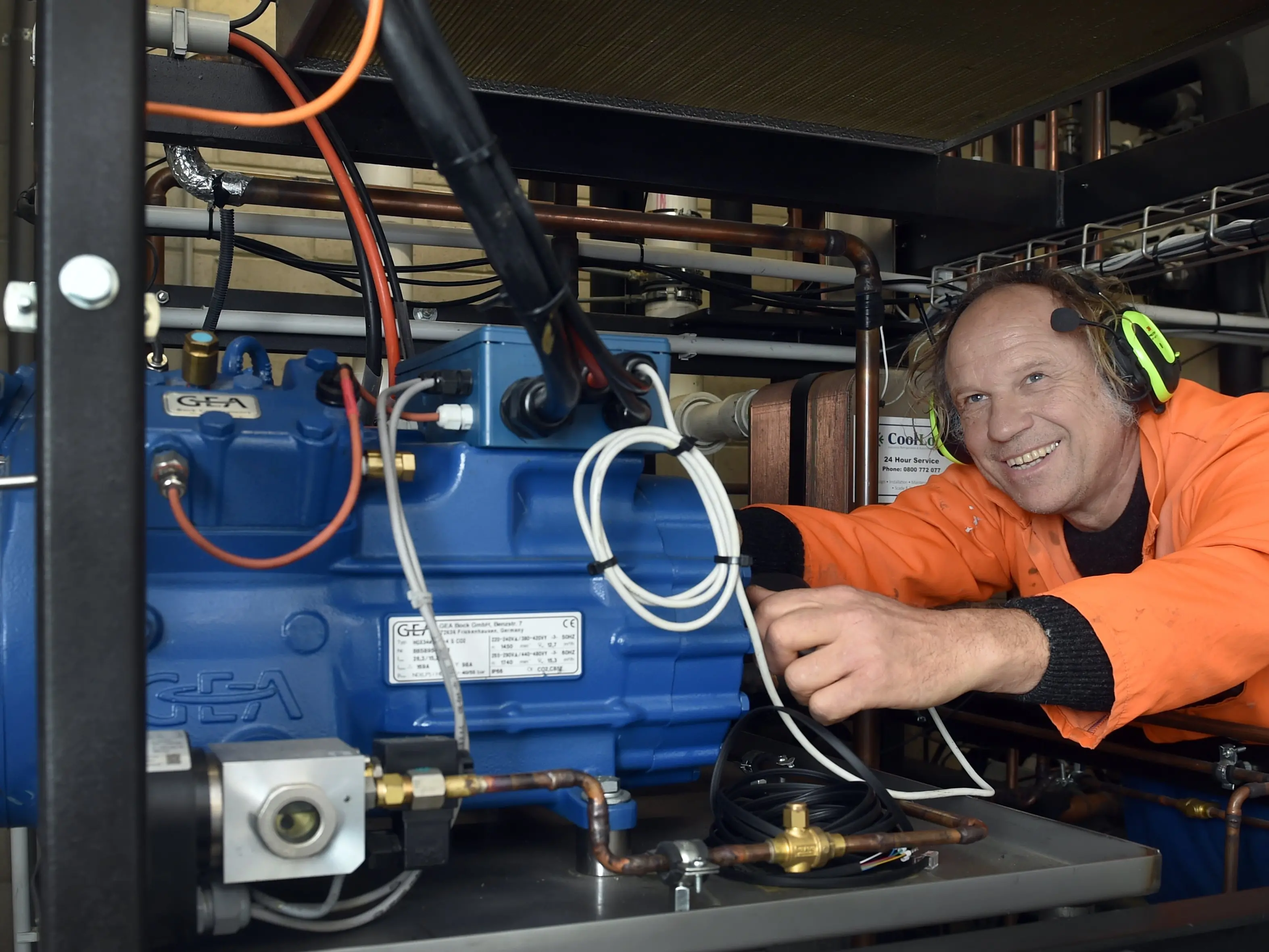
That whirring bit of mechanical kit is not only essential but world class thanks to Dunedin refrigeration engineer Hagen Bruggemann, whose firm CoolLogic researched and built it for Southern Clams.
Bruggemann is standing in the noisy refrigeration unit room, beaming like a proud parent.
"We had about10 compressors in here, running on gas. And we replaced them with this system," he says, pointing at the royal blue machinery sporting multitudinous copper and wire appendages.
"It is one of the only two-stage, trans-critical, CO2 refrigeration plants in the South Island, and it works really well.
"We’ve replaced a potential one million kilograms of CO2 with just 60 kilos. Plus we’re saving a huge amount of electricity."
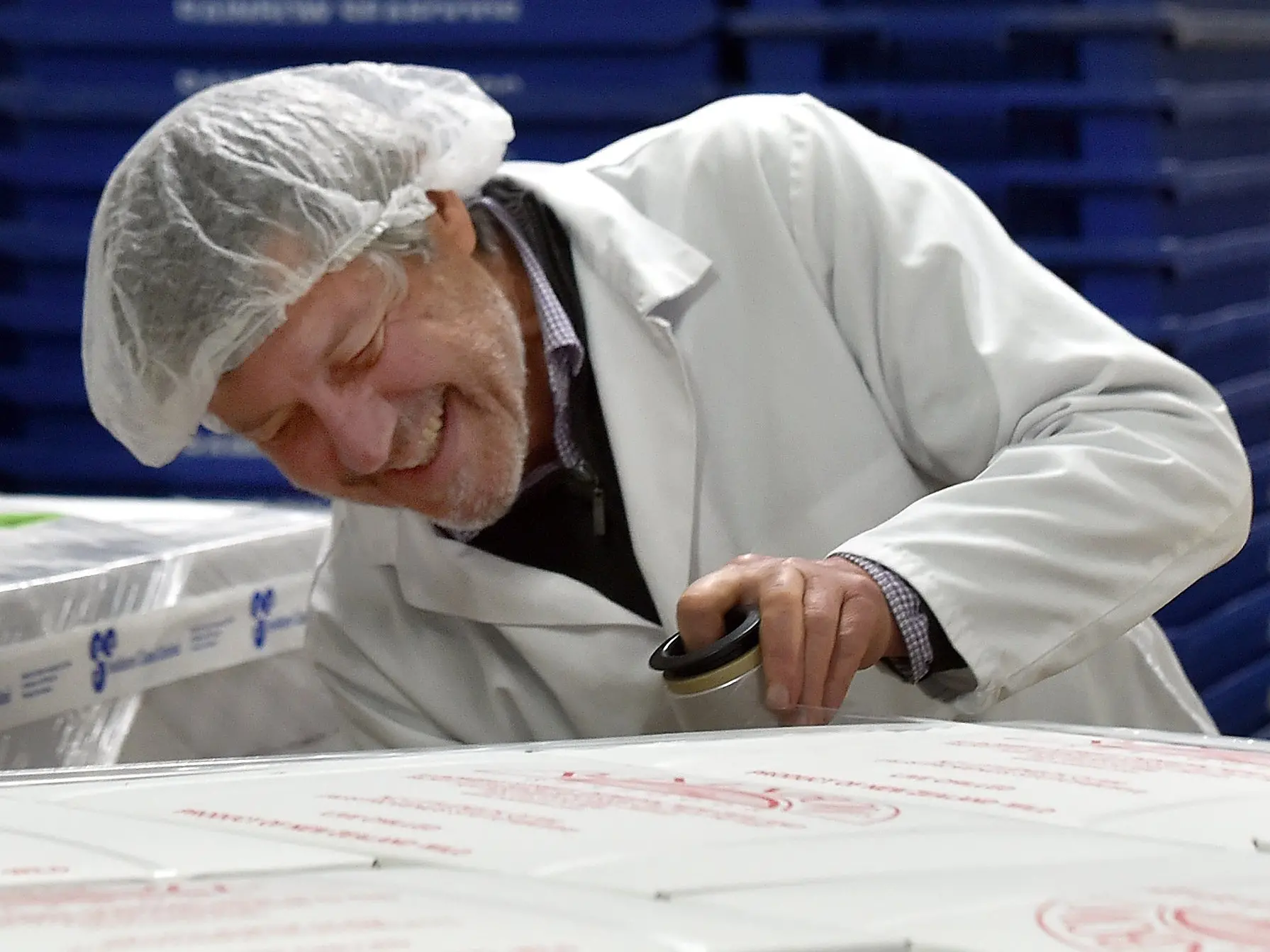
But while Belton and Bruggemann are pleased with their gigantic reverse heat pump, it is overshadowed by the Intergovernmental Panel on Climate Change’s (IPCC) newly released "code red" report on climate change, causing the pair to wonder whether New Zealand is actually serious about tackling this crisis.
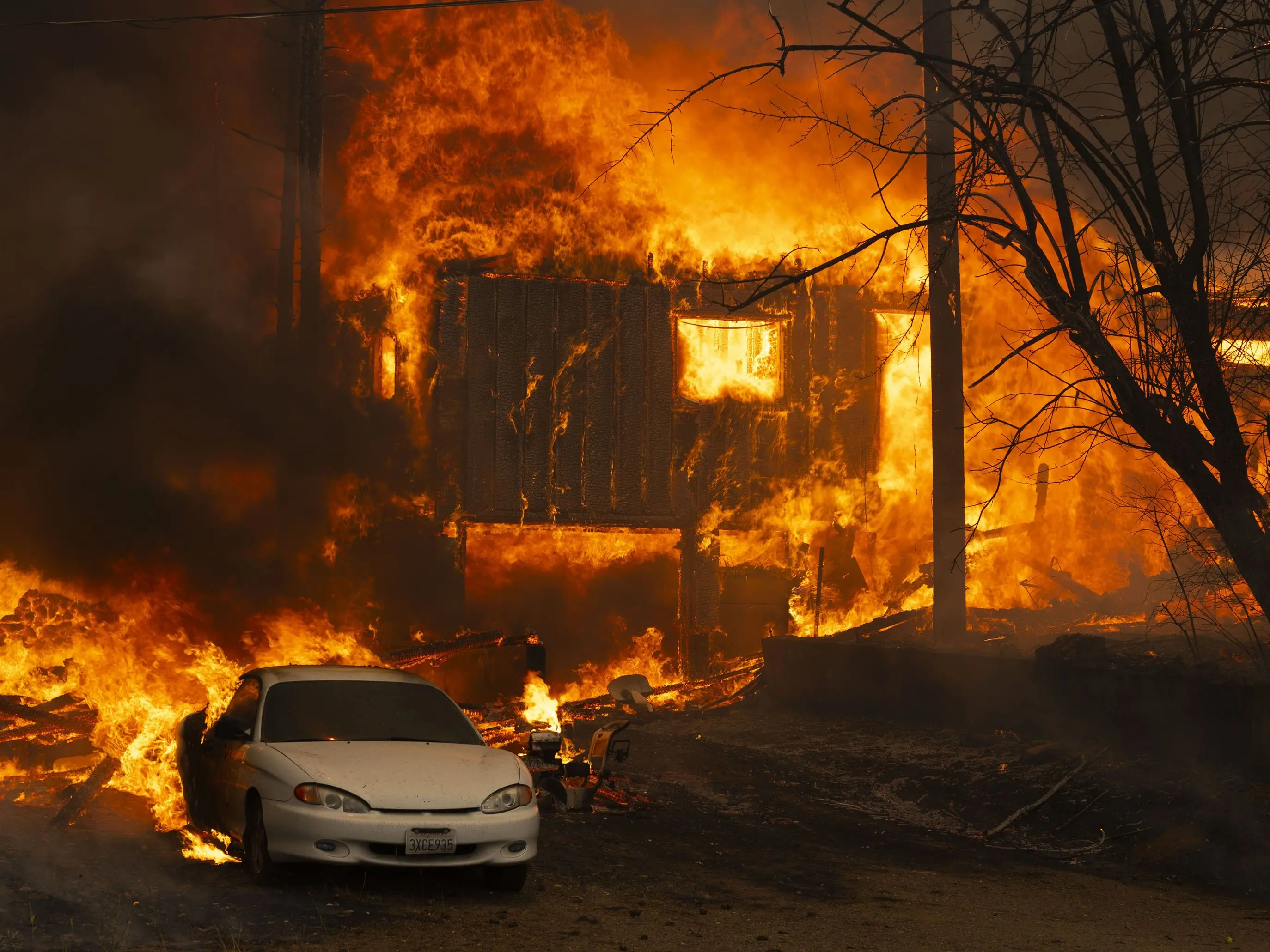
The IPCC’s latest report, released a fortnight ago, sounds yet another urgent warning about global warming and the potentially catastrophic effects that are already starting to be seen.
The report says climate change, caused by humans burning fossil fuels, is happening faster than was thought even four years ago.
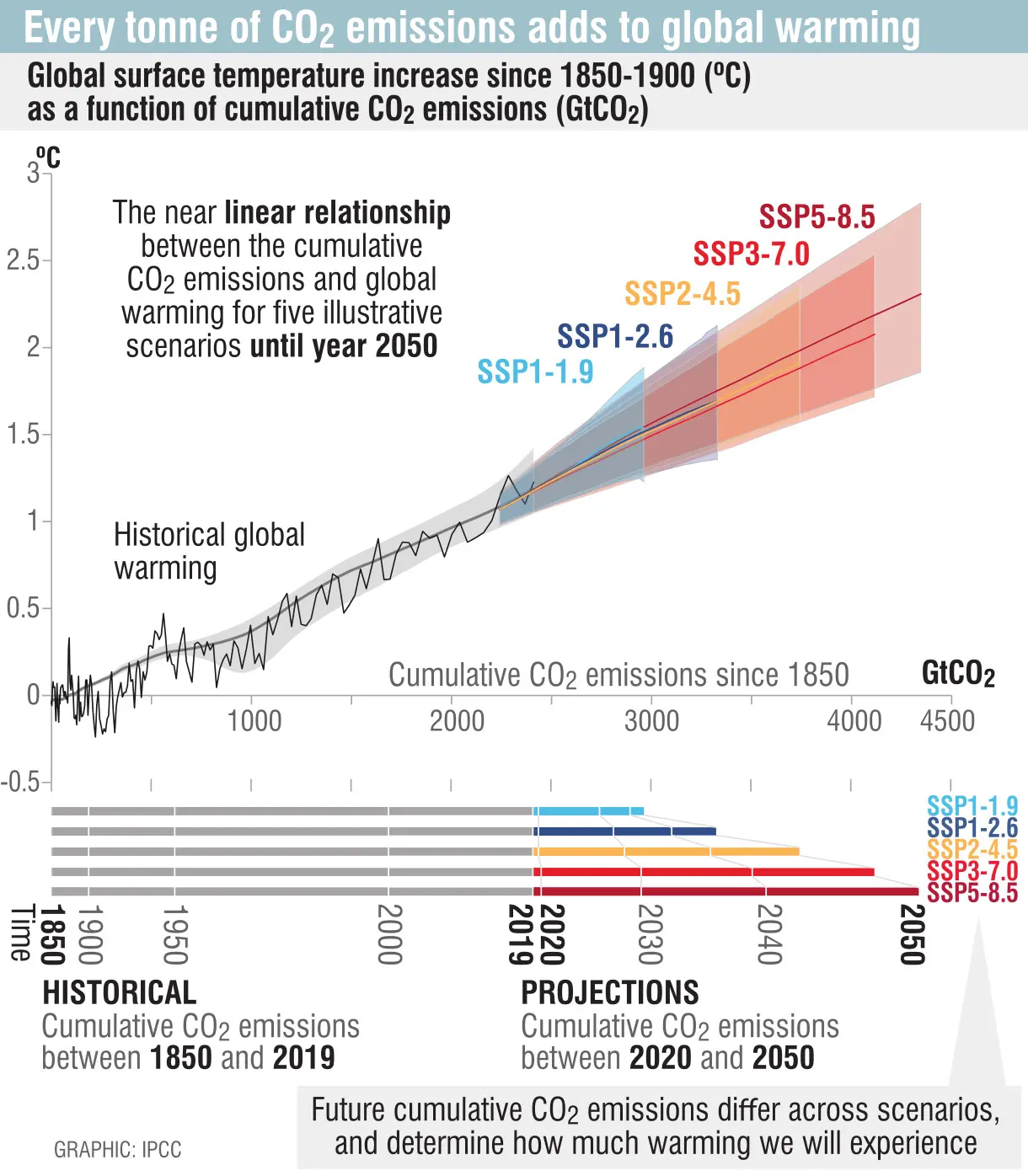
Greenhouse gas emissions must be halved within 20 years, it warns.
If nothing is done, global warming will probably reach a cascade tipping point, precipitating cataclysmic consequences.
New Zealand is the only country in the world to have a zero emissions goal enshrined in law, the Zero Carbon Act. It is also the only country to bring agriculture into an Emissions Trading Scheme, although methane from agriculture and waste (more than 40% of New Zealand's emissions) is exempt from the zero emissions goal and has a separate target.
Despite those steps, in recent decades New Zealand has been a climate change mitigation laggard.
Of the 43 industrialised nations that have benefited most from greenhouse gas emissions, only 12 have had net emission increases since 1990. New Zealand is one of those.
In fact, it is almost the top offender (57% increase), second only to Turkey (161% increase). Australia, the European Union and the United Kingdom have all had overall emission reductions compared with 30 years ago.
In December, the New Zealand Government declared a climate emergency. A few days later, it was conspicuously absent from an international climate ambition summit. It was suggested at the time that New Zealand was left off the guest list because the country’s actions did not live up to its talk on climate change.

Southern Clams was in its early teens when New Zealand signed the Kyoto Protocol, pledging to reduce the country’s emissions to 50% below 1990 levels by 2050.
Belton took that pledge seriously and personally.
Over the years, he has worked to build not only a healthy business founded on sustainable fishery practices but an enterprise that, as it grows, is also increasingly climate-friendly.
Cardboard has replaced polystyrene for packing chilled product sent throughout New Zealand and around the world. Locally, the company uses an electric vehicle, a plug-in hybrid, for its deliveries.
Belton has planted 92ha of bio-diverse forestry, in the Waitaki district, to help offset carbon emissions.
The 180 solar panels on the roof of Southern Clams’ Dunedin factory is the largest solar array in the city, generating 13% of the company’s energy needs.
Late last year, Southern Clams won the Sustainability and Resilience Business Practice Award at the annual Otago Business Awards.
But what is exciting Belton, and Bruggemann, right now is how well the new refrigeration plant is performing.
After a year of operation, the unit — in addition to getting rid of a synthetic refrigerant that, if it leaked, would have had a climate-damaging impact equivalent to 1millionkg of carbon dioxide — has reduced the company’s refrigeration energy costs by 17%.
Seeing an opportunity, Belton also added a glycerol chiller, connected to the CO2 plant, which lifts annual efficiency gains to more than 25%.
On top of that, a new heat-reclaim system was added.
"Most refrigeration plants throw away a lot of heat. So, we were throwing about $30,000 worth of heat into the sky every year," Belton says.
That heat byproduct is now used to heat water, supplying all of the factory’s hot water needs.
All up, energy cost savings are expected to top 30% compared with the old unit.
Bruggemann says the green refrigeration technology is only a few years old. It is now used widely in Japan and Europe, but has not been adopted in New Zealand, despite its potential.
"About 60% of New Zealand’s GDP is refrigerated products," he says.
"The bigger refrigeration plants can be converted to an ammonia-based system. But many of New Zealand’s commercial refrigeration units are the size of the Southern Clams one, so are best suited to a new-tech CO2 conversion. Others could totally do this."
Belton says a lot of energy could be saved nationwide by this one climate change adaptation alone.
"Who wouldn’t want to save 28% on their power bill?" he asks.
"And as a country, we would then have far more generation capacity available for electrification of our transport system."
Southern Clams’ climate-friendly initiatives have all been done off its own bat, at its own cost.
"What we have done, we have done with zero assistance," Belton says.
He wants to know why other businesses and organisations have not shown a similar sense of urgency.
Take the university, for example, he says.
"Where are the solar panel roofs, the wood-energy heating systems ...?
"There are plenty of academic positions relating to sustainable energy and climate change, but little evidence of putting into practice mitigating technologies and protocols.
"One academic salary would enable them to build what we have built, in terms of solar, every year."
Belton also wonders why there has been little assistance from the Government.
"There has been an enormous amount of blah, blah about climate change but it appears that political spin is their main concern, not actually getting the job done.
"New Zealand is miles behind Europe, which has reduced its greenhouse gas emissions by 15.5%.
"The Energy Efficiency Conservation Authority [EECA] should be providing more effective support for a transition to a low-carbon economy."
University of Otago head of sustainability Ray O’Brien has defended the institution’s climate change record.
O’Brien says the university is committed to ensuring its greenhouse gas emissions reach net zero by 2030. He pointed to its net carbon zero programme, launched this year, which has a dedicated manager overseeing initiatives targeting travel, energy and food purchases.
The university no longer uses coal in its Dunedin campus heating system and is developing energy efficiency initiatives, he says.
“Residential colleges have adopted Mindful Monday — plant-based meals one day per week — resulting in an 11% reduction in emissions due to food purchase."
EECA chief executive Andrew Caseley says the Crown entity is prioritising working with the country's biggest energy users to accelerate decarbonisation.
He points to the three-year, $70million Government Investment in Decarbonising Industry (GIDI) fund, launched last November. The first round of the fund will achieve 10% of the 2022-25 gross long-lived emission reduction target, he says.
This year’s Budget gave EECA extra money for its wider business programmes.
That is being used to increase support to Kiwi businesses "to reduce emissions by embracing low emissions technologies and energy efficiencies", Caseley says.
Green Party co-leader and Climate Change Minister James Shaw says much has been achieved since Labour and the Greens came to power, but much still needs to be done.
“Our Government has done more to fight the climate crisis in the last three and a-half years than the combined efforts of governments over the last three and a-half decades," he says.
"Is it enough? No.
"We are yet to see a sustained decline in the pollution we put into the atmosphere.
"Even when we do, we need to ensure that decline continues and, in fact, picks up pace every year until we hit net-zero.
"This is a marathon effort involving every part of government, every sector of the economy and every community over the next three decades and beyond."
So, if New Zealand were to crack on, what would it take to actually respond to this crisis?
Prof Bronwyn Hayward says business and government both need to make urgent and far-reaching changes.
The University of Canterbury academic is a member of the IPCC core report writing team and co-lead of the Cities & Infrastructure chapter of the sixth assessment report (AR6) working group 2 report, due for release next year.
“It’s critical that we stop hoping someone or something else will fix this," Prof Hayward says.
“We must now avoid a new kind of magical thinking, that relying on technology will save us. Instead, we must take real actions to reduce emissions and protect people, biodiversity and businesses."
To make rapid and effective changes, businesses need two things.
Firstly, leadership that understands why change is urgent.
"Often it is the employees, the customers and the shareholders who are pushing for change," Prof Hayward says.
"The more diverse your board is, the more likely it will be that you have people in touch with [a variety of views] ... to give the company confidence to do something that is quite challenging; rethinking how the business runs."
Secondly, business needs government support to make change.
"It is a challenge to be a first mover.
"Many businesses know they need to reduce their energy use and carbon emissions, but they are looking for assurance from government and regulatory bodies that they will get support if they do move first."
Government can do this through regulation, but also through its procurement policies, Prof Hayward says.
"Governments can play a really significant role in that by ... supporting and amplifying and showcasing and encouraging and procuring, simply buying these new innovative projects."
The country’s political leaders need to ensure a whole-of-government response to the climate crisis, she says.
The Covid-19 pandemic has been a missed opportunity to do this — understandable, but still a missed opportunity.
"That was our first opportunity to really focus on what a whole economy, low-carbon, wellbeing recovery could look like."
In December, the Government is expected to produce its interim response to the Climate Change Commission’s report. Then, next year, it will produce a climate adaptation plan.
"But my concern is that we are siloing these issues ... We really need an integrated whole-of government response on climate now.
"It would be very helpful if the December responses ... at least signal how we are going to support and protect people and businesses in a changing climate as well as reducing our emissions."
Prof Hayward says despite how serious the situation is, she is, in some ways, more confident than previously.
"Thirty years ago would have been better. But we now, in many ways, have a much better understanding of whole-of-society responses.
"Also, there is a much greater depth of understanding through the whole of the community about these issues.
"And the student strikes have shifted the conversation ... It’s now a moral question about the country we want to become."
Belton is not holding his breath. He is already working on Southern Clam’s next climate-saving improvement — switching from air freight to sea freight to get product to overseas markets.
"We’ve actually been working on this for two years. We can reduce our emissions to less than one-thirtieth of air freight, if we can crack this," he says.
To follow their lead, Belton believes New Zealand still needs a significant mind shift.
"This country needs a culture change if it is serious about mitigating climate change impacts.
"Something more akin to what there is in Europe — an attitude and a values system whereby ... everybody is responsible for the consequences of their actions.
"It’s about wearing it, and doing something about it."