

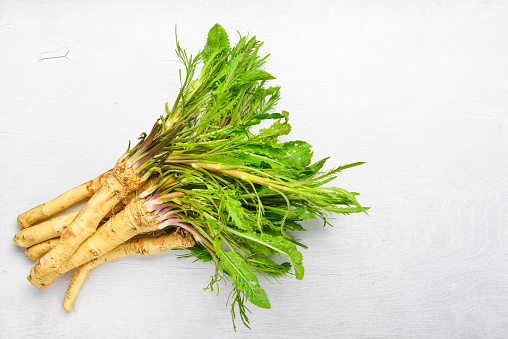
Ah, horseradish it will make you cry but it will also give the microbes in your nose a horse-sized kick in the pants and make them pack up and leave.

The name horseradish is nothing to do with horses really. It was just a prefix added to anything strong and coarse, such as horse mushrooms - which are really big and strong tasting compared to regular field mushrooms. Horseradish certainly has a strong flavour and adds a kick to some mild-flavoured dishes.
Originating in south Eastern Europe and Western Asia, horseradish is a member of the brassica family, and has long tapering white roots and leaves that can be mistaken for dock.
Despite their similar names, Japanese horseradish (wasabi) and regular horseradish are quite different plants, though both are brassicas. Japanese horseradish is harder to grow and very expensive, so often wasabi you get outside of Japan is actually made from horseradish, mustard and green food colouring. It is actually good to know you can easily grow your own "wasabi".
I am the only person on the planet to have lost my horseradish plant through neglect and a hard clay soil. It is actually something which can be quite invasive. When I told a woman selling plants at a market that I needed a new horseradish plant to replace one I had lost, she was shocked at my ineptitude. Now I grow horseradish in a light friable soil behind a retaining wall where the roots can grow thick and long, and are easy to dig up.
When horseradish leaves die after the first frost of winter, it is time to dig up the roots. Replant some, and keep some of the best large, young examples of root for use in horseradish sauce.
Because the flavour is concentrated in the outer layers of the root, it is best to just give the roots a scrub to remove the dirt, but don’t peel them. You can mince the roots but it will make you cry and cry. I find it best to put the roots in a blender to mince them up without getting exposed to the fumes. Then mix in some cider vinegar and spoon into a jar, top with more vinegar and store in the fridge. This will keep for months.
To use, take a tablespoon of horseradish from the jar, and mix it with cream, sour cream, condensed milk, or mayonnaise. I add a little salt. This becomes your horseradish sauce. Don’t add any leftovers back into your mother lode jar.
It is traditional to use horseradish sauce with roast beef. I have been experimenting with it served with eggs, with cooked fish, or with sushi. It also goes well in a dressing for Waldorf salad or coleslaw.
You probably know the sinus clearing effects of wasabi, well, horseradish has the same effect. It stimulates your sinuses to produce more mucus, which helps clear your nose of microbes that cause colds and flu.
This root has a kick, and is also really easy to grow, and although it is not an actual food to fill you up, it is good to be able to use interesting flavours to enhance your simple home grown or foraged food.
• Hilary Rowley is a frugal, foraging foodie from Waitati. Each week in this column writers addresses issues of sustainability.


