

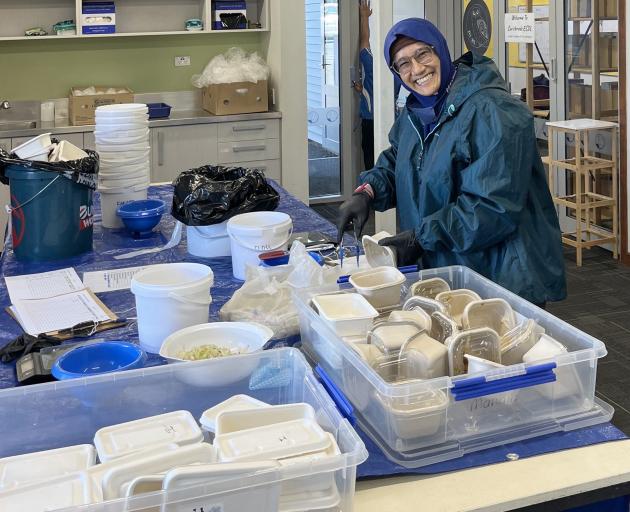
In research conducted between June and September 2024, master of science in human nutrition graduate Zahrah Hatraby found about 30% of the healthy lunches being distributed in Dunedin were going to the landfill.
However, she was worried things might have got worse since the School Lunch Collective took over the contract this year and externalised production to Compass Group’s Hamilton-based kitchens.
In 2024, 54% of the food was being eaten and 15% of it was being diverted to either be taken home or fed to stock animals.
She went to the 11 schools in Dunedin that were a part of the school lunch programme four times and did three days of collection.
She collected food waste by scraping out whatever was left in the containers the food was delivered in.
There was between 33g and 116g of food waste per pupil each day and, on average, eight schools wasted more than just over 7.5kg per day.
Miss Hatraby found pupils at schools with internal suppliers finished more of their lunches and produced less waste than those with external suppliers because the lunches were made to order.
Silverstream School had its food supplied by Dunedin company Time 4 Lunch on a day-by-day basis.
Each morning, chef Ronnie Bhogal was able to check the attendance and see who was at school to make specific amounts of lunch for that day.
He was also able to accommodate for older children who needed larger quantities, children with dietary requirements and nutritional needs.
Miss Hatraby has not researched how much is being eaten or wasted since the new provider was put in place.
She estimated there would be a lot more waste with an external supplier based outside of the region than with multiple internal suppliers as there was no way for an external supplier to know how many children were at school on any given day.
As a result, they would make a lot of lunches that would be disposed of.
"That’s where I think the internal model actually really shines because it was like a day-to-day kind of thing."
Miss Hatraby said she was worried that externalising the lunch programme had also diminished the quality of the food.
Her research also found there was a higher demand for hot lunches than cold lunches.
Miss Hatraby put that down to there being a bigger variety of hot lunches.


