
PHOTO
Not many research projects come with a cherry on top.
But this one does.
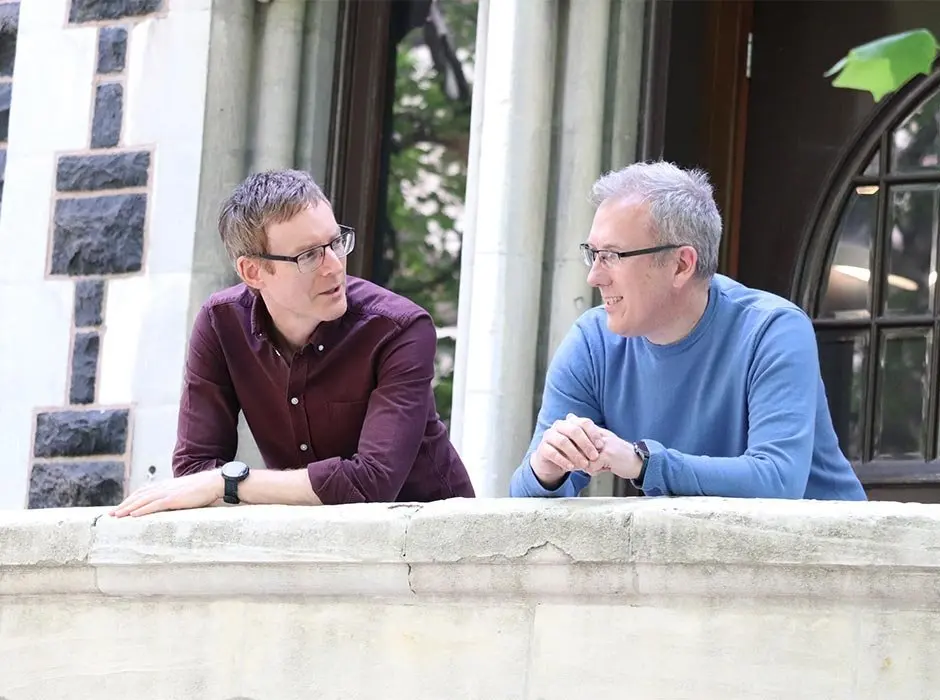
University of Otago biomedical sciences researchers Prof Peter Fineran and Dr Robert Fagerlund are studying bacteriophages — tiny viruses that naturally hunt and kill bacteria — in the hope of turning the microscopic assassins into a powerful tool to fight bacterial diseases.
As part of their bid to develop phage therapy for humans, they are tackling bacterial diseases that plague New Zealand’s cherry orchards; and the cherry on top is that the project has received funding from the Ministry of Business, Innovation and Employment (MBIE) to do it.
"We have interacted with a number of Otago orchards to collect phage samples, as part of our research," Prof Fineran said.
Pseudomonas bacteria could cause losses of 20%-50% of young orchards, so growers relied on copper sprays to control it.
However, it was a blunt instrument that damaged other microbes and the bacteria was becoming more resistant to it.
So his research team is developing phage cocktails — a combination of multiple phages, each with a different "key" to unlock a bacterium’s defences.
"If one phage is blocked, another still gets through," he said.
"In that way, you end up with a very robust treatment which avoids the emergence of resistance."
Prof Fineran said using phages meant they could be specific about which bacteria was killed, and it would leave beneficial bacteria untouched, unlike the "carpet-bombing" approach caused by antibiotics.
The same principles applied outside of orchards.
"Pretty much all the approaches are applicable to human and animal pathogens," he said.
Their recent work had uncovered "jumbo phages" that build protein shells inside bacteria, creating a safe compartment where phages can replicate, untouchable by enzymes.
They had also studied phages that decorated their DNA with sugars, shielding themselves from CRISPR cutting (gene editing), he said.
Some added one sugar, others added up to three, each giving protection against different defences.
He said these types of phages would be good to have in treatments because they were naturally resistant to bacterial countermeasures.
Phages are now being trialled in Western hospitals to combat stubborn infections, in cases where nothing else is working.
They were also being used in mainstream agriculture, but Prof Fineran warned that phages were not "a silver bullet" solution.
Rather than replace antibiotics and other approaches, they were more likely to complement them.
"To be able to choose the right phages to get the desired outcomes, we must understand the bacterial immune systems and learn about all the ways that phages overcome these.
"That is why this is the focus of our core fundamental research," he said.