
PHOTO
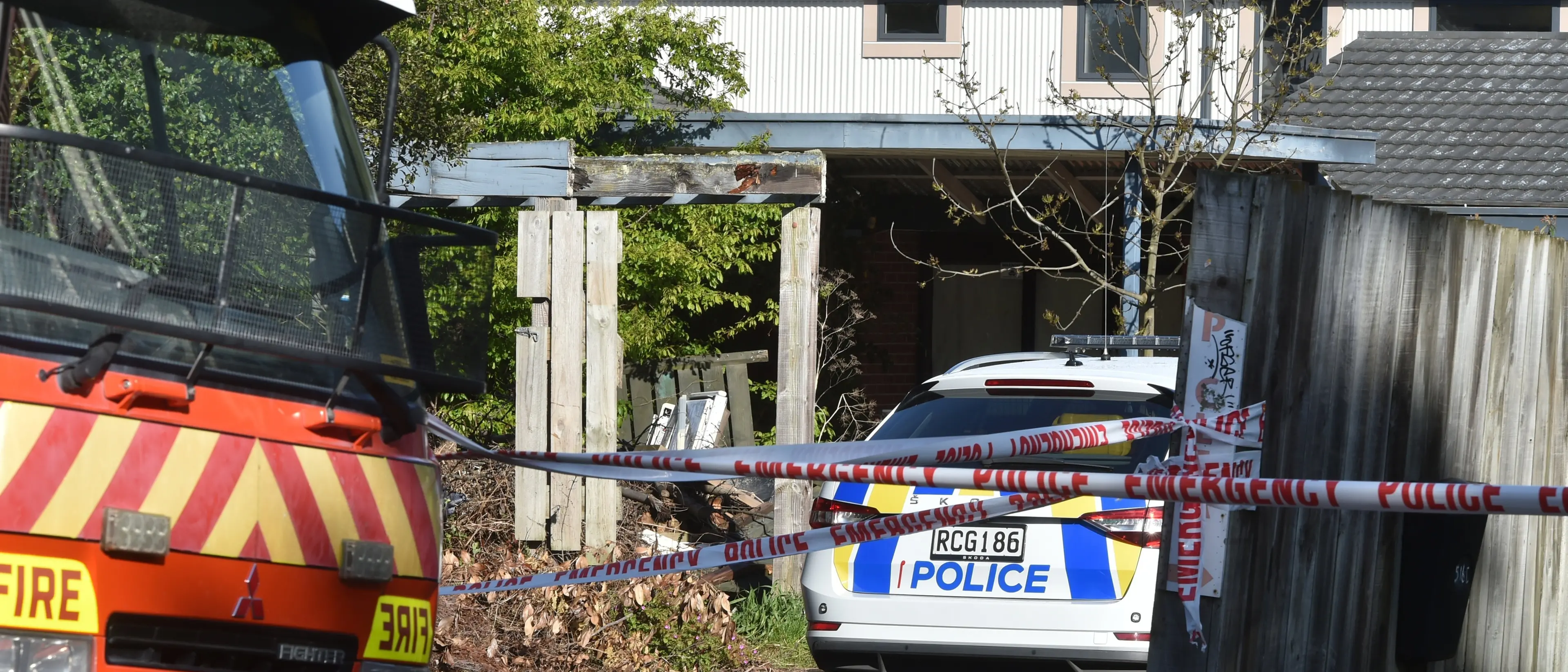
A Dunedin boarding-house resident who stabbed another man to death and was later seen dancing beside the police cordon was insane at the time.
The 26-year-old defendant — who has interim name suppression — has been acquitted of the murder of 36-year-old Aneli Helu Katea in a judgement released yesterday.
Justice Cameron Mander, before the High Court at Dunedin, made the finding on the basis the man was suffering from a disease of the mind at the time to such an extent as to be incapable of knowing his actions were morally wrong.
The court heard concerns had been raised with police, Corrections and mental-health services just days before the killing after the defendant had reported carrying sharp objects in order to ‘‘stay ready’’.
On October 3, the defendant made the short walk from his boarding house to the abandoned Great King St premises at which Mr Katea was staying.
An altercation developed between the pair, which spilled on to the footpath.
When Mr Katea fell to the ground, the defendant stabbed him in the back and chest, the latter wound piercing the victim’s heart.
Mr Katea limped back inside his makeshift home as his assailant walked away.
But the court heard after stopping at a shop, the defendant returned to the scene 20 minutes later to find the victim lying dead.
While standing in the driveway of the address, he yelled to a passerby: ‘‘Hello, beautiful woman’’ and ‘‘When are the cops going to get here? I’ve just stabbed someone.’’

Police arrived later that afternoon when a member of the public found Mr Katea and investigations were quickly launched.
The defendant, though, was not lying low.
Two days after the killing, a scene guard reported seeing the man near the police cordon ‘‘dancing ... and behaving oddly’’.
Officers found the defendant at his home that afternoon and in his bag they found a knife.
Subsequent examinations found Mr Katea’s blood on the blade.
Police attempted to interview the suspect, but it was promptly terminated because of the man’s ‘‘nonsensical comments’’.
Justice Mander’s acquittal on the basis of insanity — accepted by the Crown as the only possible course — was founded on the reports of two forensic psychiatrists.
Dr Julia Pettitt said the defendant had an established diagnosis of schizophrenia, which was complicated by his use of cannabis, methamphetamine and alcohol.
When interviewed, the man reported auditory hallucinations — which he had previously attributed to ‘‘fairies’’ — becoming ‘‘difficult to control’’ in the lead-up to the killing.
He told the psychiatrists the voices were his brothers, instructing him to ‘‘cut the head off the boy’’.
The defendant described being overwhelmed by the delusional belief that Mr Katea was having an affair with his brother’s wife and that he was, therefore, bringing his entire family into disrepute.
During interviews with clinicians, the man became ‘‘acutely agitated, angry and aggressive’’ and on one occasion, threatened to murder a psychiatrist, the court heard.
Dr Maxwell Panckhurst said the defendant’s mental illness had followed a progressively chronic course, with multiple hospital admissions over a relatively short period.
While earlier relapses had been prompted by non-adherence to medication, more recent episodes had occurred despite treatment, he noted.
The defendant was remanded to Wakari Hospital. At a hearing in July, the court will consider further evidence of mental health professionals as to whether the man should be detained as a special patient.
Justice Mander said he expected that hearing to be brief.