
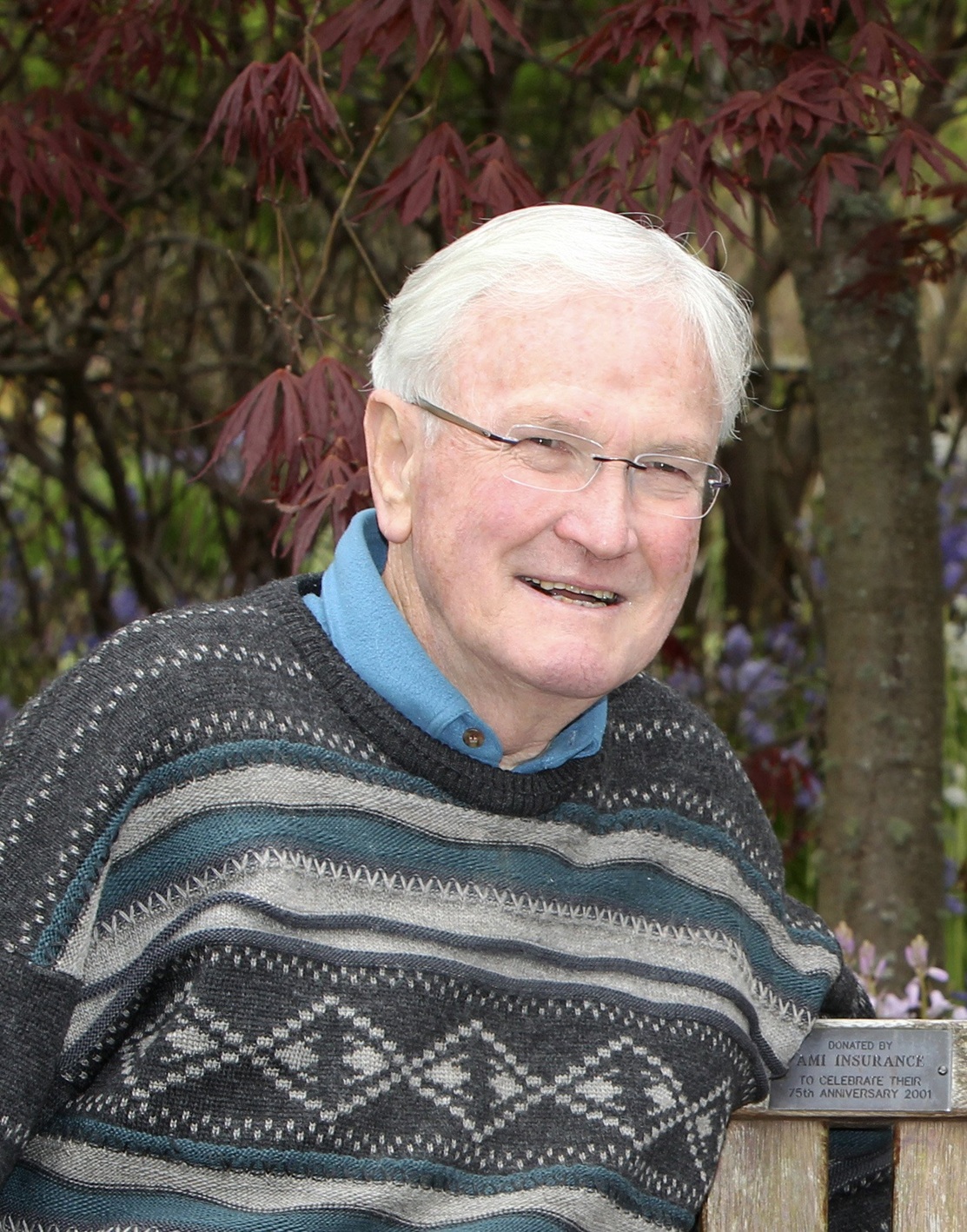
Robert Melville Carr had a thirst for knowledge from a young age.
A multi-disciplinarian, he was the longest-serving member of the University of Otago chemistry department by the time he retired in the late 1990s, but even in retirement he found time and energy to be a key curator for both Tōitu Otago Settlers Museum and Tūhura Otago Museum.
He was born on April 9, 1933 in Ranfurly to Christina and Ernest Carr.
He grew up in Patearoa living a rural life at Fairview, which already had three Robert Carrs: Old Bob, young Bob and wee Bob. Hence he was known as Melville.
He attended the local primary school in Patearoa. After school he would head along to his father’s work and help out. This was a fully operational gold mine with a sluice gun.
After primary school in Patearoa he went boarding at John McGlashan College. One responsibility of the senior boys in the boarding house was to bath the junior boys — Melville used to tell the story of bathing a very young Dougal Stevenson.
Melville finished at McGlashan in 1950 and was awarded Dux. He was to return later as a house-master.
Melville went to the University of Otago. At first wanting to study geology he was convinced to study chemistry as there were more employment opportunities.
During his time at university, he had to head north to attend compulsory military training — Melville ended up training as a signalman.
While at Otago he enjoyed the social life and eventually met Nancy Deal, later to become Nancy Carr. They were married for 65 years, until Nancy’s death last year.
Otago University became a second home for the couple, as Nancy also had a distinguished career as an academic and researcher.
Melville completed a BSc in chemistry, went on to do a Master of Science (MSc) in 1957 and a PhD in 1962, achieving first-class honours in both and serving as an Imperial Chemical Industries (NZ) Research Scholar and later an ICI (NZ) Research Fellow.
One of the research projects he was involved in was the surveying of the Buller George to detail where the uranium to be found there actually was.
He was awarded a Fulbright Scholarship in 1962 and headed off to London. He studied at the Imperial College of Science and Technology where he achieved a Diploma of Imperial College.
After London, the Carrs moved to the University of Pennsylvania in the United states to continue his research. Penn State would become a place that they would return to again.
He then became a senior lecturer in the chemistry department, spending the rest of his working life there.
During this time he was chairman of the NZ Institute of Chemistry Otago branch twice, in 1969-70 and 1992-94, secretary in 1966-69 and was also treasurer for a number of years from 1987.
He was also made a Fellow of the New Zealand Institute of Chemistry. He was the chairman of the NZ Geochemical group from 1973 to 1975 and from 1993 to 1995.
He had a passion for the mineral side of chemistry — the inorganic — and he completed research on clay, crystal, coal and many other areas.
Son Steve said his father would often take the family members on field trips.
"I had the pleasure of working for him one uni holidays where I was put to work trying to use extreme pressure to compact coal dust into briquettes. I don’t think we were very successful and I came home every night blowing black dust out of my nose.
"I also remember going to see Dad at his lab in Penn State in 1978 where he was working on specific minerals with lasers. As a 10-year-old all I was interested in was the lasers. "
Steve said his father really liked teaching.
"He liked to run labs and present lectures, and he enjoyed seeing others succeed in their studies.
"I was lucky enough to attend his lectures in first year. I remember being one of the 300-odd students in his lectures and laughing when he told a joke, and then realising I was only one of four.
"He had a great sense of humour. However, it was quite specific."
Melville retired in the late 1990s after spending nearly 50 years in the chemistry department as a student and a lecturer.
Melville was a dedicated philatelist (stamp collector).
"I believe he started collecting stamps as a young adult and this continued through to his mid-80s," Steve said.
"Well I thought he had stopped, but he hadn’t — he had just down-scaled."
Melville joined the Dunedin Philatelic Society in 1965 and went on to be made a honorary life member in the late 1980s.
Tūhura Otago Museum humanities co-ordinator Moira White said Melville was an ideal team member.
"His passion for stamps and general knowledge about them was always evident and dependable. He was an eloquent voice for what is sometimes now seen as an out-of-date hobby.
"When he began writing occasional stamp blogs for the museum’s website, it offered a new avenue for him to communicate the stories associated with an area of the collection that is not always easy to display, physically.
"Indeed, he had so much information to share about stamps featuring sheep, that we ran it in two parts."
His quirky sense of humour was occasionally apparent in his contributions to the museum, which included donating a pair of stylish mint condition Fred Perry tennis shorts, purchased in Dunedin in 1961.
Melville was also passionate about history, Dunedin, Otago, gold mining and family. He spent a lot of time researching and compiling a family history and reading books on all the local history, which led to his involvement with Toitū Otago Settlers Museum.
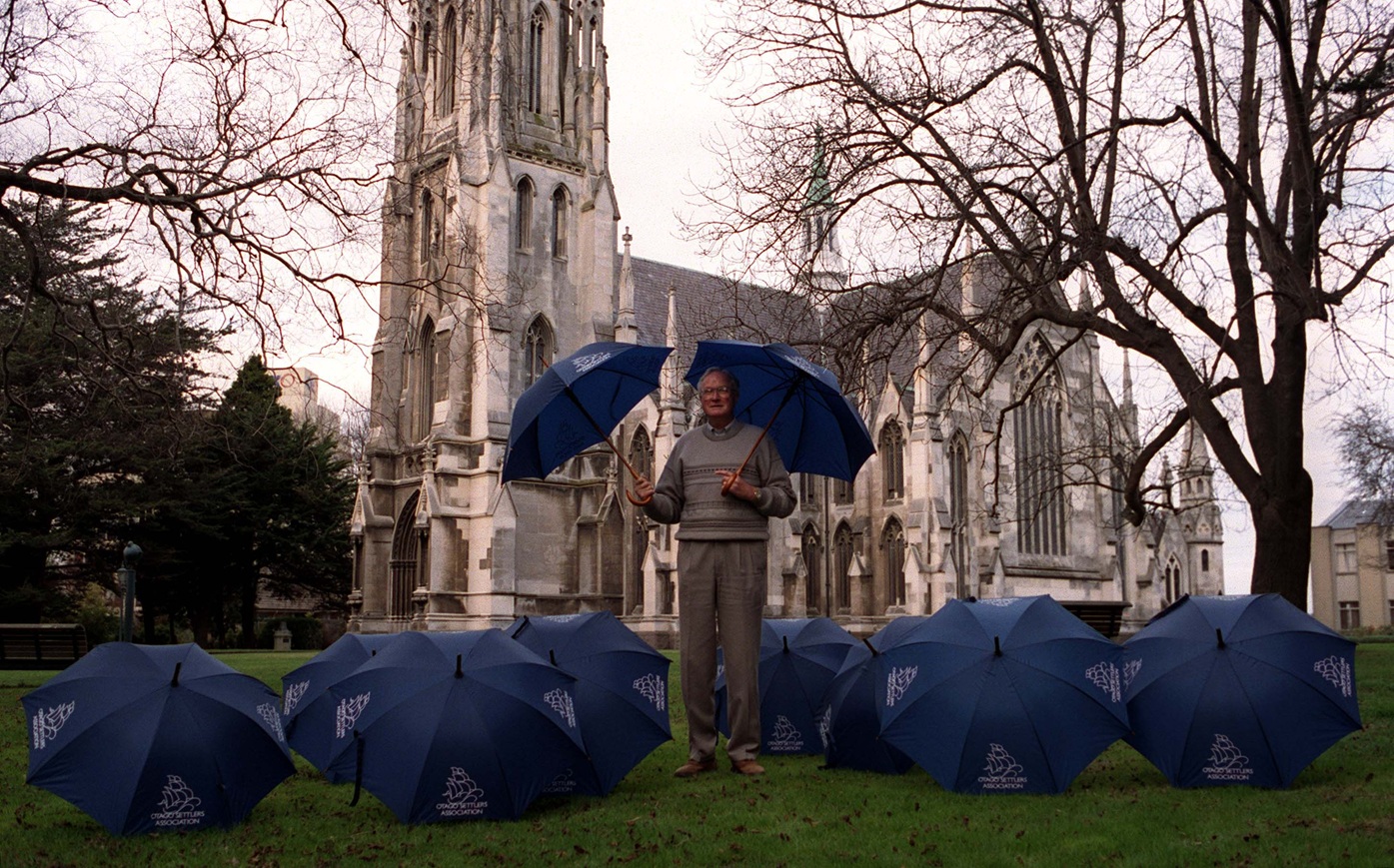
He was a committee member from 1996 and served as president from 2002 to 2006.
Tōitu museum director Sean Brosnahan said Melville’s passion for history was always apparent.
"He joined the committee of the Otago Settlers Association in 1996, at a point when the museum was still evolving as a department of the Dunedin City Council.
"It had previously been privately owned and funded by the association, so this was a significant change. By the time Melville became president in 2002 the association had celebrated its centenary, published a history, and begun to develop a raft of events and activities as it evolved into a ‘friends organisation’ for the museum.
"Melville played a key role in this transition, guiding the organisation with tact, dignity and good humour."
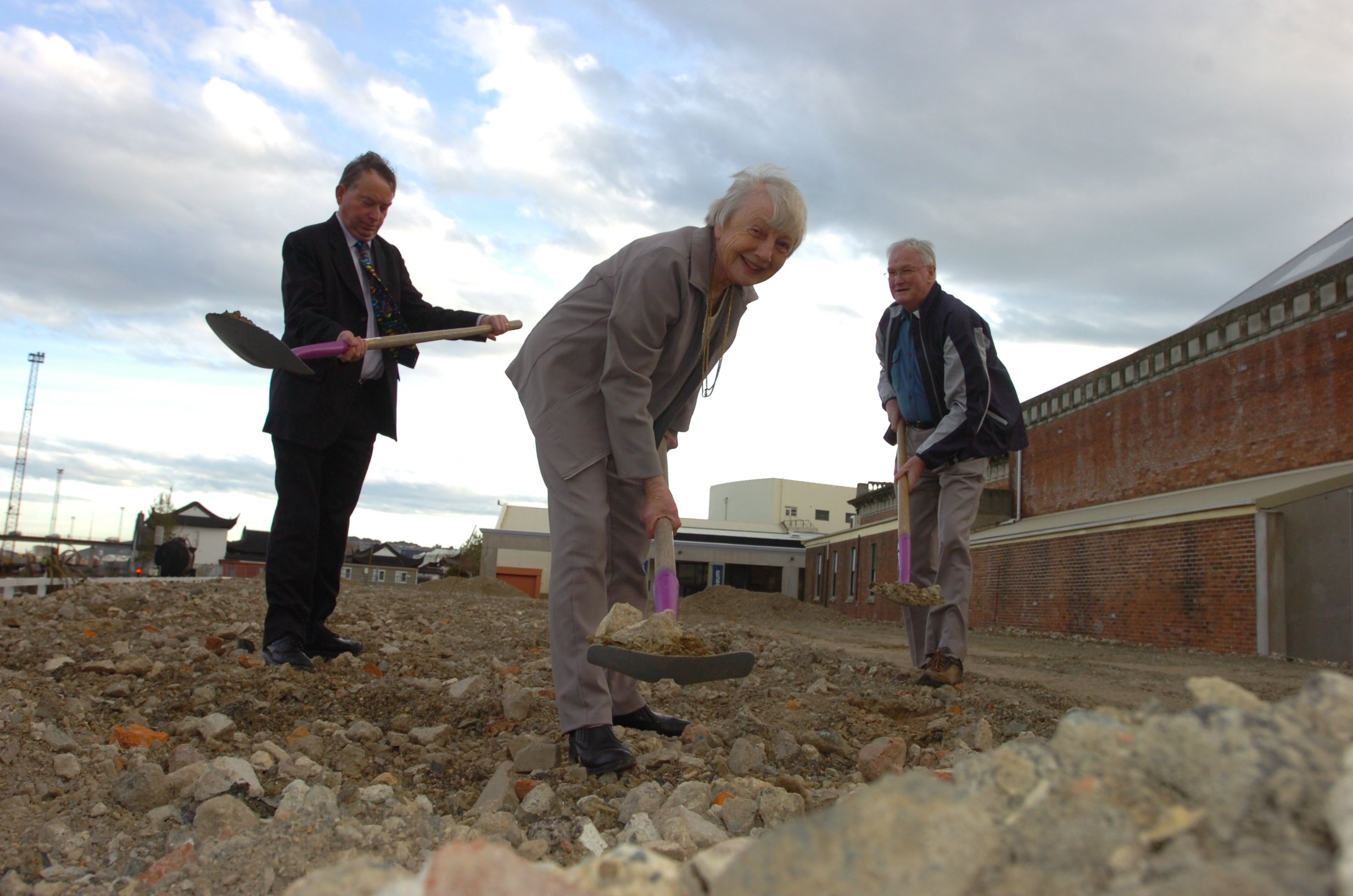
Melville moved on to the role of chairman of the Museum Board after retiring as president in 2007 and helped advocate for the museum’s major redevelopment from 2010-12.
He remained a regular at museum events until advancing years and ill health intervened.
Knox Church played a role in his life from his early 20s —he was a highly respected Elder for several decades. In this capacity, he was known for his "gentle and wise care" and was a mentor to newer Elders, teaching them important ways of pastoral care.
When the church transitioned to a council-based governance structure, he served as a prominent member of the Knox Church Council until his retirement from that specific role in late 2016.
Melville Carr died on January 30 aged 92. He is survived by his two children, Steve and Jo, and many grandchildren. — Matthew Littlewood


