
PHOTO
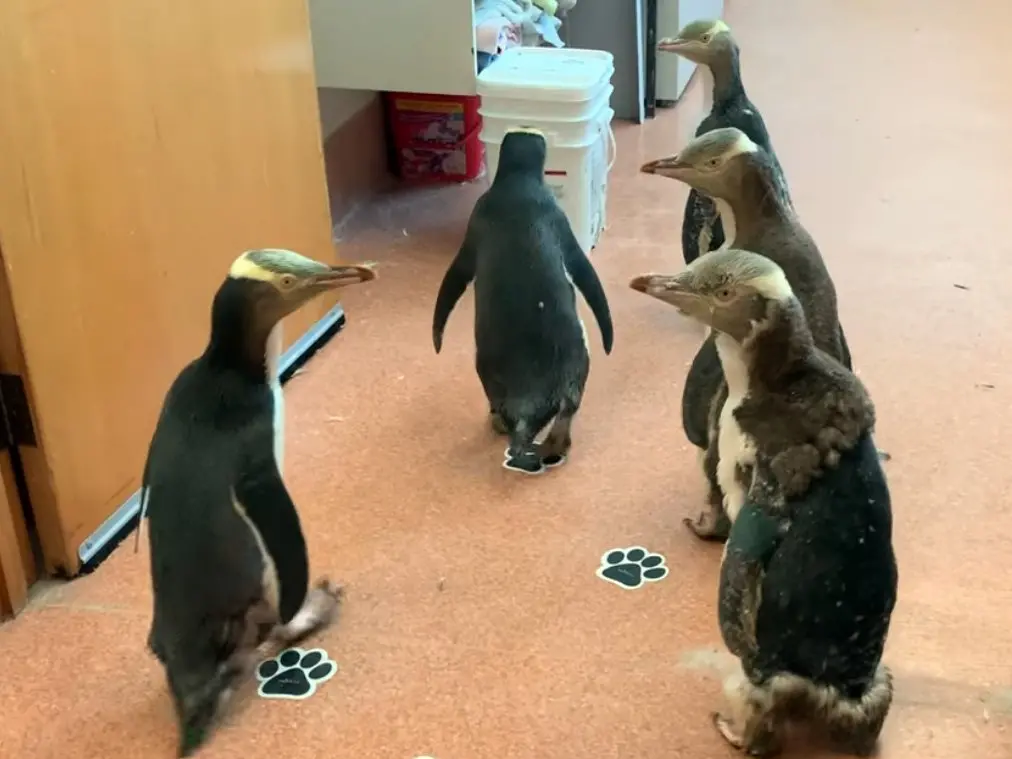
Worrying numbers of New Zealand’s mainland population of yellow-eyed penguins have required human intervention to stay alive during a catastrophic moulting season for the endangered birds now under way.
Conservationists have started to raise the alarm after high numbers of the birds began returning to shore to moult either with injuries from barracouta and small sharks, or appearing dangerously underweight — or both.
Rising sea temperatures, and a marine heatwave over summer, are suspected to be behind what Penguin Rescue sanctuary manager Rosalie Goldsworthy called "a major threatening event" for the species.
In North Otago, she said, birds were about a week late arriving back for the annual moult, when they spend about a month on land losing and replacing all their feathers at once.
At the colonies Penguin Rescue monitored about 10% of the breeding females were missing and about 90% of the birds needed help.
Only one breeding female had managed to get through the moult without human assistance this year, she said.
"In March things started to go wrong," Mrs Goldsworthy said.
"What we first noticed was our birds that we’d expected to come home to moult didn’t come home, and then a week later they started arriving and they were all underweight."
There were 110 admissions of yellow-eyed penguins (hoiho) to the rehabilitation centre at Penguin Rescue this season, she said.
"We only had 43 nests all up.
"Every female has needed a helping hand to get through the moult, or they’re missing — except one."
Mrs Goldsworthy said she believed fish were scarce in the area because of the high temperatures observed during the significant marine heatwave over the summer.
"One thing that I can tell you, that we do have evidence of, is there is greater competition for the fish, for food," she said.
"Our birds, a lot of them, came home with wounds to their feet and that happens when they are competing with barracouta and small sharks for fish.
"They just get bitten as part of a feeding frenzy."
Yellow-eyed Penguin Trust operations manager Amanda Salt said the trust’s rangers were seeing the same thing.
At present rangers were in the field every day trying to find hoiho and as required getting them quickly in to Dunedin Wildlife Hospital to either be patched up or passed through to a rehabilitation centre.
"It’s very serious," she said.
"Every person I can get in the field, they’re in the field working on it at the moment."
Wildlife Hospital manager Jordana Whyte said at least a dozen hoiho were in care at the hospital yesterday.
Birds that were simply underweight were passed on through to rehabilitation, others with wounds, underlying illnesses "or anything else that we’re really concerned about" were kept in care.
The range of injuries vets were seeing was quite varied, and birds had suffered eye injuries as well as bites to their flippers or feet.
"They’re just getting hammered."
University of Otago researcher Thomas Mattern said for hoiho, recent successive La Nina events were a problem.
The associated higher ocean temperatures meant the water was more stratified, or warmer at the surface and colder at the bottom.
"Hoiho forage at the seafloor of coastal waters, an environment that depends on nutrient input coming from the land.
"These nutrients need to sink to the bottom to fuel productivity, but with stratified waters this doesn’t happen as warm and cold water do not mix well.
"The result is less productivity at the seafloor, less food for hoiho."
New Zealand’s coasts were experiencing longer and more frequent La Ninas, he said.
This year with the La Nina phenomenon entering its third year, it had been highly likely hoiho would take a hit, he said.
"Next up, it looks like we’re heading into a substantial El Nino event, which will likely give hoiho the chance to recover a bit.
"While this will be a great relief for everyone involved with the species ... the next La Nina will come — and it could be worse than this last one thanks to what looks like ever-accelerating climate change."