


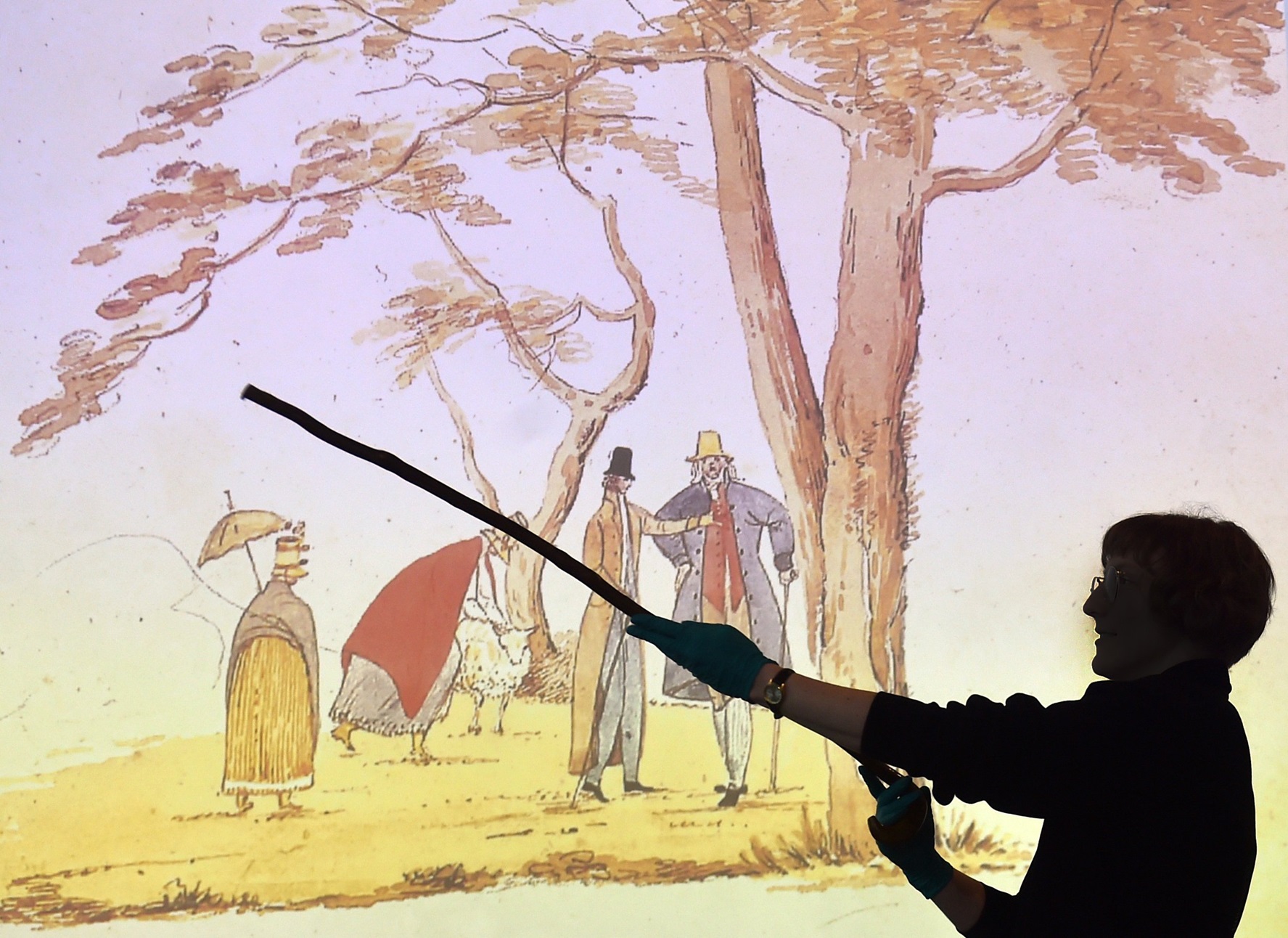
The pop-up exhibition, "Jane Austen @ 250", is part of a series of events marking the upcoming 250th birthday of the Pride and Prejudice and Sense and Sensibility author at the museum this weekend.
The exhibit will feature a pack of McEvoy playing cards and a mahogany wine cellarette, dating back to the late 18th century, as well as a Wedgwood basalt teapot and a walking stick once used by Scottish novelist and poet Sir Walter Scott — one of Austen’s contemporaries — in the early 19th century.
Two free floor talks will be given by University of Otago Emeritus Professor of English, and Austen expert, Jocelyn Harris.
None of the items on display actually belonged to Austen, Prof Harris said.
"We don't have a lock of her hair, we don't have her ring, we don't have her bracelet or anything like that.
"But we chose these items because they come from Jane Austen's time and because it sets me off to be able to talk about events at the time that she was associated with, or that she had opinions about."
She would show how closely Austen observed her revolutionary and Romantic era, satirising society and its celebrities up to and including the Prince of Wales.
War and peace, slavery and empire, as well as poverty and wealth were all categories she would speak about, on top of Austen’s writing conditions and position in the literary world.
Sir Walter was Austen’s "rival" and she was "very upset" when he started writing novels as well as poems, Prof Harris said.
"She felt that was really unfair.
"He ended up writing a terrific review of one of her books, so she must have forgiven him in the end."
Austen’s reputation had "gone ballistic" and she never seemed to go out of fashion.
Every time there was a Jane Austen event in Dunedin it was crowded, Prof Harris said.
"I'm not quite sure what she would have made of it all, but I think she would be pleased that we're celebrating her 250th birthday."
Tomorrow, the museum is also hosting a Regency-inspired high tea event featuring parlour games, live entertainment and a traditional tea service "with delectable treats".
Regency dress is encouraged with prizes on offer for the best-dressed attendees.


