
PHOTO
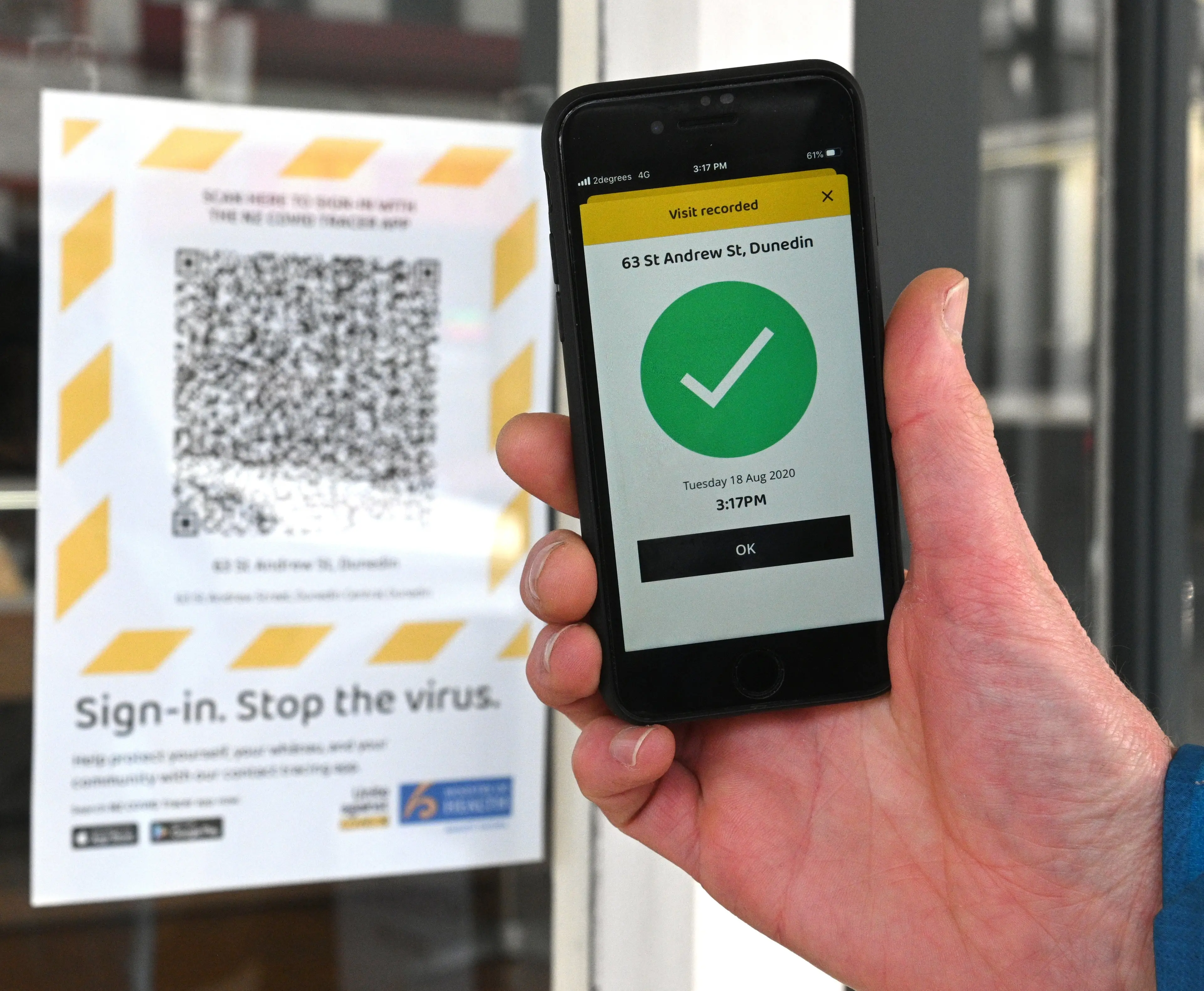
More than 90% of Dunedin people were not regularly using the Covid-19 scanning app before the latest Alert Level 4 lockdown.
That usage rate dropped still further at bars (2%) and restaurants (3%).
University of Otago academics have tracked use of the app, a vital tool for tracking and tracing of potential contacts of Covid-19 cases, for many months.
Initial research published in the New Zealand Medical Journal in March found a median rate of scanning of just 10%, and that at 12 venues, eight of which were bars, no-one scanned in at all during the survey period.
Final-year medical students carried out a similar survey again, between July 18 and August 1.
This time researchers spent 45 minutes at 64 locations around Dunedin, including cafes, bars, restaurants, supermarkets, shops, gyms, pools and churches, and recorded a mean percentage rate of use of the Covid-19 app by just 9% of people.
Supermarket shoppers and cafe patrons had the best scanning rates, at 14% and 11% respectively.
Supermarkets were also audited for use of sign-in sheets, a tool which was used by just 0.2% of shoppers.
Their supervisor, Centre for International Health co-director Prof Philip Hill, said the low rate of scanning showed that the Government decision to make keeping personal records of movements mandatory was correct.
‘‘We need to all make QR scanning part of normal life during the pandemic,’’ he said.
‘‘Along with making sure we get tested as soon as we get any cold or flu-like symptoms, these will give us a great chance of stamping out future outbreaks without requiring prolonged lockdowns.’’
Nationally during the survey period, daily scanning rates ranged between 413,000 and 942,000.
On Tuesday, the day before Level 4 came in to force across most of the country, just over 1million scans were made.