
PHOTO
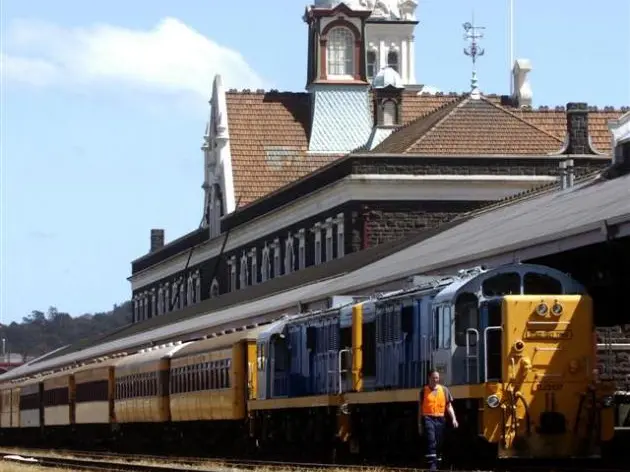
Fifty-one staff will likely be made redundant as Dunedin Railways Limited mothballs its track and equipment in a bid to avoid closing entirely.
In a statement this morning, chairman Kevin Winders said mothballing was a way of preserving DRL’s assets ''with a view to exploring future options for the company in what will undoubtedly be a very different tourism environment''.
The Dunedin City Council has agreed to meet the ongoing costs of mothballing the operation.
Consultation had begun today on proposals which would result in 51 job losses, Mr Winders said.
"We deeply regret the impact on our staff and their families. This is a very difficult time for them and we will work hard to do everything we can to look after them."
DRL would retain a skeleton staff of four to prepare the company for hibernation, and to maintain selected assets that will be kept.
Mr Winders said DRL’s existing business challenges, even when operating in a buoyant tourism market, were well known.
"The impacts of Covid-19 exacerbate these challenges severely because the company is largely reliant on international tourism which makes up 80% of DRL’s total passenger numbers.
"We are unlikely to see international visitors return in the 2020/21 summer and the outlook beyond that is uncertain at this time. With this outlook, it is simply not possible to keep the business operating as normal." DRL’s main shareholder is Dunedin City Holdings Limited (DCHL).
Chairman Keith Cooper said they were supportive of the decision to mothball the operation.
"This option provides flexibility to explore new and sustainable tourism offerings based on DRL’s assets as the economy and tourism recover post Covid-19."
The future evaluation work will be led by DRL’s sister company, Dunedin Venues Management Ltd (DVML). Future options will be reported back to DCHL and the council later this year, which will then make decisions on initiatives and any proposed investment.
Mr Cooper said it was too early to say what options might emerge, but that the business and its products could look quite different in future.
One of DRL’s biggest challenges is high operating costs due to the age and condition of the train/ track along with a deferred maintenance bill in the order of $10 million for the Taieri Gorge track in the longer term. Even before Covid-19 came along costs like this were unsustainable."
Mr Winders said DRL was grateful for shareholder support for mothballing as an alternative to closure. "Although it is not a step that is taken lightly, it leaves us with the opportunity to potentially return with new sustainable services once the tourism market becomes clear in the future."
As part of the decision to mothball the company, the Otago Excursion Train Trust has decided to sell its 28% shareholding in DRL to DCHL, making DCHL the sole shareholder of DRL going forward.
MOTHBALLING ONLY ALTERNATIVE - MAYOR

Dunedin Mayor Aaron Hawkins said mothballing the company was the only realistic alternative to full closure.
''However, this still a heart-breaking outcome because under the proposal a number of jobs would be lost, which is devastating for those impacted and their families," he said today.
“It is also a significant blow to an iconic and long-standing tourist attraction. Dunedin Railways, and particularly the Taieri Gorge Railway, is much loved by the Dunedin and wider Otago community.''
With the business already facing some financial challenges, international borders closed for the foreseeable future and the cruise industry unlikely to recover until at least 2021/2, Dunedin Railways’ passenger numbers would be significantly reduced even post the Covid-19 national lockdown.
DCHL had advised the council that continuing to run Dunedin Railways would cost about $750,000 per quarter ongoing through winter, with little hope of any significant revenue for at least another 18 months.
The company was not able to sustain those costs and would quickly become insolvent without a significant contribution from its shareholders, Mr Hawkins said.
The council had therefore agreed to financially support mothballing the company’s assets to allow exploration of new and sustainable tourism offerings, rather than seeing the business close completely.
That would cost up to $1.05 million from June 30.
That included the retention of a small number of staff and the storage and maintenance of key assets such as locomotives, carriages and power vans.
“The council has asked for a report to come in advance of the Long Term Plan next year that will present future options for the railway operation, including restarting the business. The council and DCHL will then make decisions on initiatives and any proposed investment,” Mr Hawkins said.