

There are 147 new community cases today and a man isolating at home with Covid in Auckland has died suddenly, the Ministry of Health says.
There are 81 people in hospital with the virus, up from 79 yesterday. There are 11 cases in intensive care or high dependency units, up from 9 yesterday. The average age of these people is 53, up from 51 from yesterday.
Of today's cases, 131 are in Auckland, 14 in Waikato and two are in Northland.
The Ministry says someone isolating at home with Covid has died suddenly in the Auckland suburb of Glen Eden.
Director-general of Health Ashley Bloomfield said the death would be investigated.
The cause of death would be determined by the coroner, including whether it may have been Covid-19 related.
"Our thoughts are with this man’s whânau and friends at this stressful time."
The man’s death is not included in today’s numbers.
Bloomfield said 1671 people with Covid-19 were isolating at home and the system was working well overall. They were constantly reviewing it, and pulsometers were being used in some cases, since people's health could deteriorate quickly.
School return
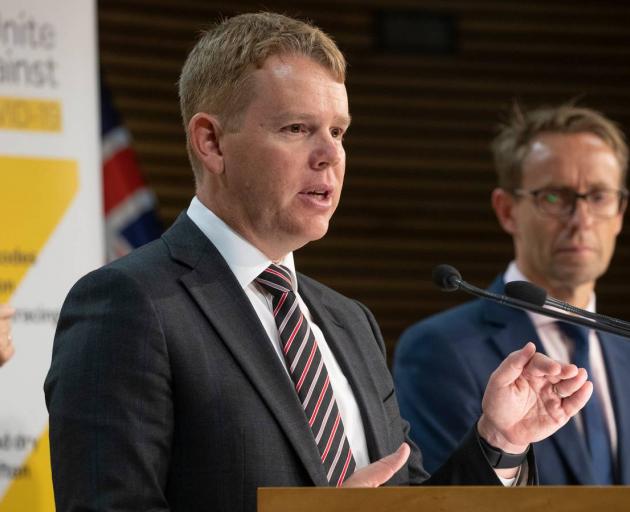
Education Minister Chris Hipkins said New Zealand was nearing the stage when it could re-open but that would be done carefully. He said Auckland and Waikato school pupils in Years 9 and 10 could return to school from November 17. Years 1-8 would return part-time from the same date.
Schools and kura could decide what worked best for their communities in structuring the return to school.
He said public health advice supported the return of schools, but there would be masks for Years 4 and up, and ventilation requirements.
Hipkins said the requirements on schools relating to the changes in the curriculum would be eased by delaying the new curriculum introductions.
Asked why primary school students would be part-time, Hipkins said that was based on public health advice. There were no hard and fast rules on how schools should do that, and he was aware some parents were nervous about sending children back to school.
"I've spent several months at home with my own children during Covid-19 restrictions and it is hard-going, and that is only a fraction of what Auckland parents have had to deal with."
He said the ability of secondary school students to get vaccinated made it less high risk than for primary schools.
Hipkins said schools should manage it in a way that was safe. Schools would be sent comprehensive guidance - but some schools had a lot more space than others, so it would not be the same for every school.
Asked if a school could choose to bring students back full-time, Hipkins said that was an option if they could do so within the public health guidance.
On warnings of a super-spreader event in a school, Hipkins said the guidance was that schools were safe with public health measures.
Bloomfield said in New South Wales in Australia, schools were not seeing spread in primary schools, even though pupils were not vaccinated.
Hipkins said a small handful of schools had reporting having troubles with the mandate for staff to be vaccinated and were working with the Ministry of Health.
He noted there had also been concerns among port workers when that mandate came in, and they had been targeted by misinformation campaigns. The same thing was now happening with schools, but he said information campaigns in ports had proved effective.
Vaccine boosters and a new jab option
On vaccines, Bloomfield said Pfizer had been the focus so far and it would continue to be the primary vaccine. However, he said there was a small number of people who could not have Pfizer for medical reasons - a few hundred people. A different option would be brought in for those and would offer AstraZeneca as a second option for people aged 18 and over.
More details would come next week, but the first delivery was likely to be late November.
It would also be offered to those who were required to be vaccinated under a vaccines mandate, but who refused to take the mRNA Pfizer vaccine.
Bloomfield said Pfizer was still the choice and had proved to be a good choice given it was so effective. AstraZeneca would be offered only to those who could not take Pfizer for medical reasons, or those who were in workplaces with vaccine mandates but who were refusing to take Pfizer.
A total of 22,178 vaccines were administered yesterday, including 5874 first doses and 16,304-second doses. Of those, 5771 were given to Aucklanders - 1,490 first doses and 4281-second doses.
Eighty-nine per cent of Kiwis were partially vaccinated and 79 per cent were fully vaccinated. For Māori, 75 per cent had had one dose and 58 per cent were fully vaccinated.
Bloomfield has also had advice from the Covid-19 technical advisory group on the timing and rollout of the boosters and he expected to tender his recommendation to the Government by Thursday. It was likely that programme would start in November.
Hipkins said a vaccines certificate system was under trial, and more information and details on the introduction of it would come next week.
Latest modelling
Bloomfield said Covid modelling had initially forecast 200 cases a day by the end of this week - and last week's case numbers were on track with that modelling.
He said hospitalisations had been higher and were due to hit 150 but there was capacity in Auckland for it.
"Anyone who needs care for any reason, do not delay in seeking it. It is safe."
Bloomfield said testing levels remained high, especially in Auckland. He said there were six suburbs of concern, Ranui, Sunnyvale, Keslton, Birkdale, Mangere and Manurewa.
There are now 21 residents and four staff members of Edmonton Meadows Care Home in Henderson who have tested positive for Covid-19.
Seven of the Covid-19 positive residents are receiving appropriate ward-level care at Auckland hospitals. There has been no increase in numbers over the last 24 hours.
A second resident at the Rosaria Rest Home has also tested positive.
Bloomfield said the Northland cases were both in the same household in Dargaville - one was a child under one. "Vaccination is the best way to protect our tamariki."
Covid in Wellington wastewater
Officials have also advised Wellington City Council that Covid-19 has been detected in wastewater at Moa Point, Mayor Andy Foster said.
Foster said officials told the council it wasn't an unusual detection and is likely from cases in MIQ.
PM in Auckland
Today's numbers come as Prime Minister Jacinda Ardern has made her first visit to Auckland after three months into lockdown.
Ardern is visiting Auckland today ahead of expected announcements from Covid-19 Response Minister Chris Hipkins on when schools will be able to reopen for younger students in Auckland and other level 3 areas.
Ardern's Auckland visit followed major protests at Parliament yesterday and ongoing tensions about mandatory vaccinations at schools and workplaces.

Hipkins discussed vaccine certificates yesterday as a group of about 3000 protesters assembled outside Parliament expressing a range of anti-lockdown grievances.
Hipkins indicated a torrent of misinformation was infiltrating more discussions about Covid-19 vaccines.
Mandatory vaccinations for teachers have become a flashpoint. In the King Country, reportedly up to a third of staff at local schools are unvaccinated.
"One of the things I'm acutely aware of is, particularly in some of the smaller schools, some of that misinformation is actually having an impact on teachers' willingness to get vaccinated," Hipkins said yesterday.
"It's clear that the level of disinformation out there does seem to be growing."
The Events Transition Support Scheme will cover 90 percent of unrecoverable costs for paid, ticketed events for more than 5000 vaccinated people.
Major event organisers have voiced relief at the scheme but promoters of smaller events have missed out.


