
PHOTO

When Thomas Cockburn saw a neurologist in September he thought it was just another step in his recovery from lingering calf and back injuries.
The 28-year-old had been kept out of the rugby season, where he played lock for Springston, and had seen physios and specialists before embarking on a European holiday with his partner Eilish Robinson-Kelly from June to August.
Over two visits to the neurologist and tests on his muscles and nerves, the source of the problem was revealed. Cockburn had Motor Neurone Disease.
“It was pretty devastating,” he said.
“I didn’t really know what to think, it just kind of changes everything.”
MND is incurable. The neurologist told Cockburn people with the disease have an average life expectancy of two to five years after being diagnosed.
But Cockburn believes his age and fitness will allow him to live longer.
He received the diagnosis on his second visit to the neurologist.
Cockburn was by himself when he went to the neurologist, as Robinson-Kelly was on her way back from Europe after an extended holiday.
“I was probably in a bit of disbelief, and I vaguely remember what (the neurologist) was saying," Cockburn said.
“He was a very straight shooter,
“I just heard the life expectancy part, and kind of shut down for a bit, and then came home to process everything.”
MND causes severe difficulties with walking, speaking, swallowing, and breathing.
Robinson-Kelly returned home from Europe on the night Cockburn was diagnosed.
When he met her at the airport she immediately knew something was wrong.
"We laugh about it now, but I came off 40 hours of travelling back from Europe, and I think the first comment I made after I said hello was: ‘Geez, you look worse than I do. What's happened?’," Robinson-Kelly said.
“That's when he dropped that bomb at two o'clock, three o'clock in the morning.”
MND is a progressive neurological condition where specialised nerve cells that control voluntary muscles waste away, causing progressive weakness, muscle wasting, and loss of movement.
Cockburn and Robinson-Kelly have been together for nearly seven years and had planned to get married. But their wedding plans have now been accelerated because of the diagnosis.
They will tie the knot this weekend with a small ceremony in front of 32 close friends and family. Because of the size there will not be an official wedding party, but Cockburn's brothers will be his groomsmen, while Robinson-Kelly’s friends will be bridesmaids.
"It was expedited pretty quickly. There was always a plan to but we wanted to get married while I could still walk,” Cockburn said.
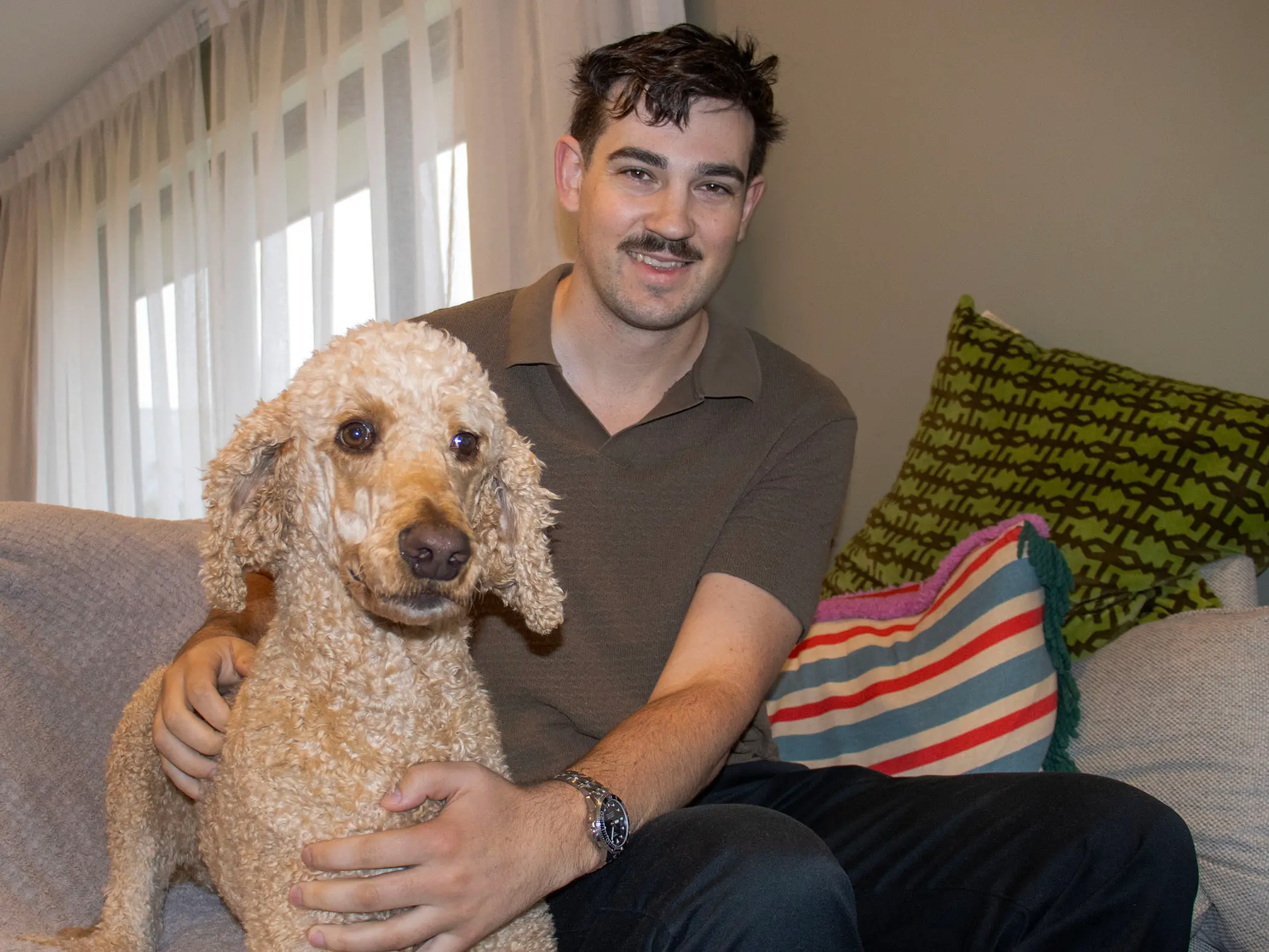
He has lost most of the muscle in his right leg and wears a brace which fits in his shoe and stops his foot from dragging on the ground. He said he uses a crutch or walking stick to help him get around.
The disease has so far not affected his ability to work. Cockburn is an accountant at Selwyn Water and previously worked at the Selwyn District Council. He is able to work from home and in the office.
Cockburn has also been watching Springston play on Saturdays and spends time with his teammates. "I’ve been to two of their games this year, which has been nice.”
But Cockburn will never play rugby again – leaving him stranded on 97 division 1 appearances.
"It was always the thing to get to 100 games, but that got cut short when I couldn’t play all of last year,” he said.
"My days are a bit more free, I don’t have trainings on a Tuesday and Thursday, but there is that part that would love to be out there still playing.”
He told his teammates about his diagnosis in December and says they gave him a wealth of support.
"I didn’t want to individually message everyone because I’d already been doing that with family and others, so I just put a message in the group chat.
"I got lots of responses, individual messages, or back in the group chat, just showing support. It was nice.”
Cockburn and Robinson-Kelly plan to travel the world as much as they can before his symptoms stop him.
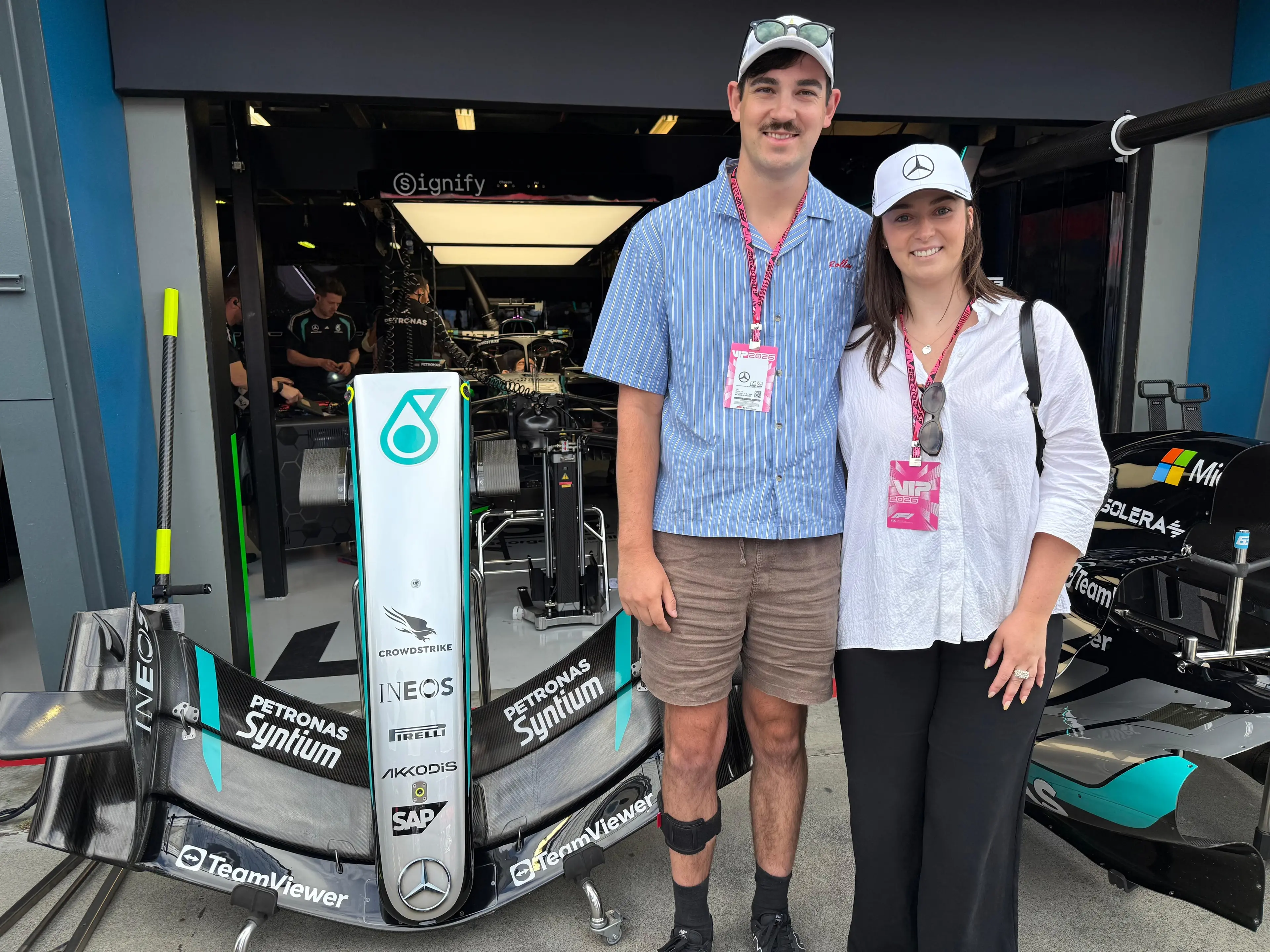
They recently visited Japan and South Korea for six weeks, where they watched the Formula 1 race in Suzuka at the end of March and got paddock passes thanks to a relative of Robinson-Kelly’s who worked for the Haas F1 Team.
Cockburn said it was an awesome experience, as he has been an F1 fan for the last “five or six years”.
"We met a couple of the drivers, so that was really cool. Ollie Biermann and Esteban Ocon on the Haas team.”
The couple are planning to head overseas after the wedding.
"We haven't booked or done anything, probably do an island holiday and then try to get back to Europe or maybe Japan again. If the politics are all good, maybe America.”
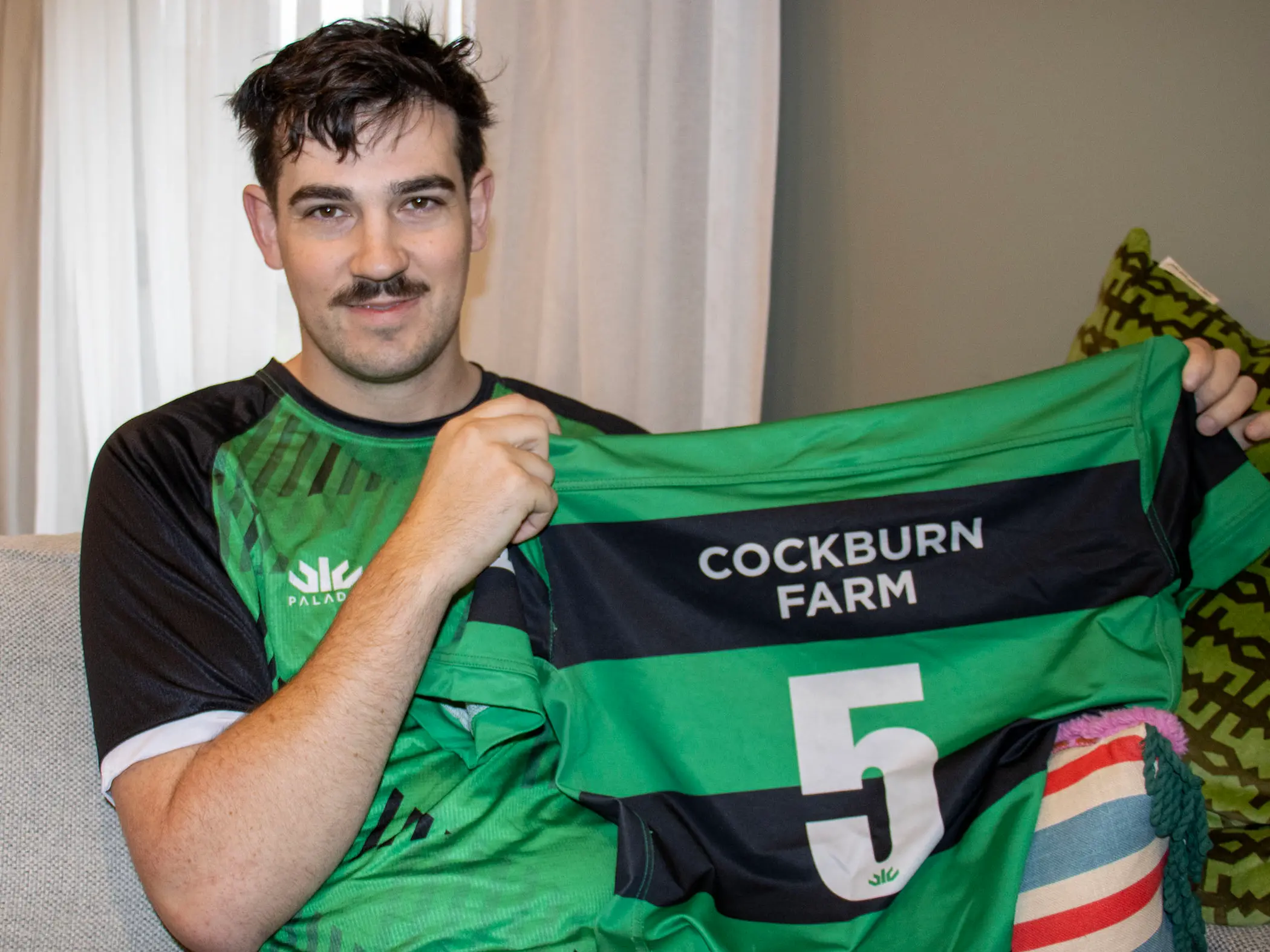
Cockburn’s diagnosis has prompted the Springston Rugby Club to raise money for Motor Neurone Disease NZ by selling retro-style jerseys, made by kit manufacturer Paladin, for $120 each on facebook.com/Springstonrfc.
The jerseys have a thick white collar in a nod to past jerseys and the club’s traditional green and black hoops. They also feature Cockburn’s initials and his No 5 on the back.
Springston vice-president and Cockburn’s former teammate Josh Farrar-de Wagt said they were doing what they could to help.
"At this point in time it's just something small, but obviously as things progress the club's definitely keen to do something else to help support him as well.
"We obviously found out the news and it rocks you a bit, so it's good to see him keeping a brave face, doing what he can and getting around and supporting us so we can support him too.”
Cockburn said living with the disease was tough – especially having no idea how the future will pan out.
"It’s quite scary to think about where your life could be in six months, a year, because I might not be walking, might not have any function or could be in a wheelchair.
“I try not to think about it, and I’m trying to live in the short term. I’ve kind of been wired to not think about things too much and just go with the flow.”
Robinson-Kelly is also helping where she can.
"Most of it really is just meeting Thomas where he's at and just trying to be there to support him both physically and mentally where I can,” she said.
“To be honest, the biggest thing is actually just living day by day and being really present in our days rather than trying to think about what's coming next.
"When we have the specialists that come to the house, I have my own questions as well, just trying to make sure that I'm over all the bits and pieces that are coming our way.”
Cockburn is hopeful his relatively young age and prior good health may help prolong the amount of time he has left.
MND is most commonly diagnosed in people aged 50 to 70, and it is extremely rare to get it before 40.
"The average life expectancy is two to five years, but that is a real rough estimate.
“There’s some people that can live for 10 to 15 years with no real issues, and some that get it and deteriorate very quickly.
"I think that since I’m younger and have had a healthy life, and they caught it within a year when normally it would take a couple years to diagnose. I should have a longer life.”
But he knows ultimately the debilitating disease is incurable.
"Sometimes I can see myself walking in a couple of years, but then others it’s like six months then I’m in a wheelchair.”
But for now he is just trying to focus on his upcoming wedding and spending time with his fiancée.
"I'm really looking forward to it and seeing what else there is to do.
"I was so lucky to have been able to do the Europe trip when we did and tick a lot of that off my list.
“Planning for the wedding has been a bit chaotic since we got back (from Japan), now it’s just getting that out of the way and then focusing on something new.”