
PHOTO
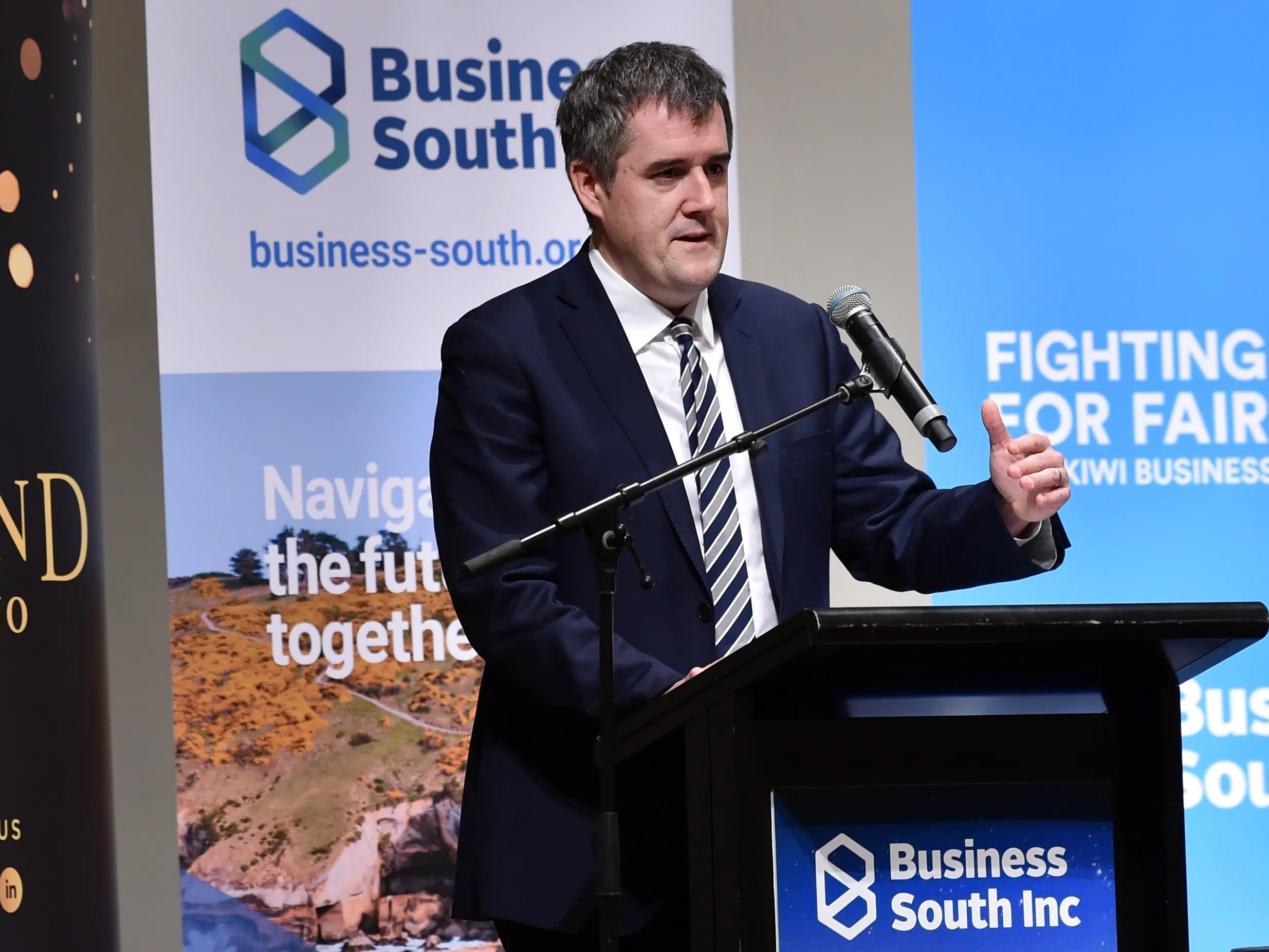
Arguably, in 2023, Chris Bishop did the hard part: the Hutt South MP was chairman of the election campaign which restored National to power.
Now comes the hard part ... in 2026 he has to mastermind another win.
"We will be putting our best foot forward. I think that we have a strong record to run on and a strong platform for re-election but that will be up to the voters."
While National’s polling has been reasonably steady for the past two years its leader, Prime Minister Christopher Luxon, has not fared so well. Mr Luxon’s personal popularity remains stubbornly low, something which Mr Bishop however — often touted as a future party leader — dismisses as being of any concern.
"What he would say is that he was elected to do a job and that he is there doing it", Mr Bishop said.
"I have got every faith that New Zealanders will see more of what we see of Christopher in 2026. He is absolutely 100% focused on getting this economy going again and lifting living standards.
"That has involved some quite hard decisions at various points, the last two years have not been easy, but I am very confident that he will do a great job on the election campaign."
Despite many people’s expectations, the country’s first three-party coalition government has proven remarkably resilient. Despite policy differences and occasional invocation of the agree to disagree provisions in respective coalition agreements, the coalition has not disintegrated.
Rather, it has passed an enormous amount of legislation — with the Resource Management Act reforms Mr Bishop is in charge of to come — and its three constituent parties have polled consistently (and usually well enough to be returned for a second term) for the past two years.
"The reality is that we live in an MMP world", he said.
"Yes, we are part of New Zealand’s first three-way coalition but it was always going to happen at some point. By its very nature MMP produces governments of different stripes ... there are clearly differences between the parties, if we all agreed on everything we would all be in the same party and we’re not.
"NZ First has a different perspective to us and we have a different perspective to Act on many issues, and those differences are well-understood ... I think the opposition doesn’t give the public enough credit for understanding that."
RMA reform and accelerating the consenting process have been at the heart of a phenomenally busy legislative couple of years for Mr Bishop who, as well as his RMA role is also Minister of Housing, Infrastructure and Transport, and Leader of the House.
While much of that work has been characterised by the word "fast-track", in reality many of the reforms Mr Bishop is championing, such as RMA reform, will not fully come into effect until 2029 or later.
"It does take a while but these things don’t happen overnight. We will see the benefits of planning and environment reform into the 2030s", he said.
"I put education in the same category too. The work Erica [Stanford, Education Minister] is doing is excellent and long overdue and very important but we won’t start to see the economic impact of better reading and writing and numeracy until well into the next couple of decades."
But that is all what will you do for me eventually. Having endured Covid-19 and a post pandemic economic downturn, New Zealanders are impatient for progress, they want life to be more affordable, and they want economic growth and all of the benefits that come from that right now.
Mr Bishop sympathises with that but argues that the government he has been an integral part of needed to address the long-term as well as immediate concerns.
"The simple reality is that many of the problems with the New Zealand economy are not overnight fixes. One of the things I’m proudest of as a government is that now we are starting to tackle some of those long-term economic challenges that have afflicted New Zealand for too long.
"People are pressuring us for change and what I would say to them is that we are on the right track, we are on a journey, and we need to stick with the plan."