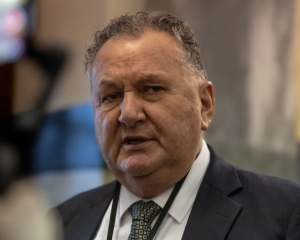
Arthur Allan Thomas has been reinterviewed by police investigating the 1970 murders of Harvey and Jeanette Crewe, one of New Zealand's greatest unsolved crimes.
In the past few weeks, Mr Thomas, two of his brothers, his sister and her husband have been interviewed by police, with some asked to provide alibis.
A rifle belonging to Mr Thomas' brother, Richard, was taken by the police for testing.
Police have told the family they still believe Arthur Thomas' rifle was used to gun down the couple at their Pukekawa farm in June 1970, despite his being cleared of the murders by way of a pardon.
His family say they are horrified the police are still pursuing and ''harassing'' them, instead of finding out who did kill the Crewes.
Mr Thomas was found guilty in 1971 and again at a retrial in 1973. However, in 1979, after Mr Thomas had spent nine years in prison, he was granted a pardon on the basis the police case against him was not proved beyond reasonable doubt.
In 1980, a royal commission of inquiry found police planted evidence used to wrongly convict Mr Thomas, and he should never have been charged. According to the commission, neither Mr Thomas nor his rifle were involved in the murders, which remain unsolved.
In 2010, the Crewes' only child, Rochelle, asked police to reopen their homicide investigation in a bid to finally find out who killed her parents. Just 18 months old when they died, Rochelle was found crying in her cot five days after they were last seen alive.
Police refused her request, but then-deputy commissioner Rob Pope agreed they would conduct a ''thorough analysis and assessment of the Crewe homicide file in an endeavour to answer questions raised by Rochelle Crewe''.
Earlier this month, the policeman charged with carrying out the review began questioning the Thomas family, including demanding an alibi for the night of the murders from Mr Thomas' sister, Margaret Stuckey, and her husband, Buster.
They also visited Desmond Thomas and took a rifle away for ''testing''. The rifle belongs to his brother, Richard, who has also been interviewed by police.
It is not the same rifle initially identified as the murder weapon, which belonged to Mr Thomas.
Police interviewed Arthur Thomas on August 16, asking him specifically about Mr Stuckey.
Mr Thomas said police asked him, among other things, if, around the time of the murders, he went out rabbit shooting at night on his own and whether Mr Stuckey had access to his farm.
Mrs Stuckey told the Weekend Herald Detective Superintendent Andy Lovelock and Detective Senior Sergeant Gary Lendrum arrived at her Pukekawa house unannounced on August 20.
''They said they were coming to talk about the Crewe murder. We knew they were doing the inquiry so we were happy to let them in, but it wasn't very long until we realised just how pointed their questions were.
''Without a doubt we felt like we were being interrogated.''
Police questioned Mr Stuckey, who was working as a fencer at the time, about work he may have done on the Crewe farm.
Police suggested Mr Stuckey had argued with Mr Crewe over a job. They also asked him about access he had to Mr Thomas' farm and firearms.
''They said that the Thomas rifle had not been eliminated from the inquiry, that the Crewes were murdered by Arthur Thomas' gun.
"So either someone went into the house and took Arthur's gun - and that could have been the mailman, the stock agent or someone that knew the farmhouse pretty well,'' Mrs Stuckey said
Mr Stuckey said: ''They said to us more than once that the bulk of the evidence still points towards Arthur. They didn't say he was guilty or anything, but they said the evidence still pointed to him.''
Two days after speaking to him in person, Det Snr Sgt Lendrum phoned Mr Stuckey, and asked him for an alibi.
''He asked me where I was on the night of the murder ... He rang back the next day and asked again.
"I said 'you listen to me and listen real bloody good. If you carry on this way there will be a harassment charge against you.' ''That was the finish; that was my answer.
''The mere fact that after 43 years ... and the way they questioned Arthur - they are trying to put me in a corner.''
Mrs Stuckey said: ''I know exactly where Buster was the night of the murder. I know exactly where we both were. But I don't feel compelled to answer that question.
''Arthur had an alibi - we knew where he was on the night of the murder and look where that got him.
''It didn't make any difference.''
Richard Thomas was interviewed at his home after the Stuckeys and said he was asked about his family, whether he had worked for the Crewes and when Mr Stuckey ''became religious''.
Police refused to directly answer specific questions about the homicide review this week.
In a statement, Acting Assistant Commissioner Glenn Dunbier said speaking to people connected to the case was ''a logical and appropriate step in any review of this nature''.
''We would be remiss if this wasn't carried out,'' Asst Comm Dunbier said.
''That included recently approaching members of the Stuckey and Thomas families, who two senior detectives met with in order to discuss various matters raised during the review assessment to date.
''The purpose of the approach was to offer them an opportunity to provide further information that could assist police in our assessment of the file.
"We stress that throughout this process, the review team have been keeping an open mind and have not yet reached a conclusion.''
Police considered the meetings with Mr Thomas and his family ''courteous and professional throughout'', Asst Comm Dunbier said.
''As we've previously said, the purpose of the review, which is being independently assessed by a senior barrister, is to provide a definitive assessment of the evidence gathered in this 43-year-old case using current analytical tools.
''It is also considering allegations against police as part of its scope.''