
PHOTO
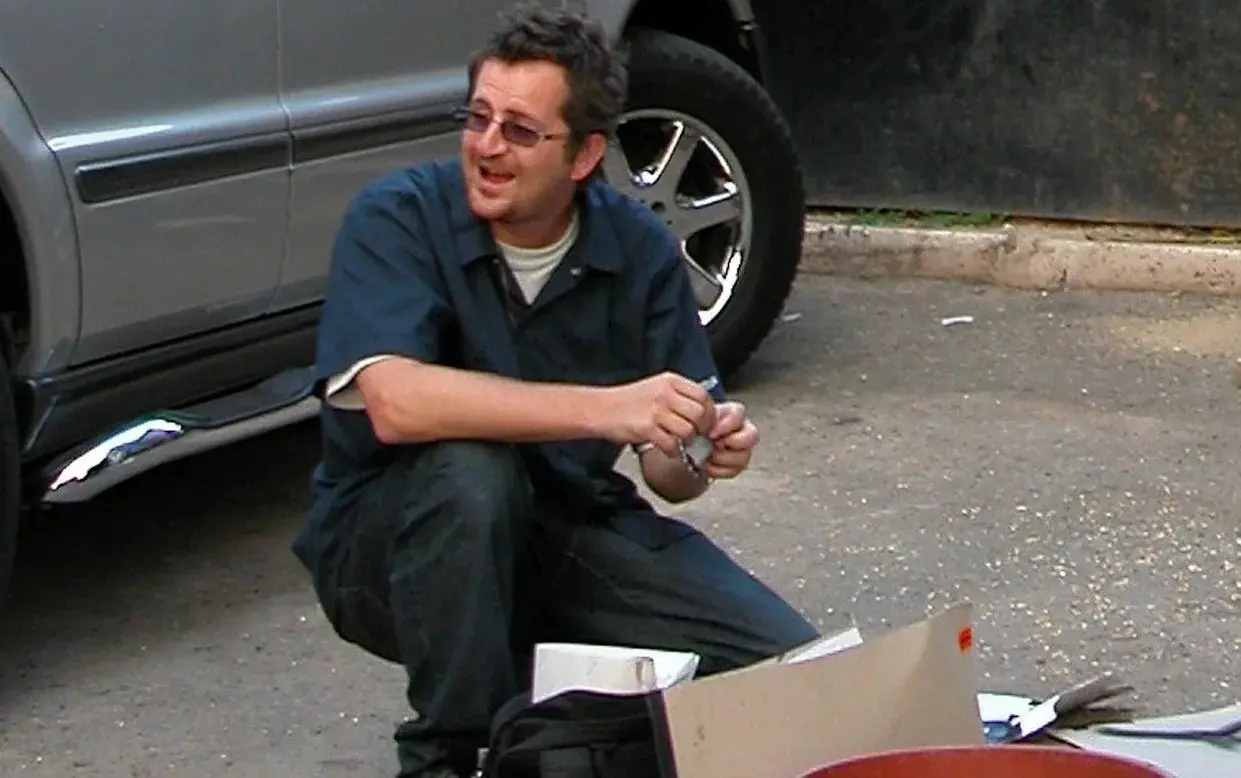
The ubiquitous street artist known only as Banksy for the past 30 years may have finally been identified, mainly thanks to an arrest in New York in 2000.
An extensive Reuters investigation released this week concluded the man responsible for wall murals spotted in Britain and around the world were created by English artist Robin Gunningham.
Reuters reached its conclusion after interviewing a dozen people familiar with the 51-year-old artist and studying his work in the US, Great Britain, France and Ukraine.
It also used media dispatches, court records and reports from law enforcement to identify Gunningham.
A central piece of evidence that pointed to the artist from Bristol was a September 2000 New York City police report saying authorities stopped a suspect who was in the process of defacing a billboard at 4.20am. That report included a signed handwritten confession.
The incident had been referred to by Banksy’s associates in the years since but never followed up by journalists until now.
One of many steps Gunningham allegedly took to hide his identity was changing his name to David Jones in 2008.
That name is so common in England that searching for it would leave sleuths acting on a tip chasing endless possibilities.
There had long been suspicion that musician Robert Del Naja, of the band Massive Attack, who like Gunningham is from Bristol, might have been Banksy. Reuters said its researchers ruled out that possibility.
Gunningham has not responded to the accusatory report pointing at him.
Banksy’s company, Pest Control, told Reuters the artist "had decided to say nothing".
The artist’s lawyer said without elaborating that Banksy took issue with "many of the details" included in the news agency’s research without confirming or denying the veracity of the story.
He also argued that maintaining his anonymity allowed his client to express himself freely.
Many of Banksy’s works appear on public and private spaces where permission may not have been granted.
Banksy acknowledged in a 2010 LA Weekly interview that what he does could be interpreted as criminal.
"I’m not so interested in convincing people in the art world that what I do is ‘art’," he said.
"I’m more bothered about convincing people in the graffiti community that what I do is really vandalism."
British tabloid the Daily Mail contended in a 2008 report that Gunningham appeared to be artist known as Banksy, yet the artist continued to live and work in obscurity. — TCA/Allied Media