


Donna Ferguson, of The Observer, helps celebrate the crucial role they played in the Battle of Britain
They flew together, died together, and are buried side by side.
First officer Dora Lang and Flight Engineer Janice Harrington were killed on March 2, 1944 while delivering a de Havilland Mosquito Mk VI plane to an airfield in Hampshire. Their plane stalled as it approached the landing strip, and they crashed.
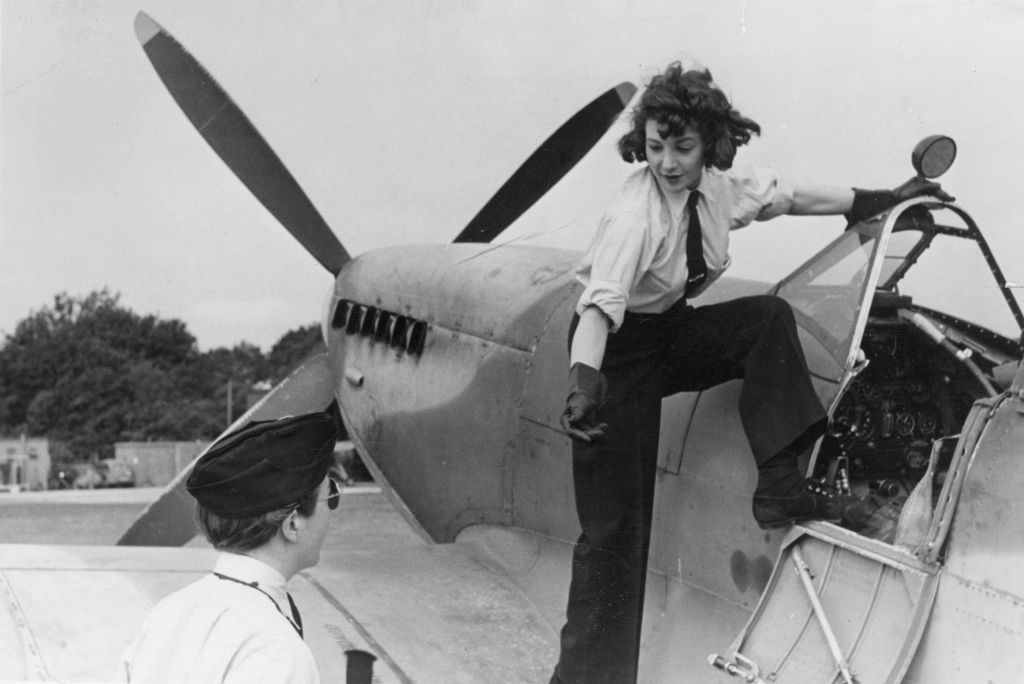
This is just one of the untold stories of the heroic young women who, with minimal training, flew thousands of aircraft around the country and risked their lives to keep British planes in the air during World War 2. Now, the numerous achievements of these women — and the remarkable courage they showed, often before resuming their roles as housewives in post-war Britain — will be celebrated for the first time in an exhibition at Biggin Hill Memorial Museum, near London.
Items on display for the first time will include the logbook, training manual and dark blue uniform of decorated war pilot Dolores "Jackie" Moggridge, a pioneering aviator who, like many women who wanted to fly, joined the Women’s Auxiliary Air Force (Waaf) when war broke out.
In July 1940, at the age of just 18, she was recruited into the Air Transport Auxiliary (ATA) and, after only some two weeks of military training, began transporting hundreds of aircraft to wherever they were needed for the Battle of Britain.
"She was the youngest ATA pilot to fly in World War 2 and quite a ground-breaking woman," Kate Edwards, director at the museum, which commemorates the famous World War 2 fighter station and RAF airfield at Biggin Hill in the London borough of Bromley, said.
"She was flying planes up and down the country — she flew 82 different types of warplanes in total, and after the war she went on to become the first female airline captain to ferry passengers on scheduled flights."
Some men were "horrified" whenever they encountered a female pilot like Moggridge during the war, Edwards said. On one memorable mission, Moggridge believed her plane was about to be hit, because just as she landed everyone outside suddenly ran for cover. "It turned out all the [male] pilots had been sunbathing in their underwear."
The challenges women such as Moggridge faced were extraordinary because ATA pilots were not taught to fly all the different types of warplanes they were expected to transport.
Instead, after some "very limited training" in the air, they were handed a small book known as the "ferry pilot’s notes’‘, which contained all the technical data they needed to know to fly each different plane — and told to study it.
"That was all they had. They might be flying four or five different types of aircraft a day by following these notes."
"She flew them all in one day, with just these ‘ferry pilot’s notes’," Edwards said.
Women were forced constantly to refer to the notes to figure out how to use the muddle of flying instruments they found in the different planes.
"The throttles, the gauges, all those instruments in a plane — they had to work it out as they were flying or read the notes before they took off."
A male member of the RAF once made a complaint about Moggridge after observing her reading while she was flying the plane he was on.
He reportedly said: "It was dreadful weather and I can’t believe not only was a woman flying me here, but she was reading a book".
According to the exhibition, Moggridge’s response was: "Oh no, I wasn’t reading a novel. Those were my ATA notes. I hadn’t flown this type of plane before" — at which point her erstwhile passenger "nearly threw up".
Moggridge went on, in 1953, to become one of the first women to get her RAF wings, and died aged 81 in 2004. The engrossing "book" she was reading on that flight — her own precious copy of the "ferry pilot’s notes" — will be on display for the first time at the exhibition.
Over the course of the war, ATA pilots ferried 309,000 aircraft across Britain, flying 147 different types of planes in total. One in 10 of them were female.
These women played a vital role in the war effort, Edwards said, "and they did it without radios, with no flying-instrument instruction, at the mercy of the British weather, often in a plane they’d never seen. And at that time, without radio, once you were up, that was it. You were on your own."
The reliance of female pilots on their "ferry notes" may explain why Lang and Harrington died so tragically while attempting to land.
"The notes would tell you the stall speed for each aircraft — so the speed at which you would stall. Perhaps they hadn’t taken in that data," said Edwards.
The two women are buried next to each other, exactly as they spent their final flight. They had no husbands or children to mourn their passing, Edwards said — they died too young. And as they didn’t get a medal or die in a blaze of glory, their sacrifice has, until now, been largely forgotten, Edwards said.
"Like a lot of ordinary people who were killed during the war, their story has gone untold. Until now." — Guardian News and Media


