It began with a river.
Travelling along the Waitaki River three years ago, from the river mouth to the base of Aoraki/Mt Cook, a group of Ngāi Tahu artists began a project that has taken them internationally for the first time and home again.
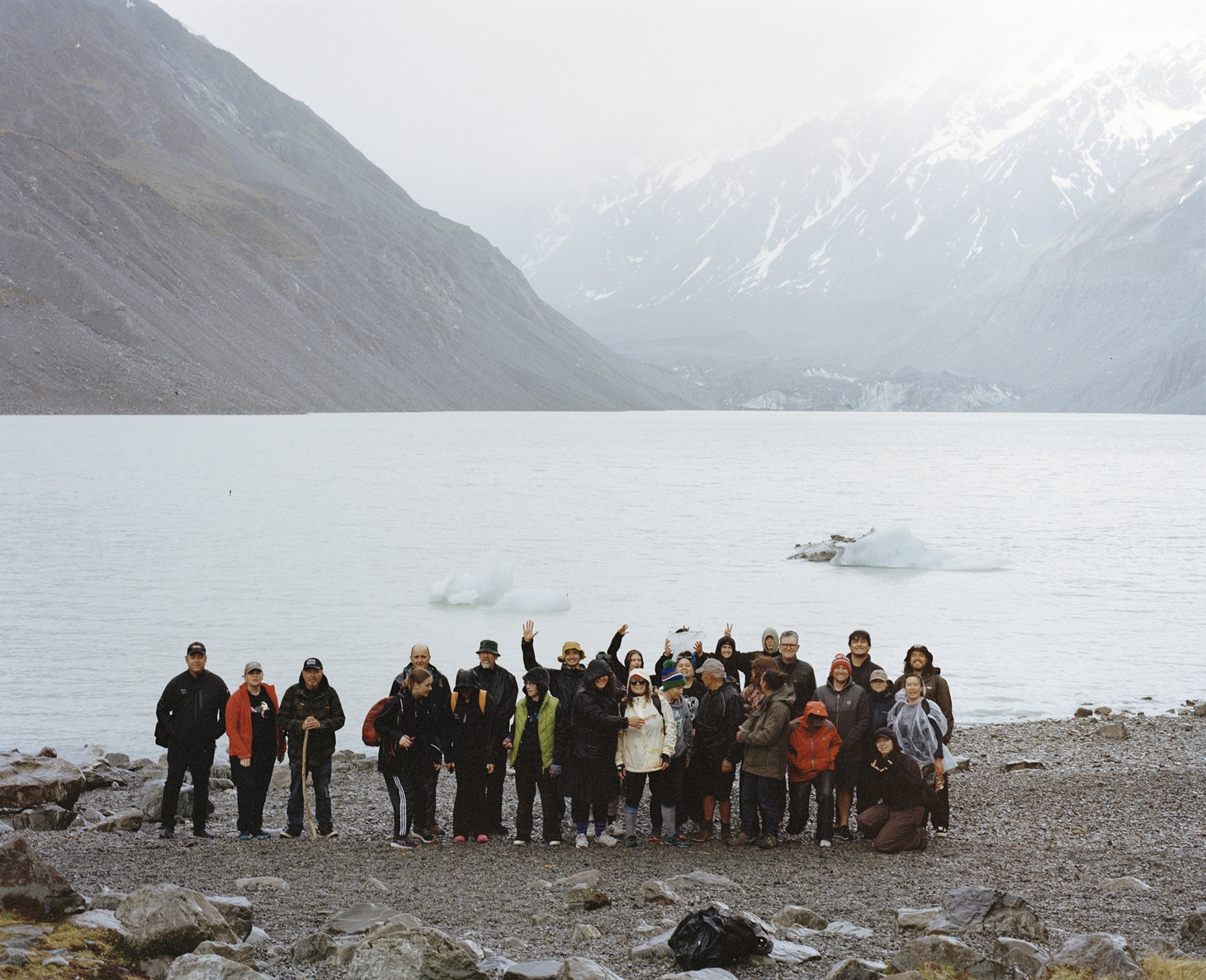
More than 40 artists who share whakapapa (genealogical connection) with the mountains, plains and waterways of Te Waipounamu (South Island) and are part of Paemanu, a Ngāi Tahu Contemporary Visual Arts collective, their families and cultural experts embarked on a hīkoi (journey) organised by Paemanu’s pou tokomanawa (central support figure) and artist Ross Hemera in 2023.
"The hīkoi was the breath we took in, that gave us the strength to travel offshore and to start to express who we are. That strength comes from this river, this whenua, these ancestors and the haukainga."
It was a first for the group who travelled together, stopping off at significant cultural, rock art and environmental sites and marae over four days.
From that trip emerged four creative aho (strands), Karaka, Ana Whakairo, Tīrewa and Hīkoi, collaboratively developed into art works of the same names and presented as "Paemanu: Awa Toi" at the Queensland Gallery of Modern Art in Meanjin Brisbane at the 11th Asia Pacific Triennial of Contemporary Art in 2024.
Paemanu co-chairwoman Mya Morrison-Middleton says part of the purpose of the hīkoi along the Waitaki River was in preparation for meeting the Brisbane River (Maiwar) which runs through the centre of the city.
"So, it was a way of us arriving in Meanjin and greeting the river and bringing with us our river and the many rivers that we have connections to."
It was the first time Paemanu had been offshore as a group and about 30 artists travelled with the exhibition. The exhibition brought together works in which many of Paemanu’s artists had contributed to, drawing on individual artists’ practices and strengths.
This approach, rooted in whanaukataka (kinship), manaakitaka (care), and kaitiakitaka (guardianship), is fundamental to the Paemanu rōpū (group).
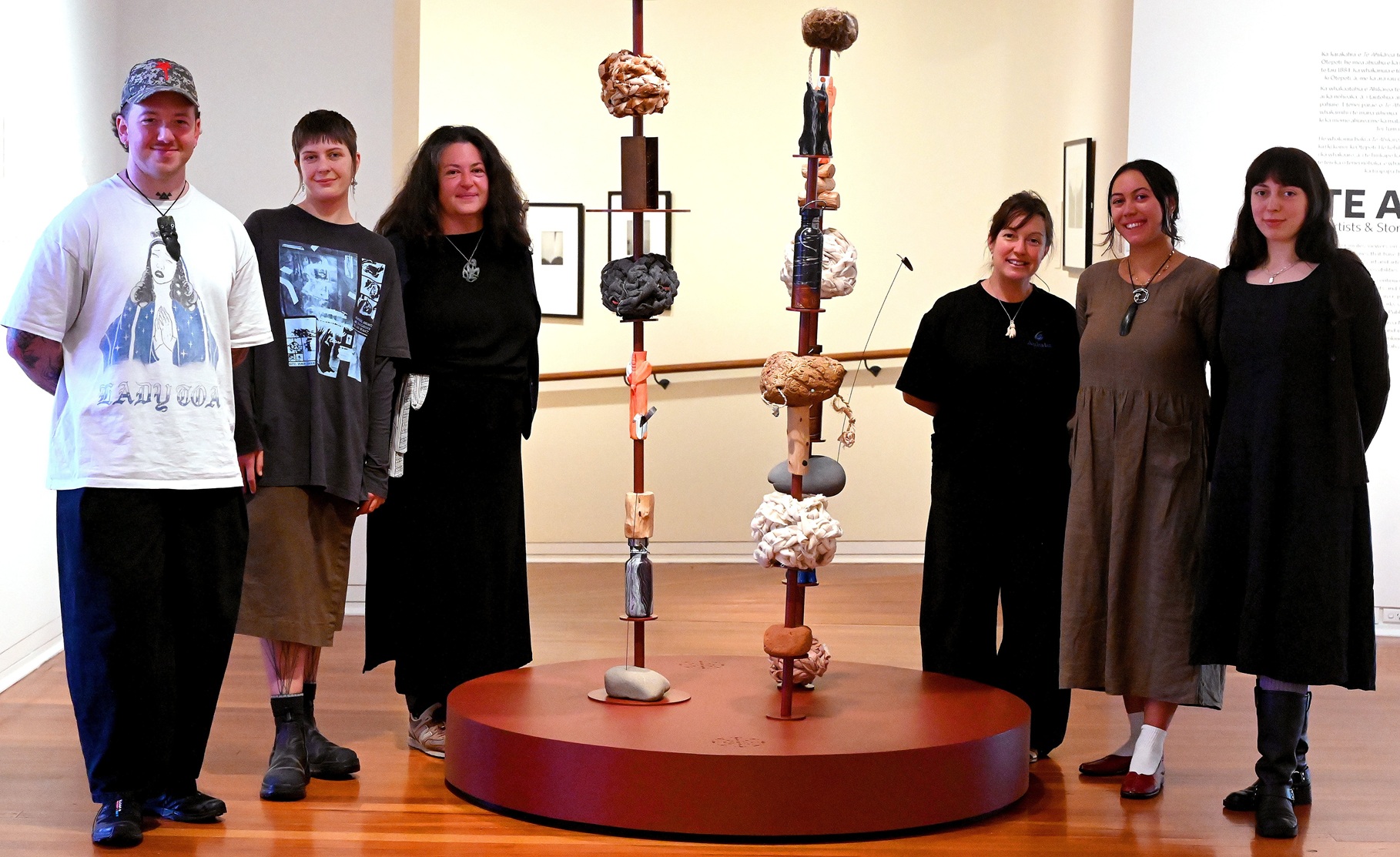
It includes sculptures, such as Karaka, in which individual sculptures created by the women of Paemanu are threaded together on to poles to reflect the ceremonial calls during a pōwhiri (welcome) when coming on to a marae.
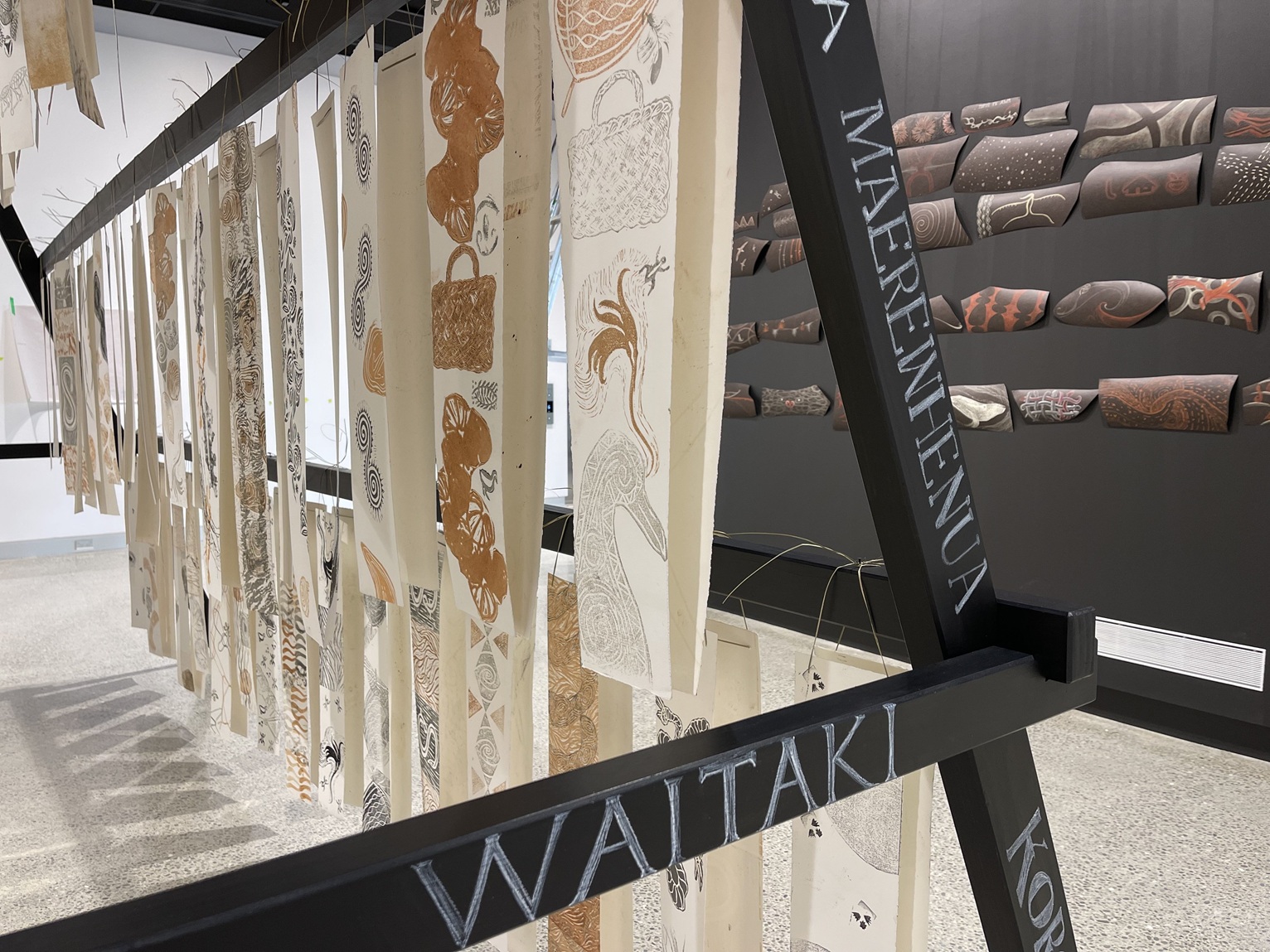
"Because Paemanu artists are spread all over the country and all over the world, they each created printing blocks that could then be collaboratively printed together."
Paemanu co-chairman Martin Awa Clarke Langdon says the prints are a reflection of Ngāi Tahu’s relationship to mahinga kai (food gathering), food sovereignty and practices.
The artists shared this practice with artists from their indigenous whanaunga (relatives) in Brisbane in a printmaking workshop. The works created were then added to the Tīrewa intermixing with those by Paemanu artists.
Another work, Ana Whakairo, is inspired by the artists’ ancestors’ rock art. Hemera, an expert in Māori rock art, created art works directly on the walls of the gallery.
"There were also contributions added by all of the Paemanu members who travelled."
Hīkoi comprises photographs and video that tracks the group’s Waitaki journey featuring the artists drawing, sketching, photographing and enjoying the journey or simply being "awe inspired".
Morrison-Middleton says it was an opportunity for Paemanu artists to collaborate closely. For their 2021 exhibition at the Dunedin Public Art Gallery, artists contributed individual works more than working in the intensely collaborative way they did for this exhibition.
Langdon says it has helped Paemanu solidify what having a shared voice sounded like in an overseas setting.
"Centring around the Waitaki and the Aoraki mauka, getting that sense of Kāi Tahu voice through our art. Those kind of collaborative practices become more important than trying to bring individual practices together."
For Morrison-Middleton, one of the biggest joys that came out of being involved in Paemanu and on the hīkoi has been not only the amazing places they visited but spending time together and building those relationships and connectivity.
It has also resulted in artists establishing connections for future work that may have never come about without this connection.
Being able to get the works out again and showcase them at Oamaru’s Forrester Gallery in its new exhibition space was significant as it was bringing them "home" to where they were inspired.
"It is an honour to be the first large exhibition in the new gallery extension, which is celebrating the region, and the gallery’s future direction including mana whenua, Kāi Tahutaka and Kāi Tahu artists," Langdon says.
The exhibition has been reconfigured to reflect being back in the Waitaki and the new space, including a new name "Paemanu: Kārakaraka Toi".
Some of the artists involved have been installing the exhibition in the gallery over the past few weekends.
"Working in a space that’s never had an exhibition in it before is a new challenge, but the works all sit together well. It was really nice bringing the artworks out of storage. Warming the artworks up and greeting them was special. There are so many people, and so many hands, contributing," Morrison-Middleton says.
There are also new works being added to Ana Whakairo for this exhibition.
Forrester Gallery curator Anna McLean says it is really appropriate the exhibition is to return to the Waitaki after receiving "really good" recognition in Brisbane at the Asia-Pacific Triennial.
It is also important as it signifies the new direction the gallery is able to take in its new form to be a cultural hub for the whole community.
"It was really important to look at the space biculturally. Looking at the original space as you walk in, it is a very intimidating colonial space. And walking into this new space, everyone feels included. And there’s a real strong presence of toi Māori and toi from Kāi Tahu."
The exhibition also ties in with other art work and installations that will be unveiled when the extension is opened.
TO SEE
"Paemanu: Kārakaraka Toi", April 20-August 16 at the Forrester Gallery, Oamaru.