Politicians have to fashion an understanding with reporters if they want their pearls of wisdom reported, and journalists have to cultivate MPs, mayors and councillors as contacts for stories, but must also avoid being captured by them and becoming nothing more than their stenographer.
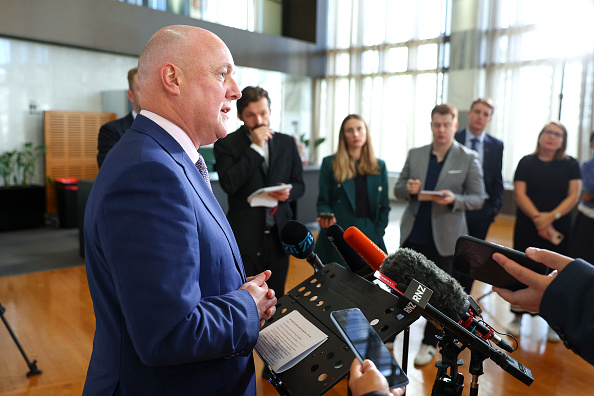
Occasional ruptures in the relationship are an inevitability of each side having a completely different job. While both are communicating to voters, one is doing it from a partisan perspective while the other — if they are doing their job professionally — is not.
Historically New Zealand media — unlike the UK or US, where owners’ political beliefs are well known and frequently demonstrated — strives to keep itself unaligned in the battle for power.
That does not stop a perception that various outlets are biased in a variety of directions. That is seldom so, and is likely based on people having a short memory and a misapprehension of the media’s role as a watchdog over government.
That scrutiny will, logically, usually be of the party or parties in government: they are the ones spending taxpayers’ money or taking decisions which have an impact on many or all of us.
The Press Gallery, which was blasted for being anti-Labour four years ago and which is now being accused of being anti-coalition, is simply asking the hard questions of whomsoever is sitting in the Treasury benches.
However, it is difficult not to feel that National, the senior party in the coalition, has decided that it is open season on TVNZ.
Recently there was high-level dismay at the editorial decisions 1News made over coverage of the release of crime statistics and last week a complaint by National led to the suspension of TVNZ’s political editor from the Gallery for her attempts to gain an interview with National chief whip Stuart Smith.
Journalists covering Parliament do so subject to a protocol covering interviewing, filming, and photography in its buildings, and failure to abide by the protocol can incur the ire of the Speaker.
Gerry Brownlee, in suspending the reporter, said that she had accepted that she went beyond the rules and also accepted his decision.
This was an isolated incident, and while it was National which complained the Speaker was responding in his role as superintendent of the complex.
More broadly, National leader Christopher Luxon, who regularly declines to appear on the network’s flagship current affairs programme Q+A, has now decided to scrap his weekly appearance on TV One’s Breakfast show.
Mr Luxon said that he had ‘‘reset how I want to engage with media’’, a phrase which does not bode well for open government.
While, for now, he will still appear weekly on Newstalk ZB and RNZ National, skipping Breakfast is a further diminution of an already dwindling number of times Mr Luxon fronts the media — and by extension, speaks to the nation.
In 2024 Mr Luxon said he would no longer stop for interviews on the Tuesday ‘‘bridge run’’ — the few minutes before Parliament sits when MPs walk to the House and stop to talk to reporters.
In general, Mr Luxon seldom does long sit-down interviews. Allied Media shares the frustration of the makers of Q+A — every request we have made for a feature-length interview with the Prime Minister for the past two and a-half years has been declined.
Being ‘‘pretty accessible’’, as Mr Luxon likes to describe it, is an integral part of his job. Previous prime ministers have understood this and made themselves available to the media as often as possible.
Quite apart from accountability arguments, it is simply good politics. There are only so many votes you are going to win by making TikToks for a self-selecting audience.
Going back to TVNZ, according to NZ On Air data about 46% of New Zealanders regularly watch 1News. While that figure represents a significant decline in viewership from the corporation’s pre-streaming heyday, it is still an important source of news for about half of the country.
Why, if you wanted their votes, would you turn your back on that many people?
And why, if you were accountable to those people for your job, would you not explain yourself to them via a questioning media?