

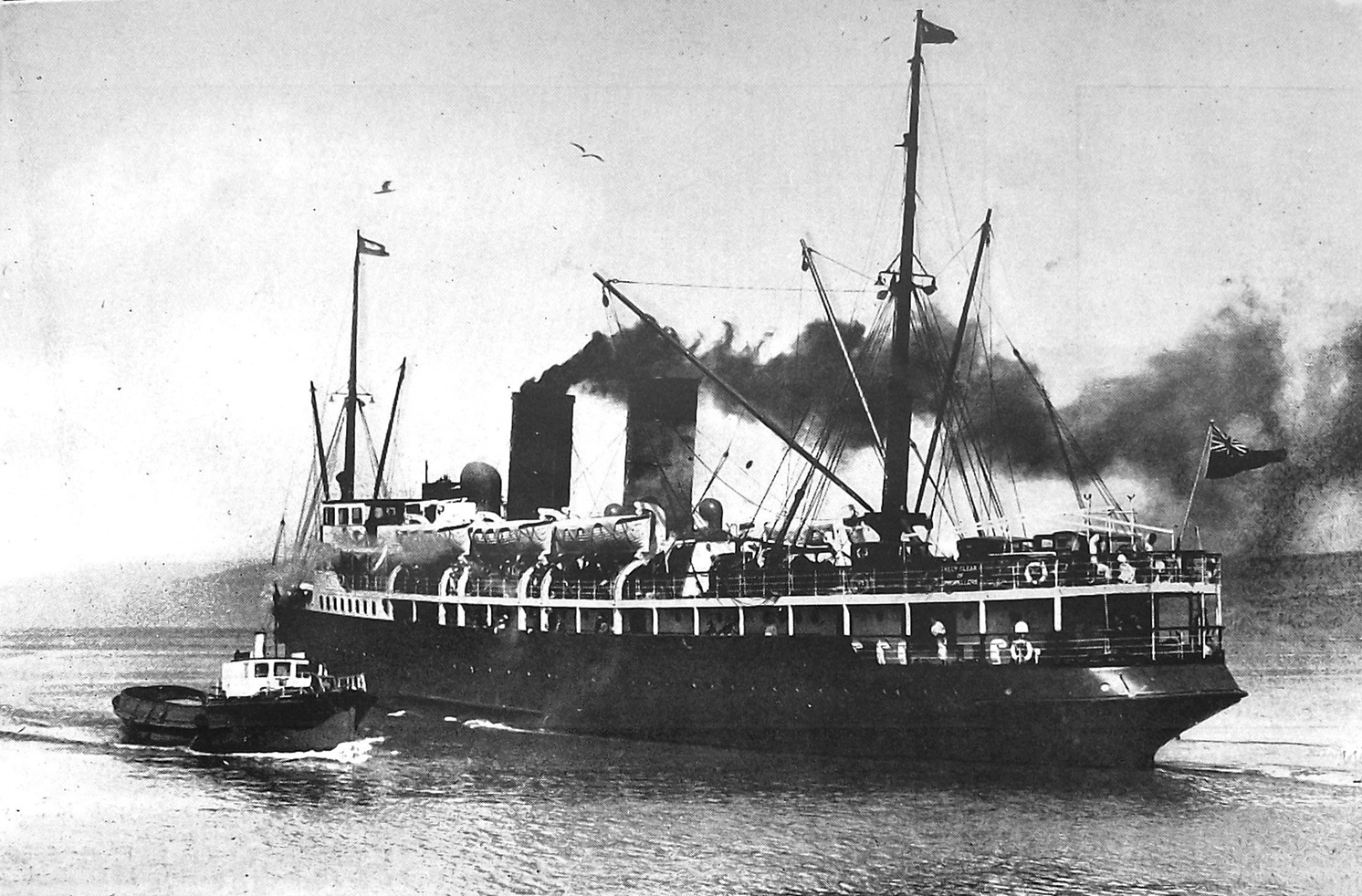

Mr D.A. Aiken (general manager of the company) proposed the toast "Success and Prosperity to Marlborough and the Tamahine," which was honoured amid enthusiasm. The Tamahine carried on her maiden trip about 400 ordinary passengers and 25 motor cars belonging to tourists. The vessel is specially designed for the carriage of motor cars, and can accommodate 40.
A link in zoology
New Zealand’s tuatara is the most famous anachronism in the annals of zoology, but there is at least one parallel in the lower orders. This, like the tuatara, is found in Now Zealand, but it is not the exclusive possession of this Dominion. It is an aberrant member of an important group.
The individuals are about only 1 inches long; they are blue-back on top, slaty blue beneath. They have 14 pairs of stumpy, be-pimpled legs, each equipped with a pair of very small horny claws. The legs and the feet have given this creature the only name it possesses, Peripatus, which has the same meaning as peripatetic — namely, walking about.
Ace of spies
An unrevealed drama lies behind an advertised death notice stating that Captain Sidney Reilly MC was killed near the village of Allekul, in Russia, by GPU troops. The Daily Express stated that Reilly, who was the son of an Irish father and a Russian mother, took a commission in the RAF in 1917, though over military age, and subsequently undertook hazardous intelligence work in Germany. Later he was in the Secret Service in Russia during the height of the Bolshevist terror, becoming an official in the Soviet organisation. He was outlawed in 1918 and condemned to be shot if he was found in Bolshevist territory. He married Pepita, widow of Haddon Chambers, the playwright, in 1923. — ODT, 22.12.1925


