
PHOTO
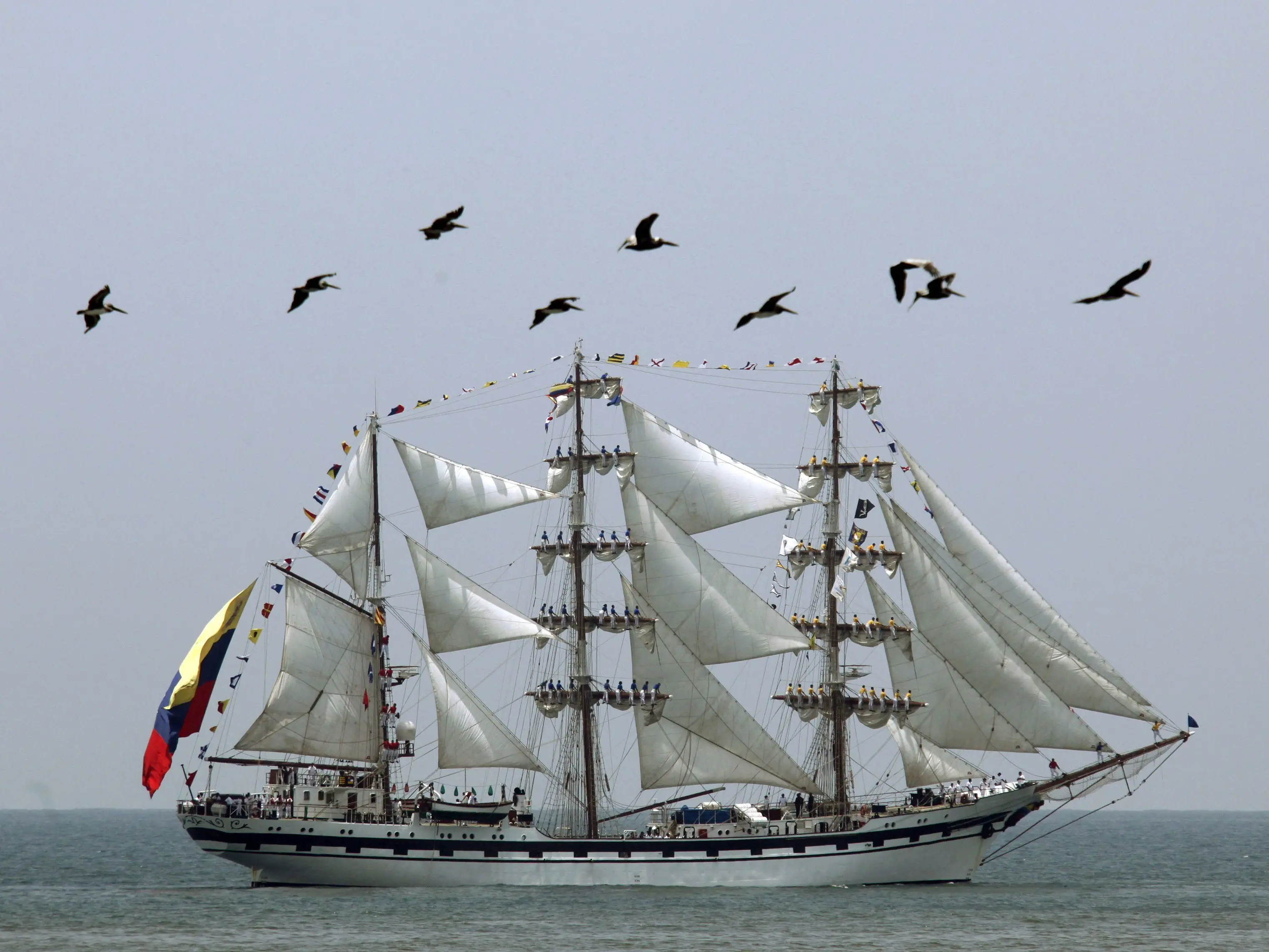
This week, for the first time, I opened a copy of the book Seamanship in the Age of Sail by John Harland.
As a complete landlubber myself, I hope that this well-illustrated volume will help me to understand tacking, rigging, reefing and so much more.

How did I get here? The age of sail comes a long time after the age of Jesus.
Years ago, I visited Akaroa on Banks Peninsula. My hopes for a weekend of enjoyable walks were dashed by solid, heavy rain.
I somehow found a copy of Patrick O’Brian’s Master and Commander, the first novel of his Aubrey & Maturin series.
The series was the basis for Peter Weir’s 2003 film Master and Commander: The Far Side of the World, starring Russell Crowe and Paul Bettany.
There is something satisfying, and perhaps more than a little fortuitous, in reading Master and Commander in Akaroa on Banks Peninsula, immersed as it is in maritime history.
The peninsula itself is named after Sir Joseph Banks, a botanist and natural historian who accompanied James Cook on Endeavour.
In 1770, Cook, Banks and his crew were the first Europeans to see the peninsula, which Cook mistook for an island.
Unbeknownst to me at the time, Patrick O’Brian must have also had a keen interest in Banks, since he wrote his biography in 1978 (Joseph Banks: A Life).
So began my entrance into the unforgettable world of the British Royal Navy during the Napoleonic Wars as depicted by Patrick O’Brian.
He doesn’t pause to explain technical terminology: he just expects you to know your halyards from your mainstays.
This is part of the enduring charm of the novels — their ability to completely transport you into the wooden world of the ship, from the top of the mainmast to the murky bottom of the bilge.
This world is fully encompassing, and can be enjoyed by landlubbers like me, with no knowledge of seamanship.
However, the more you learn, the more deeply you can appreciate the way that O’Brian describes the technicalities of seamanship, and so much else.
In a very strange way, reading the Bible has this in common with reading Patrick O’Brian (at least for me). Both can be appreciated more fully when they are understood within their own culture and time.
This can mean pulling out an atlas, specialised dictionary, or, for me this week, Seamanship in the Age of Sail.
This is all the more relevant now as the 2026 Burns Lectures come to their conclusion.
Every two years, the Presbyterian Synod of Otago and Southland provides generous support to bring an internationally acclaimed scholar to Dunedin.
This year, the University of Otago has been immensely privileged to host world-renowned archaeologist Jodi Magness for this year’s lectures. Magness has written many books about the archaeology of the Holy Land.
In one captivating lecture, she spent over an hour detailing Jewish burial practices in order to explain why all of the hype over finds regarding the supposed burial evidence about Jesus and his family was thoroughly misplaced.
In short, no, the James ossuary, or bone box, could not have belonged to James, the brother of Jesus Christ.
In the first century, only the wealthy could have afforded these types of burial practices. This is just one of many reasons why these claims don’t live up to the overblown media hype that surrounded them.
She spoke with the confidence and conviction of someone who has immersed themselves in a field of study for many, many years.
I feel like I have come away having learned a tremendous amount, but I also realise how little I actually know about the specialised discipline of archaeology.
I am thankful that there are people like Jodi Magness who spend their careers carefully sifting through the data (literally).
The discipline of archaeology takes a great deal of patient, careful scholarship, fieldwork and experience. It can’t be learned overnight.
Like the best things, it takes time and attentiveness, virtues that often go unappreciated in our fast-paced lives.
Rather than be afraid of difficulty and complexity, I think it’s better to see them as some of the things that make the world rich and beautiful, whether it’s taking the time to find out where the futtock shrouds are on a sailing ship or learning about burial shrouds and practices at the time of Jesus.
• Katie Marcar is senior teaching fellow and research fellow in theology at the University of Otago.