
PHOTO
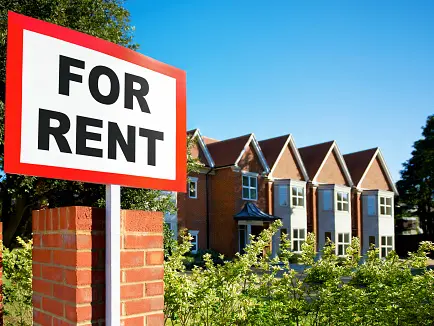
The Australian Federal Budget delivered on Tuesday has caused a huge amount of concern for renters who will face much higher rents in the future as a result of the government changes.
Labour in New Zealand made similar changes back in 2018 which resulted in rents increasing on average $180 per week. What’s more concerning is the government in Australia campaigned on not doing this.
Before the election, Australians were repeatedly told negative gearing on rental properties would not be touched. Now the conversation has shifted and investors are once again being treated like the bad guys.
Changes to negative gearing could completely change the game for property investment and development in Australia, with many people simply deciding the risk is no longer worth it.
What is negative gearing? Here is a real-world example.
If Sue owns an investment property worth $500,000 and owes the bank $400,000, her interest costs might be roughly $24,000 pa. She rents the property out for $20,000 pa and also has another $10,000 of expenses including rates, insurance, maintenance and property management costs.
Currently, her rental income of $20,000 minus expenses and interest costs ($24,000 total) leaves her with a loss of $14,000. She does not pay tax because she has not made a profit. In reality, she is losing money while providing a rental property.
If interest deductibility is removed, she can no longer include the $24,000 of interest costs in the calculation. On paper, she suddenly appears to have made a $10,000 profit and pays tax on that, despite the fact she actually lost money once interest costs were paid.
That is the real-world problem many investors are looking at, and that is why many people who currently house tenants stop investing altogether.
Whether people agree with negative gearing or not is almost beside the point. The bigger issue is governments changing the goalposts after people have already committed millions of dollars into long-term investments.
Property development is not a six-month decision. Investors and developers make plans over 10-20 years. They buy land, arrange finance, employ tradespeople and commit to projects based on the rules at the time.
If governments keep signalling one thing before an election and then changing direction afterwards, confidence disappears. Confidence matters more than politicians realise.
The facts also tell a very different story to the political narrative. First-home buyers in Australia now make up around 30% of the market. In New Zealand it is around 28%. More first-home buyers are entering the market now than ever before, despite constant headlines suggesting home ownership is impossible.
That does not mean housing is affordable. Far from it. But it does show people are still striving to get ahead and making sacrifices to do so.
What is concerning is the growing attitude that if you take risks, invest money, employ people and build houses, somehow you are a bad guy.
If you borrow millions of dollars, hire builders, contractors, electricians, plumbers and landscapers, provide work during difficult economic times and house tenants who cannot yet afford to buy, you are increasingly treated as the problem instead of part of the solution.
That mentality is dangerous.
It feels like aspiration is being punished.
Sometimes it feels like the message from government is this: if you want to succeed, forget taking risks or building businesses. Go get a BA and work for the government instead.
The frustrating part is the economics behind housing are actually very simple. If you build fewer homes, prices rise. It is basic supply and demand.
The Australian Prime Minister is now facing criticism after Treasury advice reportedly warned that around 35,000 fewer homes per year could be built under proposed changes. That matters because Australia already has a housing shortage. More people need homes every year, yet fewer homes are likely to be delivered.
You can see the same thing in New Zealand. Take Dunedin as an example. If the city builds only 50 homes a year, buyers are competing over a limited number of properties.
There are fewer options available, more pressure at auctions and more competition between buyers. Naturally house prices rise faster and rents also rise because fewer homes are available to rent.
Now compare that to a city building an extra 500 homes a year. Suddenly buyers and renters have more choice. Competition eases. Prices may still rise over time, but they will not rise as sharply because supply is keeping up more closely with demand.
That is how markets work.
That is the reality politicians often ignore. Investors are not charities. If projects no longer make financial sense, they do not happen. When developments are cancelled, fewer homes get built. When fewer homes are built, shortages worsen and prices rise further.
Also concerning is that in New Zealand the Labour Party has not ruled out whether it would again remove interest deductibility. New Zealand could face the same problems Australia is now confronting.
When a country starts punishing the people building houses, employing staff and taking risks, that is when progress stalls.
• Hamish Walker is a former National MP and director-salesman of Walker & Co Realty, Queenstown.