
PHOTO
Greetings from Aotearoa New Zealand as we commemorate International Conscientious Objectors Day on May 15.
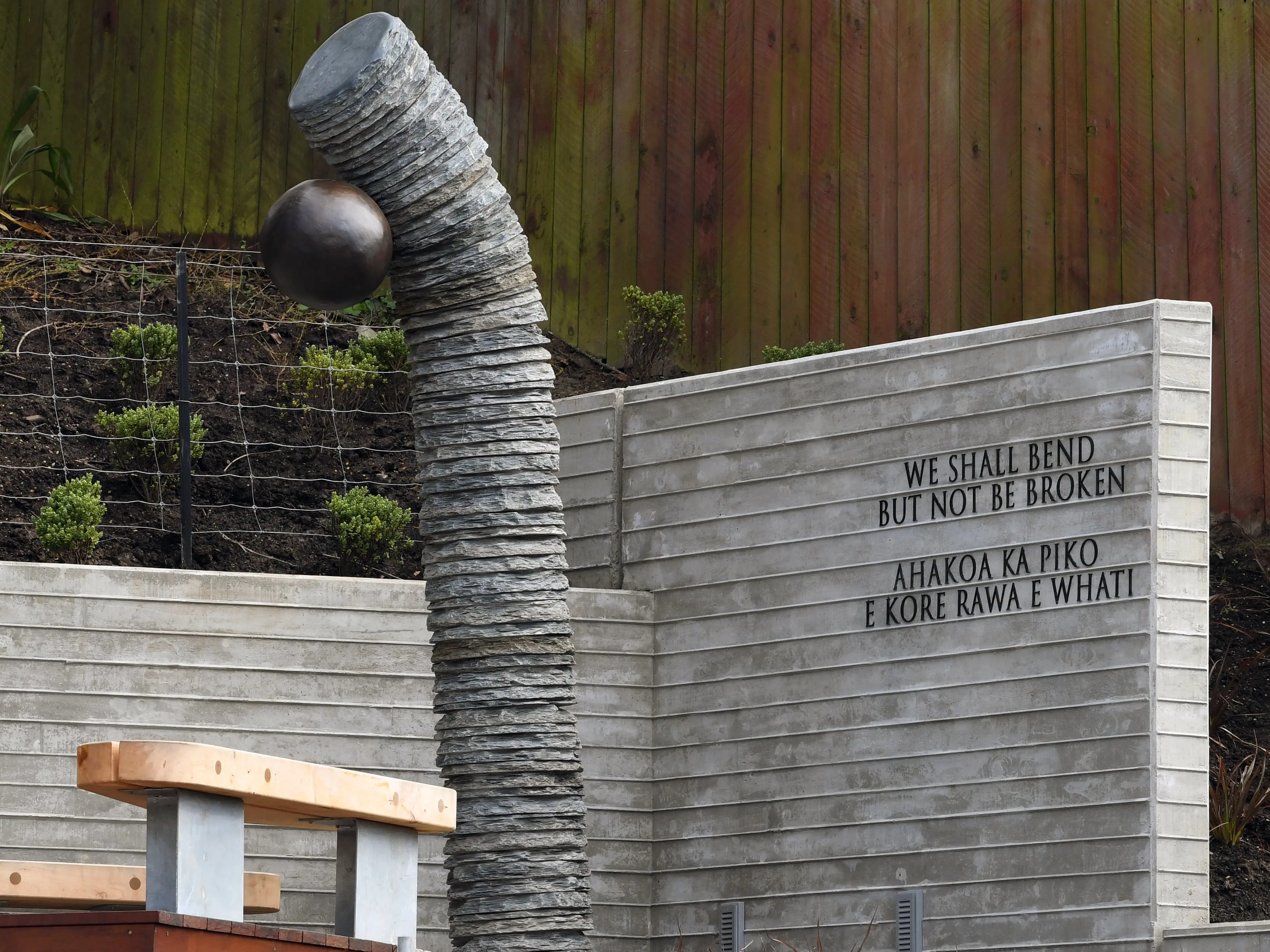
We will be gathering at the Archibald Baxter National Memorial to all New Zealand Conscientious Objectors in Dunedin.
Baxter was one of many New Zealand World War 1 COs who suffered for their beliefs.
Baxter was better known than the others but COs such as Mark Briggs suffered as much. They were all shipped to the front lines and endured constant military harassment and Field Punishment No 1.
Lawrence Kirwin, Henry Patton and the three sent to the notorious Dunkirk Military Prison (Garth Ballantyne, Sandy Baxter, Willim Litte) were all tortured beyond human endurance.
They suffered mightily for their stand but despite sustained torture and humiliation they never put on ‘‘the uniform’’.
We honour them for their stand, as well as the 800 World War 2 COs who were detained for the duration of the war.
These COs, like peace builders everywhere today, understood that violence never produces stable peace.
Our ceremony will be a combination of poetry, prayer and silence.
Poetry because the world is in desperate need of truth. Poets, artists, writers and musicians have to embrace truth if their work is to have any integrity and impact.
In a world of misinformation and lies we need artists who can speak truth to power while promoting non-violent alternatives to tooth-and-claw nationalism, violence and war.
Prayer so that we might rediscover the healing power of love and radical empathy leading to respect and dignity for all peoples.
Silence so that we can mourn and grieve all those who are suffering and have lost their lives in unnecessary wars of choice in Iran, Ukraine, Sudan and multiple other places.
The old and rickety world order has indeed collapsed but there is deep uncertainty about the contours and shape of a new one.
In the interim the world is afflicted by autocrats, xenophobic populists, psychotic political leaders and an unhealthy expansion of defence/war expenditure everywhere.
Against this backdrop of violence and uncertainty the pacifist position is in danger of being further relegated as too idealistic, too soft, too passive in the face of force and naked aggression.
Yet this is precisely the moment when people of conscience must unite to promote a more loving, hopeful and peaceful world. Individual acts of resistance to serving in the military must be supported, especially since Germany and a host of other countries are contemplating returns to compulsory military service.
May 15, therefore, is an opportunity to remember and give thanks for COs from past wars; but more importantly it is a chance to remember and support all those around the world who continue to say no to violence, militarism and war.
Conscientious objectors everywhere continue to suffer, often in appalling conditions, for their stand.
It’s not easy saying no to conscription, for example, in Russia, Ukraine, South Korea, Colombia, Thailand, Turkey and Israel.
Most COs in these countries are stigmatised, marginalised and often imprisoned.
In countries such as Sudan there is appalling violence and conflict but little or no chance of conscientious objection when all sides to the bloody civil war force the nation’s youth to join violent militias at gunpoint.
Some people wonder whether conscientious objection still has a place in modern warfare. The reason why conscientious objectors and pacifism remain relevant and critical is because their absolute vocational commitment to preserving life non-violently is a powerful restraint on untrammelled violence.
If pacifists and pacifism did not exist there would be little or no ethical restraint on the masters of war and the military-industrial complexes that support them.
We are living in confusing and worrying times. Nobody thought that the 21st century would see a return to pathological nationalism, xenophobia and violent coercive diplomacy.
Pacifists, peace builders and peaceful institutions need to take time out to discern peaceful opportunity in the chaos.
To do this in our frenetic world we need to rediscover the peaceful power of slowness and quiet relationship building.
As John O’Donohue put it:
This is the time to be slow
Lie low to the wall
Until the bitter weather passes
Try, as best you can, not to let
The wire brush of doubt
Scrape from your heart
All sense of yourself
And your hesitant light.
If you remain generous,
Time will come good;
And you will find your feet
Again on fresh pastures of promise,
Where the air will be kind
And blushed with beginning.
• Kevin P. Clements is chairman of the Baxter Memorial Trust.