
PHOTO
"I suspecy that, in practical terms, this is the end of the line."
The words are those of Nigel Hampton QC — who acted for some of the families of those who died in the collapse of the Canterbury Television building in the February 2011 earthquake — after the decision by police not to prosecute anyone for the disaster.
After an almost seven-year battle of endurance, the families had been hoping for justice and accountability, but this week’s announcement has ensured only another dark day in New Zealand’s history. After a three-year investigation, it was decided not to prosecute Alan Reay and David Harding — the engineers responsible for the building’s design in 1986 — for negligent manslaughter.
Detective Superintendent Peter Read, when announcing the police decision, said: "If I’d taken my heart’s advice, we would have prosecuted. But I can’t take my heart’s advice, I have to use my head."
In a further cruel blow, it appeared there had been sufficient evidence to prosecute, but the legal advice was the burden of proof was too high, and the time after the event too long, according to the Crimes Act.
It is difficult not to be moved by the families’ anguish, to feel that they, and the victims, have been failed at every turn.
After all, the considerable building and regulatory failures were laid bare in the Canterbury Earthquakes Royal Commission of Inquiry, whose third and final report was released in December 2013.
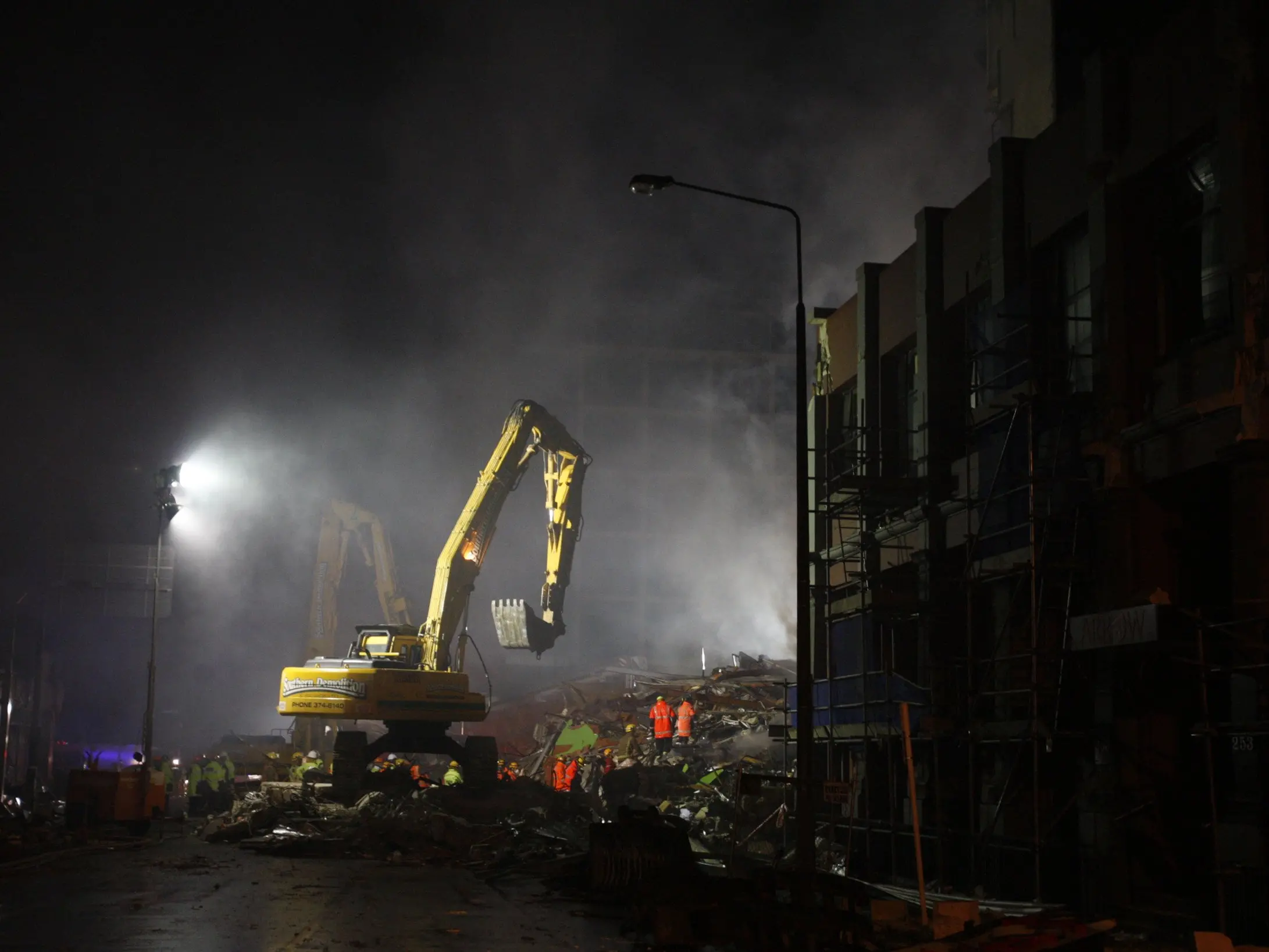
That report focused on the catastrophic collapse of the six-storey CTV building, which claimed 115 lives, the largest loss of life in the February quake in which a total of 185 people died and many were injured.
The commission found 20 years’ worth of engineering, construction and council errors led to the building’s collapse in the magnitude-6.3 earthquake. It concluded it should never have received a permit from the Christchurch City Council in 1986 as it was not built to the standards of the time. It said the engineering design was deficient, defects occurred during its construction, that construction was poorly supervised, and after the September 2010 quake it was "green-stickered" by council officials, with no advice from an engineer.
Failures at various stages were made by structural engineer David Harding, construction manager Gerald Shirtcliff, who failed to supervise construction at the site, council buildings engineer Graeme Tapper, who signed off the building despite concerns about the structural design, and property manager John Drew, who commissioned an engineer’s report after the September 2010 quake but did not follow up on the recommendation to order more detailed assessments.
The report was most critical of principal engineer Alan Reay, whose then firm, Alan Reay Consultants Ltd, designed the building. Dr Reay was criticised for tasking Mr Harding with the design of the building despite his inexperience, failing to adequately supervise him, not reviewing the design plans, and convincing Mr Tapper to sign it off.
Dr Reay’s resignation from the Institute of Professional Engineers New Zealand in 2014 resulted in that body dropping its investigation into him, another shock for families.
The role of the commission was never to apportion liability, but it is hard to reconcile those stark findings with this decision. While lessons have been learned and changes made or in the offing, it mirrors the tortured legacy of the Pike River Mine explosion, and the combined failings leave a dark stain on our nation’s conscience.
For without justice for tragedies found to be preventable, can there ever be healing?