
PHOTO
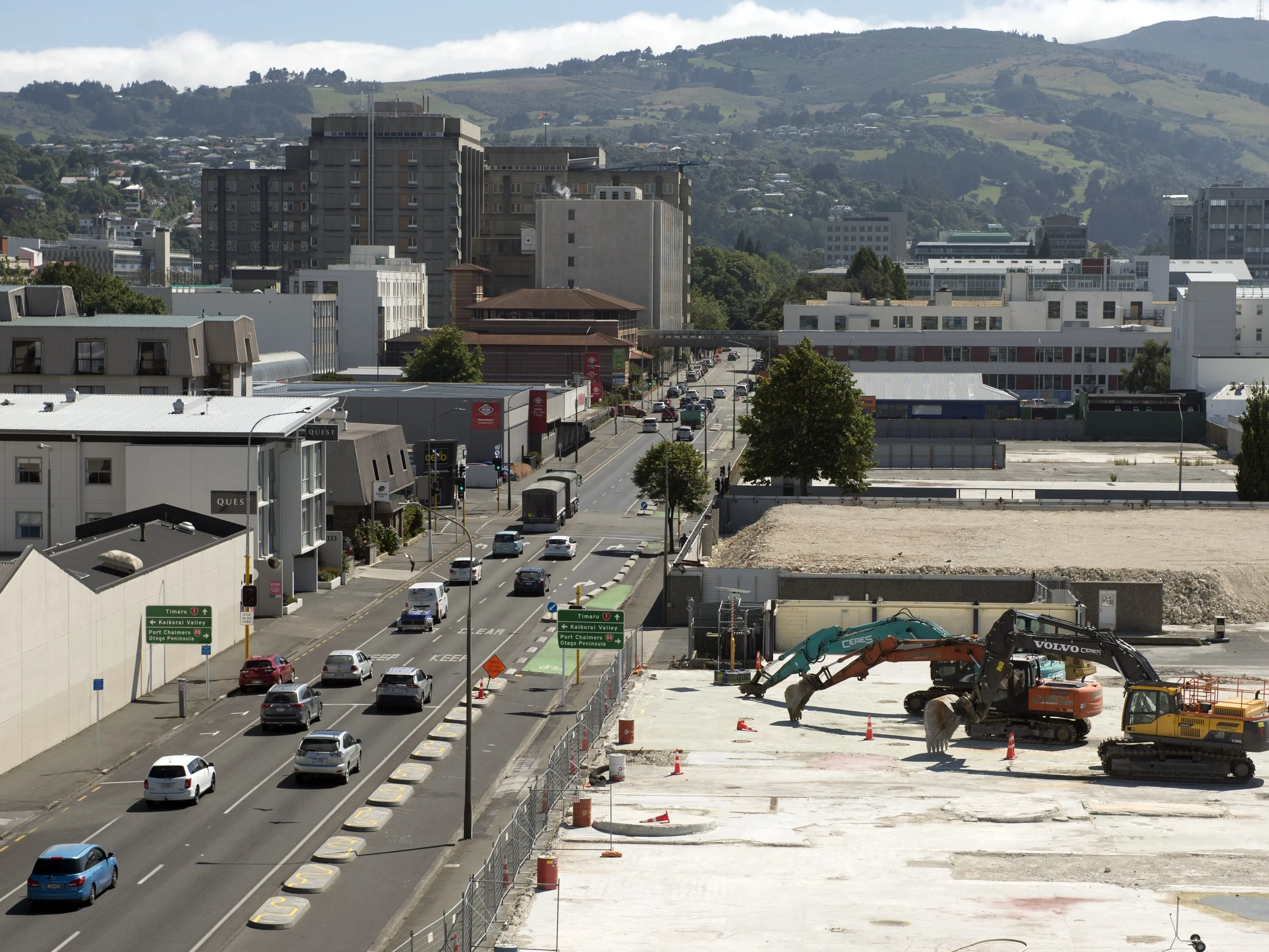
There is no getting away from it. Huge numbers of vehicles must move through Dunedin every day.
This must be achieved relatively smoothly, and the Dunedin’s City Council’s preferred option to do away with the arterial one-way roads would stymie that.
Councillors, narrowly, this week pushed for a programme that would reconfigure the central city, introducing a northbound lane to the southbound State Highway 1 route and turning Cumberland St into a two-way local road.
This view has its advantages. It would improve pedestrian access and remove a main road from one side of the new hospital precinct. It is also described as transformational change, reconfiguring the heart of the city.
Fundamentally, though, it would cause huge traffic congestion and frustrate residents. It would create a barrier across Dunedin dividing the north from the south.
The plan is full of idealism about a world where many more people take buses and cycle and work, where the carbon footprint is reduced, where — supposedly — the attractiveness of the city as a place to live, work and play would improve.
But it would be a practical disaster.
In essence, the goals would be achieved via disruption. Residents would find it so much more difficult not just to have access to the CBD but also to drive from one end of the city to the other. They would be driven from their cars.
No wonder three-quarters of respondents to a transport agency survey in 2020 wanted the one-way system retained.
No wonder the agency, Waka Kotahi, which has the final say on state highways, backed retaining the one-way system in a decision made late last year.
Already, traffic snarls when just one lane of the one-ways is blocked – and not just at peak times. Already, the one-ways can barely cope.
Dunedin’s geography and history create the underlying problem — the narrow strip between the hills and the harbour. This difficulty is accentuated by the railway line.
Hopefully, while retaining the one-ways, efforts can continue to improve the route on the harbour side of the rail tracks, especially making it more attractive for heavy transport. However, diverting much of the through-traffic to that road would trigger serious choke zones at each end.
Good access from the north is essential not just for commerce and trucks but because the city is so integrated. Everybody from the northern suburbs and North Dunedin who wishes to travel south, to go to the airport, St Clair, Otago Peninsula, The Warehouse, Mitre 10 or Bunnings, St Clair, funerals, the Edgar Centre and so much else generally will travel on the one-ways in both directions.
Good access from the south is essential for the university and the polytechnic and for everyone heading north.
What, too, about all the freight and people wanting to simply pass through and not even stop in the city? The hills, the roads and the traffic are enough of a hassle and barrier as it is. There are no bypasses. As the funders and decision-makers for state highways, Waka Kotahi would have considered this.
Many Dunedin residents already believe a majority of councillors seem determined to fulfil a green agenda and force residents from cars via the likes of reduced parking and George St developments. The vote this week will accentuate this feeling. Look for such matters to become a key issue at the local government elections this year.
A council report discussing the options acknowledges a drawback in its proposal is that “journey times for drivers are less reliable”. In other words, if adopted the plan would make it much more difficult to travel from one end of the city to the other.
The hospital build has brought matters to a head, and — no doubt — traffic will need to be slowed in that area.
One-way arterial roads past the hospital and through the university are far from ideal. But they are the least damaging option.