PHOTO
Who wants to be right all the time? People who insist they know it all can be insufferable to deal with. A bit of humility can go a long way.
When it comes to official advice, on which life and livelihoods depend, we generally expect it to be right. Similarly, we want pilots and air traffic controllers to be right 100% of the time.
Weather forecasting and flood prediction are tricky tasks. There are too many uncertainties inherent in the atmosphere and the catchments of rivers to make these prognostications perfect every time.
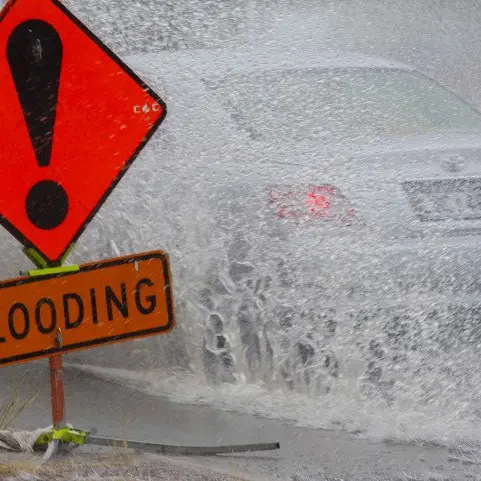
Late last week, disaster threatened again for people living in parts of the West Coast. Torrential rain was expected throughout the Southern Alps and along much of the length of the narrow coastal strip.
Fears of flooding were particularly high for the Buller region and residents in and around Westport, many of whom are still struggling to recover from being hit badly by a similar event just last July.
What a huge relief then this time that the township escaped mainly without incident, apart from the usual lakes and large puddles in the lowest-lying areas. However, conditions were worse north of Westport, around Fairdown, Waimagaroa and near Mokihinui, with flooded creeks and slips forcing helicopter airlifts to safety.
There was plenty of warning from MetService of the potential for danger from this latest rainstorm, although of course it is nigh-on impossible to predict exactly where the worst will occur.
In this case, it was good the emergency management team was ahead of the game and evacuating Westport residents well in advance of when the worst weather was expected. It was also good that the rain and river-flow forecasts were a bit on the high side and residents didn’t end up facing another huge clean-up.
Westport’s location makes it a sitter for flooding. On one side of town is the mouth of the Buller River, one of the mightiest rivers in the country; on the other lies the swampy Orowaiti Lagoon, fed by the river of the same name.
In July’s one-in-100-year flood, both swollen rivers overflowed their banks and encroached on Westport from either side, leaving just a small crown of slightly higher ground in the middle where floodwaters were not quite as deep. Elsewhere, rather than merely lapping at the door, water ran through houses.
While Coasters are well used to heavy rain and angry rivers, the Buller River in July was a frightful prospect, peaking at 12.8m above the river bed at Te Kuha at the entrance to the Buller Gorge. In last week’s storm it peaked considerably lower, at about 8.8m in the same location.
Buller residents have been fortunate to have Jamie Cleine as their mayor throughout these two civil defence emergencies.
Mr Cleine has been a strong and empathetic leader for the district, giving clear advice, making timely decisions and showing a great deal of sensitivity to the situation. The stress of leading the district through such frightening events, not to mention any impact it may have had on his own personal situation, will have had an effect on his own wellbeing and mental health, and it is to be hoped he has good support from those around him.
More heavy rain is on the cards for Westport and Buller this week, although it doesn’t appear at this stage if it will warrant another, rare, red severe weather warning from MetService.
With more frequent and extreme rainstorms expected as a consequence of climate change, Westport, and towns like it, face an uncertain future.
A $10.2 million system of stopbanks is planned for Westport by the West Coast Regional Council. But it will take a lot more money than that to fully protect the township.
Extensive flood-protection schemes need to be a government-funded priority, not a cost borne by ratepayers of often small districts that can barely afford them.