
PHOTO

A truncated select committee process is not a good look for legislation which relates to police powers.
Instead of the usual six weeks for submissions on the Policing Amendment Bill, there will, by our reckoning, be three weeks and six days, with two of those days public holidays.
With the Bill due to be reported back to the House by July 27 it seems destined to get caught up in an unseemly rush to pass laws before the November election.
The first part of the Bill is supposed to clarify the police’s ability to record images and sounds in public and private places and to collect personal information for lawful purposes, including intelligence.
Controversy over police photographing people without sufficient reason has been hanging around since at least 2020 but was reignited last year by a Supreme Court decision.
In that case, a man’s conviction for aggravated robbery was quashed because it was found using a photograph of him taken at a routine traffic stop, unrelated to the alleged robbery, was unreasonable and unlawful.
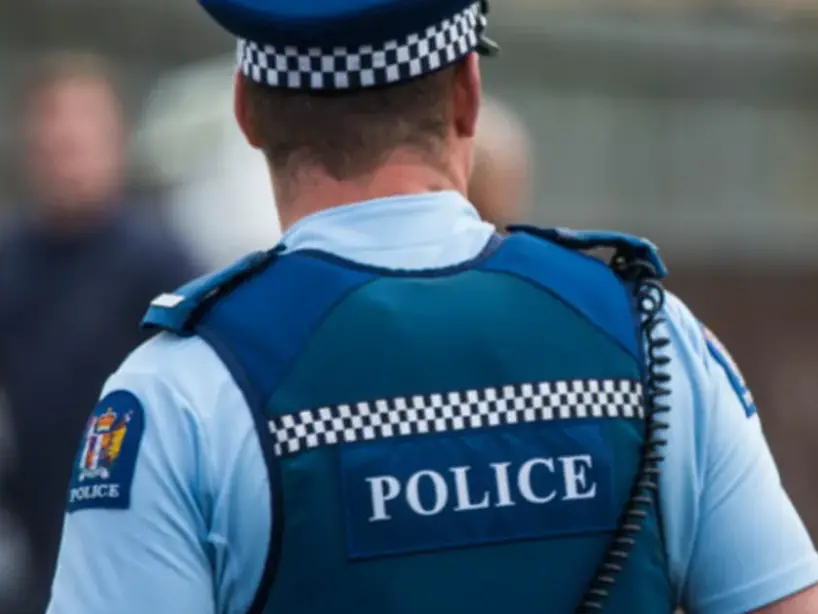
But in 2022, in a joint report from the Privacy Commissioner and the Independent Police Conduct Authority, the police were found wanting over taking and keeping thousands of photographs of people, many of them young Māori, often on the flimsiest of pretexts.
The joint report revealed officers had poor grasp of privacy law, even though that law has been around since 1993.
As deputy privacy commissioner Liz MacPherson pointed out then, police had to understand that when officers were in uniform and operating as police officers they were not members of the public, but an agency under the Privacy Act.
Accordingly, they had to meet a higher standard than members of the public taking photos in a public place.
Police were criticised for turning their cameras on people when they were annoyed by being photographed or video recorded. Annoyance was not a lawful basis for such information gathering.
Although the police made some changes as a result of the IPCA / Privacy Commissioner report, they still have not been able to identify and delete all the unlawfully taken photos and have failed to meet several deadlines for this.
Last year it was also reported they had not found a failsafe way to not use the photos in any way in the meantime.
While the government is pushing the view the proposed new law will just restore the powers which presumably many police thought they already had, critics do not buy that.
They say the law extends police powers, is too vague, and lacks safeguards.
Privacy Commissioner Michael Webster has described the safeguards in the Bill as setting a low bar.
It permitted the collection of people’s information for ‘‘an intelligence purpose’’ which was not defined and the person collecting the information only had to consider the information ‘‘will or may support the police in performing a function’’.
He has expressed the view police photography or video recording of individuals for general intelligence purposes should be limited to situations in which police can articulate a reasonable possibility, based on more than mere conjecture, that collection of the image would be relevant to a particular or likely investigation.
The Ministry of Justice also had reservations, concerned the proposals did not provide sufficient assurances there would be clear and transparent protections to ensure collection, retention and use of personal information remained proportionate to the actual policing value of that information.
The other part of the Bill involves new powers for police to declare a wider range of public areas closed, to stop vehicles in such an area and direct drivers and others to leave the area, increase powers to get biographical details in that circumstance, and give them the power to detain or move people from the area.
This has also drawn criticism for being too broad, with suggestions it might enable police to shut down protests without sufficient reason.
Given the differing views already being expressed on the various aspects of this Bill, the best we can hope for is that those with an opinion will make submissions in time and that the short select committee process will be thorough. It is not ideal.