
PHOTO
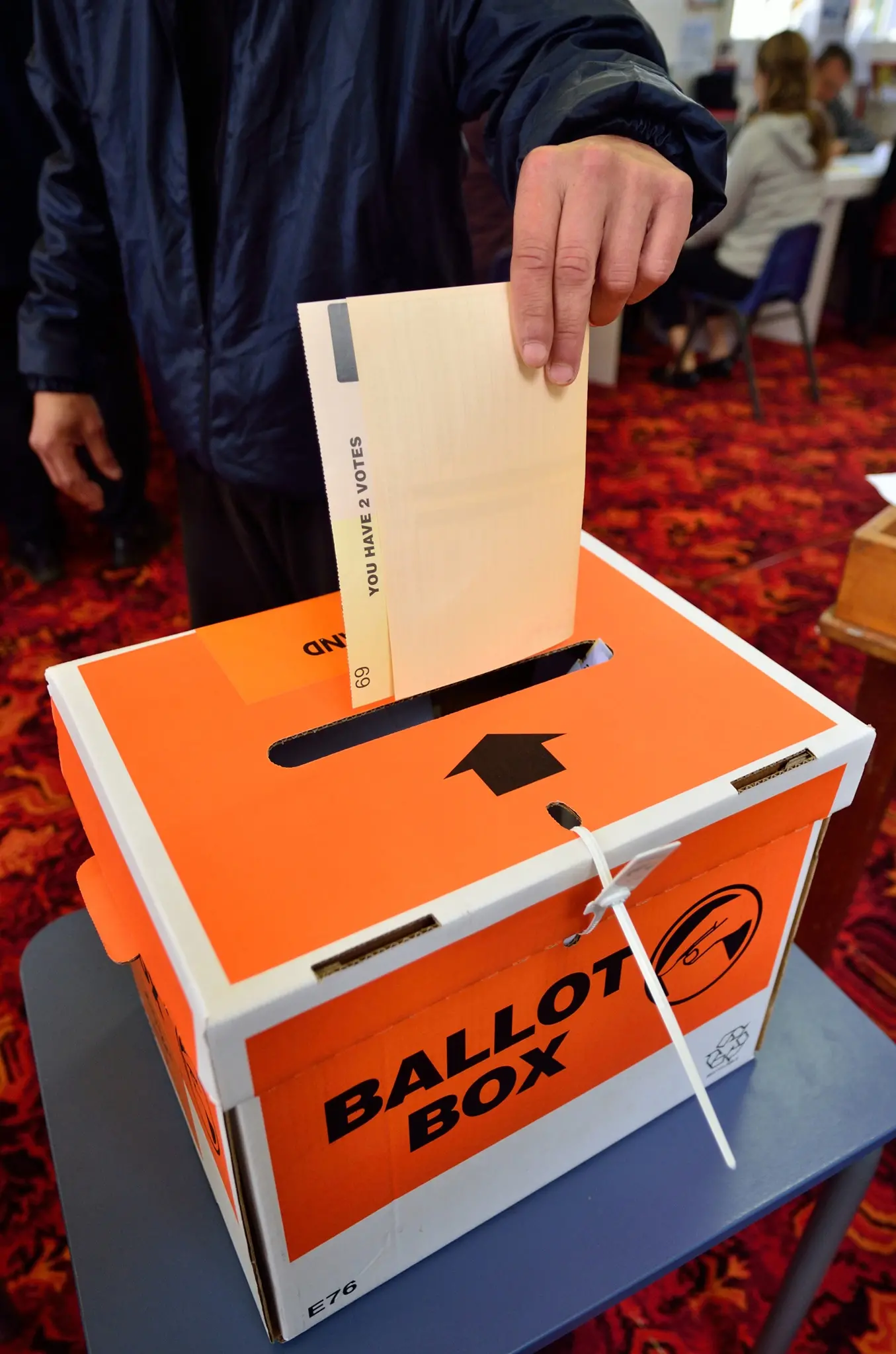
As coalition cracks begin to show and complaints of tails wagging the dog become more frequent, some people, National and its supporters in particular, have begun pointing the finger at MMP.
Minister of Justice Paul Goldsmith recently said he would "like the MMP system to be vanquished". This is particularly rich coming from someone who has for years gerrymandered the Epsom seat, allowing David Seymour to carry Act New Zealand into Parliament, and who is a list MP himself.
Neither National nor Labour wanted MMP because the ancient first-past-the-post system ensured them absolute power once they won elections, sometimes by only a seat or two. And they have both resisted reforms to an eminently flexible electoral system.
The most notorious example came after a wide-ranging and in-depth review of the system by the Electoral Commission. This followed the referendum on MMP in 2011, when voters gave it the thumbs-up.
Among other items, the commission recommended lowering the threshold from 5% to 4% and abolishing the one-electorate rule that Goldsmith had used to manipulate voters in the Epsom seat.
When the Labour opposition asked then-National minister of justice Judith Collins if she would implement the commission’s recommendations, she simply stood up Parliament and said: "No."
Labour then quietly forgot all about it. Cynicism rules, OK?
MMP is not to blame for the current coalition’s problems and the declining state of the country. Prime ministerial ineptitude has much to do with it, plus dollops of ignorance and arrogance among his ministers.
Yet the coalition parties now want a four-year parliamentary term with the suggestion of: "Trust us — we know what we’re doing."
But so do Labour and the others, so changing horses in the House would change little.
What to do? It may need even more dissatisfaction with the current regime before a new campaign, this time for improving MMP, can gain any momentum.
Those who have a problem with the system need to know that it can indeed be modified to changing circumstances and needs. Apart from the Electoral Commission’s 2012 recommendations, we could look overseas and see how different MMP systems work there.
One of the old hoary criticisms of MMP is that list MPs "are not elected" but "appointed".
As if electorate MPs are not also "appointed" by their parties. As if the majority of list candidates do not campaign for their parties in electorates.
This criticism harks back to the ludicrous anti-MMP campaign in 1993, backed by the National Party, in which list MPs were shown as people blundering about with brown paper bags over their heads.
In any case, other MMP systems include open lists which allow voters to choose individuals. This helps to counter a party’s attempts to oust members who upset party hierarchies but who are popular with voters. An open list here may well have prevented Dunedin MP Michael Woodhouse being dumped by National after being placed too low on its list in 2023.
MMP can be tuned to suit but it will need much greater voter pressure on the two main parties to make it happen.
The big difference between our system and those elsewhere is the presence of separate Māori seats. When the Royal Commission on the Electoral System recommended MMP nearly 40 years ago, it also recommended that the Māori seats be relinquished but balanced by Māori parties, which would not be subject to any threshold for several elections. This would allow Māori parties to develop presence, mana and policies before meeting a general threshold.
The commission recommended this at 4%, which was changed to 5% by the National government not long before the MMP-winning referendum of 1993.
It has long been declared that only Māori can decide whether or not the Māori seats should remain. That means close to forever, especially when Te Pāti Māori campaigns for more people to join the separate Māori roll so that more Māori seats may be created.
But have Māori been shooting themselves in the foot? The parties on the right rarely bother contesting the Māori seats and the current coalition is not exactly going out of its way to meet many Māori needs.
But if there was only one electoral roll, all parties, Māori or not, would have to compete for Māori votes.
The separatism of segregated seats can be electoral poison. As Māori affairs journalist Aaron Smale has pointed out, the geographical scale of Māori electorates such as Ikaroa-Rāwhiti and Te Tai Tonga effectively corrals large numbers of Māori voters in a kind of "passive version" of gerrymandering.
When attacks on MMP come from both left and right, look closely at who wants to shoot the electoral messenger and why.
Ask why MMP’s opponents do not want to improve the system, but wish to return to old ways that just give them more power and control, and voters less choice.
• Dr Phillip Temple ONZM was a campaigner for MMP leading to the binding referendum in 1993. He was given a Wallace Award by the Electoral Commission for his "significant contribution to public understanding of electoral matters".