
PHOTO
Should we be surprised that 10 former Members of Parliament know so little about the institution they once served?

Probably not.
Very few of the MPs I’ve encountered over 40 years of writing about politics demonstrated a deep working knowledge of, or even a deep attachment to, New Zealand’s core constitutional principles.
Indeed, they knew as much about their country’s constitution as they did about its history — which is to say, three-fifths-of ... very little.
The 10 former MPs who volunteered (I don’t think any were elected) to sit on the “People’s Select Committee on Pay Equity” (PSCOPE) certainly did not appear to grasp that our Parliament is sovereign.
As the expression and instrument of the will of the New Zealand people, the House of Representatives is the fount of this country’s laws and their ultimate arbiter. It bows to no higher authority, which makes it our highest court.
Accordingly, the key finding of the PSCOPE: that in reconstructing New Zealand’s pay equity legislation in the way it did, the government was guilty of “a flagrant and significant abuse of power”; is nonsensical political rhetoric.
In relation to the Pay Equity legislation of 2020, the House of Representatives did no more that what it has done before and will, doubtless, do again.
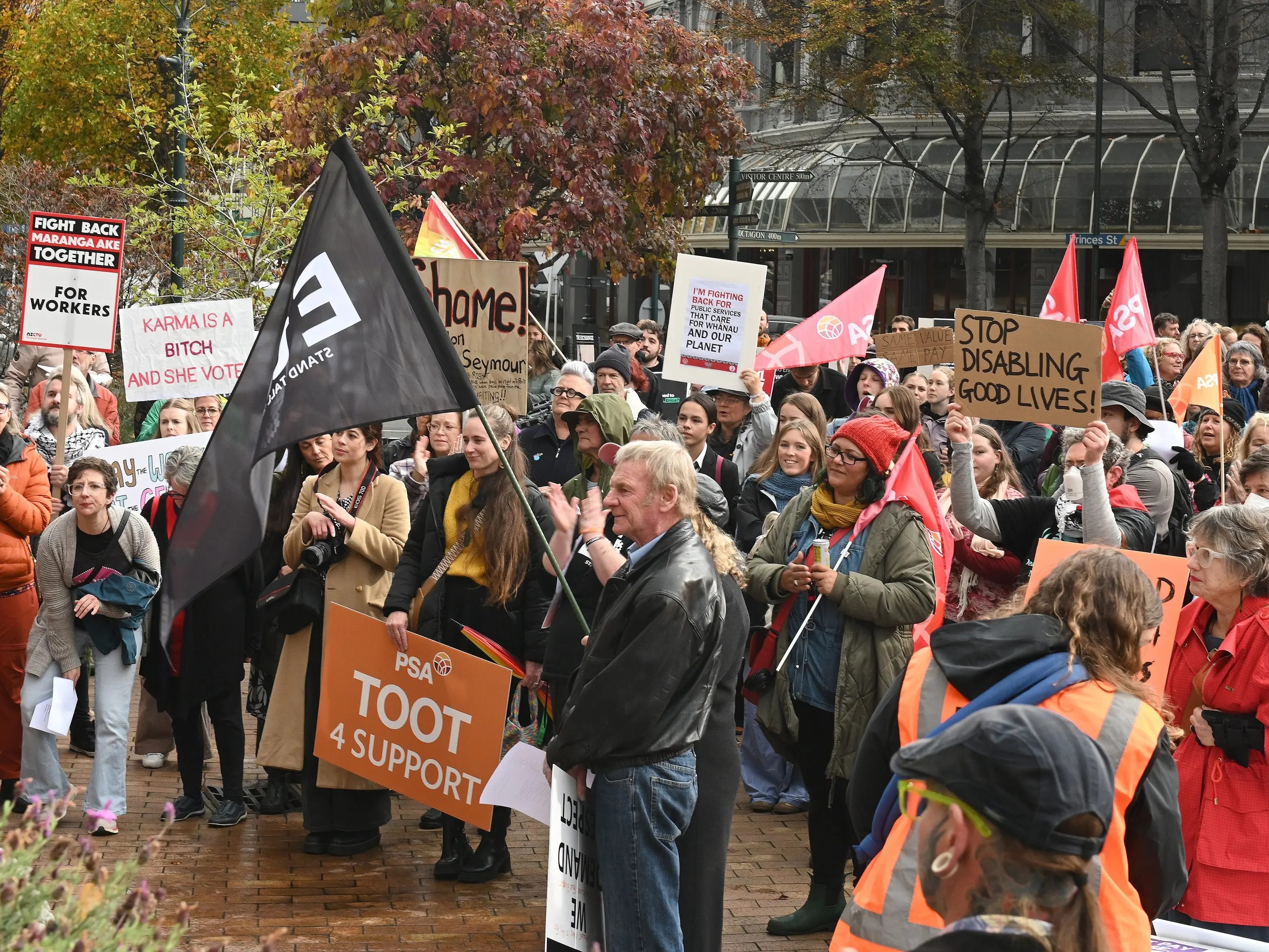
The House acted swiftly and, yes, ruthlessly, to correct a situation which a majority of the men and women elected to represent the nation had judged to be fiscally unsustainable.
Every one of the women comprising the PSCOPE, when they were MPs, would have participated in parliamentary proceedings under urgency.
This is the procedural short-cut available to any government unable or unwilling to wait upon the very, very, slow process of turning a Bill into an Act.
Had any one of them, as serving MPs, considered their party’s recourse to urgency “a flagrant and significant abuse of power”, they could have refused the Whip and, thereby, signalled their determination to bring their parliamentary career to an abrupt end.
To the best of my knowledge, however, none of those 10 women chose to resign rather than push the legislative and/or regulatory changes demanded by their party through the House under urgency.
But, perhaps, it wasn’t the coalition’s resort to urgency that led the PSCOPE to condemn its “flagrant and significant abuse of power”.
Its report draws our attention to the importance of “the rule of law” and damns the government’s actions for flying in its face.
Except, if the House of Representatives is the nation’s highest court, and the actions taken in respect of pay equity comported with its Standing Orders, then the rule of law was in no way threatened when the government repurposed the $12billion set aside to meet pay equity claims.
Then again, the PSCOPE might simply be channelling the views of some of our senior judges that the lower courts (which includes the misnamed Supreme Court), when confronted by a government determined to override the most cherished rights of New Zealanders, should take steps to impede its offending legislative initiatives.
But that would require a thoroughgoing revision of New Zealand’s constitutional arrangements. Unless, of course, such a flagrant and significant departure from the constitution, instigated by unelected judges, is a development which the PSCOPE would not consider an “abuse of power”.
Which I’m pretty confident it wouldn’t. Because the whole concept of an unelected “people’s select committee” reeks of the political class’s elitist impatience with the “excesses” of representative democracy.
Let’s just pause and consider the brute political facts here.
The left lacked the numbers to prevent the right from radically reforming pay equity.
To paraphrase the late Michael Cullen: they won, the left lost, eat it up.
Don’t pretend that some great crime against the rights of women has occurred — it hasn’t. All that happened was that those in possession of the numbers changed the law.
If left-wing women want to change it back, then they will need to amass the parliamentary wherewithal to make it possible.
It’s called Democracy.
Meaning that Labour, the Greens and Te Pāti Māori must, together, attract sufficient party votes to restore “genuine” pay equity.
We can only hope that the left will let New Zealanders know which government programmes and services will be required to surrender the $12b needed to pay for it.
• Chris Trotter is an Auckland writer and commentator.