

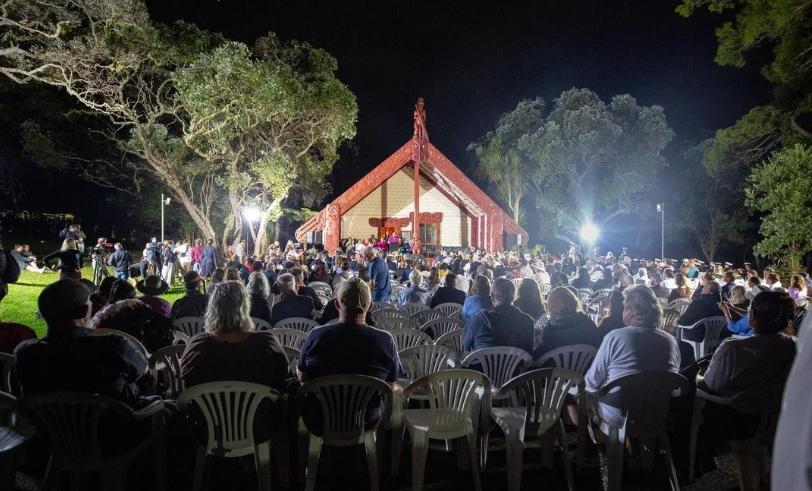
The theme of our rūnaka haerenga to Waitangi in commemoration of Waitangi Day 2026 is based on the call to unity the late Kingi Tuheitia made to the motu in response to the government’s denigration of the Treaty and its place in legislation.
The term ‘‘kotahitaka’’ is rooted in Māori culture and emphasises togetherness and solidarity, the importance of working to common goals and outcomes.

The Treaty of Waitangi evolved out of a situation where Kororareka, in the Bay of Islands, had become a popular port of call for sailors, whalers and traders but was also a place of lawlessness at times. The Treaty was preceded by a declaration of independence in 1835 by the chiefs of Ngāpuhi, from which they would frame laws and, in return for the protection of British subjects in their territory, they sought King William’s protection against threats to their mana.
Ōtākou in the 1830s was also a busy port where the chiefs Tahatū, Karetai and Taiaroa had agreed to the Weller Brothers setting up a whaling station based at Te Umu Kuri (Wellers Rock).
This was strategically important for trade and access to new technologies, including whaleboats and metal tools, and for connection to a new world.
The Treaty of Waitangi was conveyed to three locations in the Kāi Tahu takiwā at Ōnuku, Ruapuke Island and finally to Ōtākou on June 13, 1840. The sale of the Otākou Block followed in 1844, and shortly thereafter the long-running Kāi Tahu ‘‘claim’’ began due to unfulfilled Crown promises.
Taiaroa, a prominent Ōtākou chief, was politically active, negotiating a peace with Te Rauparaha in 1843; attending the hui of iwi leaders at Pukawa in 1856 to select a Māori King; and attending the 1860 Kohimarama Conference of Māori chiefs to discuss sovereignty and governance in the context of colonial rule.
Hōri Kerei Taiaroa, son of Taiaroa, devoted his life to resolving the Kāi Tahu land and mahika kai issues as a member of the legislature, a commitment that generations of Ōtākou leaders in succession would follow in pursuit of a collective justice.

During the 1980s, the separate treaty claims across Kāi Tahu were brought under one umbrella in an exercise of kotahitaka — this was an important factor in bringing the claim settlement to fruition in 1998, after five generations of effort.
In the year 2000, the Ngāi Tahu Treaty Festival commemorations began by rotation around the three locations where the Treaty was signed. In many respects a beginning not an end, the triennial Treaty Festival at Ōtākou has blossomed from small beginnings to the last occasion where thousands attended.
Road and marae infrastructure improvements are just keeping pace with the growth, while the broad-based community attendance has been heartwarming. At the same time, outwardly among agencies, local government and institutions, the growth in Treaty awareness and partnership has been constant since the 1998 Kāi Tahu settlement, with broad reach and mutual satisfaction.
This is not to say we have not seen setbacks, beyond the five-generation struggle for the claim to be settled: relationship building and reversals are part and parcel of the journey in recognising and honouring the place of the Treaty as a foundation of the nation.
Although experience informs us that Te Tiriti is about relationships, elevating commonalities instead of differences, remembering what is important and knowing the difference between what takes us forward and what takes us backward, and acting on that.
This brings us back to the current uptick of kotahitaka among the willing against a background rhetoric of misinformation and division broadcast using the state’s resources and offices, portraying Te Tiriti as a race-based privilege.
The rhetoric seems to argue, under the premise of equal rights, that a stranger arriving at your house that you have lived in for 50 years can remove you to the out-shed while the stranger takes prime occupation of the house — a rather inequitable proposition.
While our rūnaka has treasured our Treaty Festival occasions with the community, we have been moved by the iwi and community groundswell across the country to come together in the spirit of kotahitaka, to celebrate our commonalities and strengthen our commitment to pursue what is right, good and correct in the way we conduct our relationships and responsibilities.
Importantly, making that once in a lifetime pilgrimage to Waitangi on Waitangi Day offers an excellent opportunity for our hapū members, particularly the young, to make connections, absorb the strength of the kotahitaka spirit and move forward with confidence.
It also moves us to connect in a way that we have not done in some generations with Ngāpuhi, the kaitiaki of Te Tiriti, to celebrate the ancient waka voyaging traditions.
Ka mua ka muri — the importance of the past informing the future.
• Edward Ellison is upoko of Te Rūnaka o Ōtākou.


