

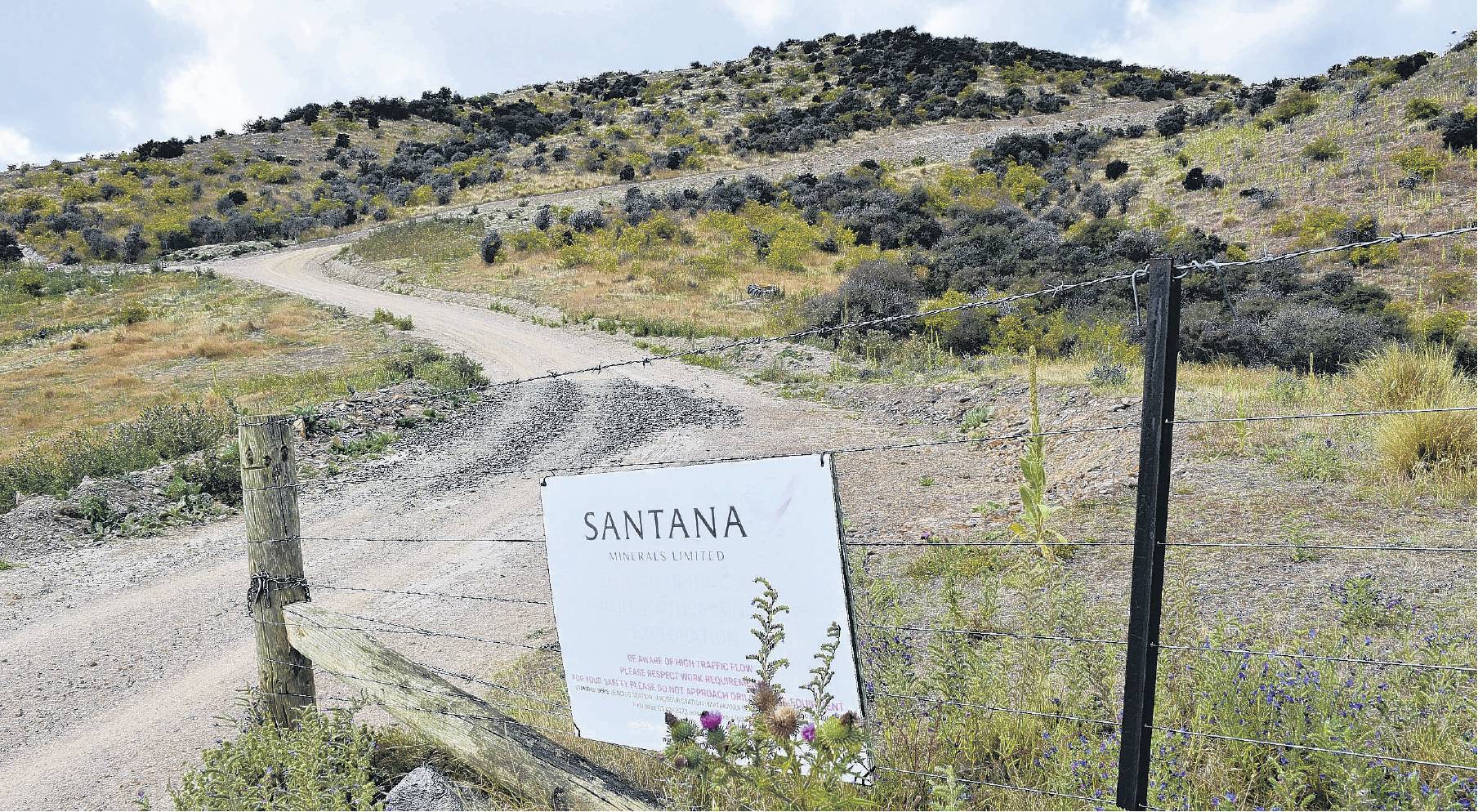
Visitor needed to stop and talk to the locals
As an economist, surely Gail Duncan (Opinion ODT 8.5.26) would consider the impact of a large gold mining operation on the wellbeing of a community.
Even she must see that 350 jobs paying an average of $140,000 a year will have materially positive impact on the Central Otago district.
Santana’s promised annual $1.5 million royalty to the local council, around $100 a rateable property, will be a significant help in keeping rates at a reasonable level.
Instead she makes a series of claims about the mine and the consenting process. She seems to imply that in the highly unlikely scenario of a tailings dam failure there will be an impact on coastal seashore and marine life, despite the fact that the Pacific coast is nearly 300km down the Clutha River.
She writes of the indigenous history that is yet to be discovered. Isn’t that rather oxymoronic?
She mentions the effort made by the Ministry of Works half a century ago ascertaining the risks of developing the Clyde Dam. Yet isn’t that what the eight-month consenting process is doing at the moment?
Ms Duncan, thank you for whizzing through on the way to Te Anau.
Next time perhaps you could stop and talk to some locals.
Peter Williams
Bendigo
Sit the test yourself
Apparently Minister Brooke van Velden is behind a new test for NZ citizenship which will require applicants to gain at least 75% in answering questions on the “responsibilities and privileges” of citizenship. The questions will include the Bill of Right Act, as well as voting rights.
I am having difficulty with Ms van Velden requiring others to be familiar with the Bill of Rights Act when she is the minister responsible for scuppering pay parity rights for women in order to balance the Budget. Also, Minister van Velden is behind the lowering of safety standards in the workplace and the discriminatory leave Bill for workers.
In addition, Minister van Velden is part of a coalition which will cause voting restrictions in the November general election by curtailing voting enrolments right up to the election day. Former minister and then attorney-general, Judith Collins, declared that these measures were inconsistent with people’s rights.
Ms Collins added that tens of thousands of new NZ citizens would be disenfranchised as a result.
Perhaps it is best that, with particular focus on the Bill of Human Rights, Minister van Velden along with Prime Minister Luxon who has endorsed her proposal, test themselves on the proposed test’s subject matter before imposing it on others.
Jenny McNamara
Gore
Testing material
Your editorial (8.5.26) asked whether a multi-choice citizenship test can measure civic suitability, and whether New Zealanders themselves would pass one.
I have built a mock version of the proposed citizenship test at kiwi-values.nz, drawn only from the topic areas Internal Affairs Minister Brooke van Velden and the Department of Internal Affairs' procurement tender have publicly named - the Bill of Rights Act, voting rights, structure of government, human rights, democratic principles, and travel and citizenship.
There are 65 sample questions, each citing a public source. The site is private, non-partisan, and unaffiliated with any government agency or political party.
Your point that even long-standing citizens might struggle to pass the test may well be borne out through seeing how they respond to my mock survey.
Doug Lilly
Dunedin
Bill unneeded and designed to stir up voters
I was heartened to read Ms Wong, Dr Claude and Dr James’ opinion article about New Zealand First’s English Language Bill (ODT 29.4.26).
As a New Zealander with a migrant background, I agree that such a Bill is unnecessary due to the widespread usage of the English language in New Zealand. While English may not have an official status, it is the dominant language of education, governance, commerce and entertainment. English also helps connect us with much of global society, which uses English as a lingua franca.
NZ First’s English Language Bill is nothing more than culture war posturing intended to energise their voter base, who seem to yearn for the time when Maori children were spanked in school for speaking te reo. The Bill seeks to solve a problem that does not exist.
There is no harm in sprinkling the English language with Maori words and phrases given that English itself has borrowed words from numerous languages including Latin, French, German, Malay, and Hebrew. In my former home country Malaysia, we often mixed words from Malay, English, and other languages in informal conversations.
Perhaps a middle ground could be found in using both English and Maori terminology in official and media communications so that everyone gets the message.
Despite the National-led government’s efforts to prioritise the English language over te reo, it is strange that they are seeking to repeal the previous Labour government’s Plain Language legislation encouraging the use of jargon-free terminology in official government documents and communications.
In times of rising living costs, environmental degradation, climate change and a volatile international environment, the English Language Bill sounds like a vanity project.
Andrew Lim
Shiel Hill
UN complaint cuts both ways
Re the article ‘‘Complaint to UN over pay equity Bill backed’’ (ODT 7.5.26).
Putting aside the substance of the Pay Equity Amendment Bill the article raises two matters that are emerging as a pattern and strike at the heart of our democracy.
First, the now well-trodden path made by the politically disaffected to the United Nations. It is not clear from the article what specific relief Mrs Campbell seeks from them, but it is heavily implied they should have material influence or jurisdiction over the matter.
The idea that unelected staff in New York could overturn laws passed in our own Parliament should be concerning to all New Zealanders. Who are these people and what do they know about New Zealand?
A feature of democracy is that not everyone will be happy all the time, but thankfully we have the opportunity, every three years, to demonstrate whether we approved of the decisions made by our elected government. Labour and the Greens have clearly stated their intention to repeal the Bill if elected and Mrs Campbell notes that this will be her key voting consideration in November. All power to her.
Second, Mrs Campbell is quoted as saying there are ‘‘plenty of people within government’’ who are working against the Bill. Given it was passed with the support of the three governing parties these people can only be unelected officials.
This is in contravention of the Public Service Commission which is very clear in its requirement when it says ‘‘we act in a politically neutral manner’’. Whilst motivated individuals might deem that rogue officials are heroes on the right side of the issue this is a very dangerous position to take.
If you like the idea of the UN and bureaucrats thwarting a government you oppose I have one question for you: what if the shoe was on the other foot and they thwarted a government you voted for?
Andy Macleod
Queenstown
Address Letters to the Editor to: Otago Daily Times, PO Box 517, 52-56 Lower Stuart St, Dunedin. Email: letters@odt.co.nz


